
Toyota Camry vs Honda Accord: Which Sedan Fits Your Commute?
Compare 2026 Camry and Accord powertrains, fuel costs, passenger needs, safety equipment, and recall checks before choosing a midsize sedan.
Read articleRecallWire driver tools
Know the fuel bill before you go.
Plan a weekend away or a drive across the country. Estimate the gas you will use, switch to a round trip, and split the cost with your travel companions.
01 / Your inputs
Start with the example below. Change any value to update your estimate.
Calculated in your browser. Your entries are not submitted or saved.
02 / Your estimate
ExampleEstimated one-way fuel cost
250 total miles · 8.33 US gallons
Complete the highlighted fields to see your estimate.
A $0.50 increase per gallon would add $4.17 to this trip.
Free report · Print or save as PDF
03 / See the bigger picture
Fuel spending at the same MPG and gas price throughout the trip. Distance includes the return leg when selected.
Slide to explore. Use arrow keys for finer control.
Behind the numbers
Fuel cost = total trip miles ÷ MPG × price per US gallon. For a round trip, total miles are twice the one-way distance. Cost per person = fuel cost ÷ people sharing.
A 250-mile one-way trip at 30 MPG and $3.50 per gallon uses about 8.33 gallons and costs $29.17. A return journey doubles the total to $58.33. Shared by two people, that is $29.17 each for the round trip.
A little more clarity
Always enter the one-way distance. Select Round trip to include the return journey automatically. Leave One way selected if the distance you entered already covers your entire itinerary.
Use a price you expect to pay and try a higher price as a second scenario. The starting price on this page is only an editable example, not a current national average.
Your actual MPG and fuel prices can differ along the route. Detours, traffic, weather, cargo and driving style can also change fuel use.
From the RecallWire desk
More context for the decisions ahead.
Compare 2026 Camry and Accord powertrains, fuel costs, passenger needs, safety equipment, and recall checks before choosing a midsize sedan.
Read article
NHTSA’s new fuel-economy rule does more than slow the path to 2031: ending inter-manufacturer credit trading in 2028 shifts compliance pressure back onto each automaker’s own lineup.
Read article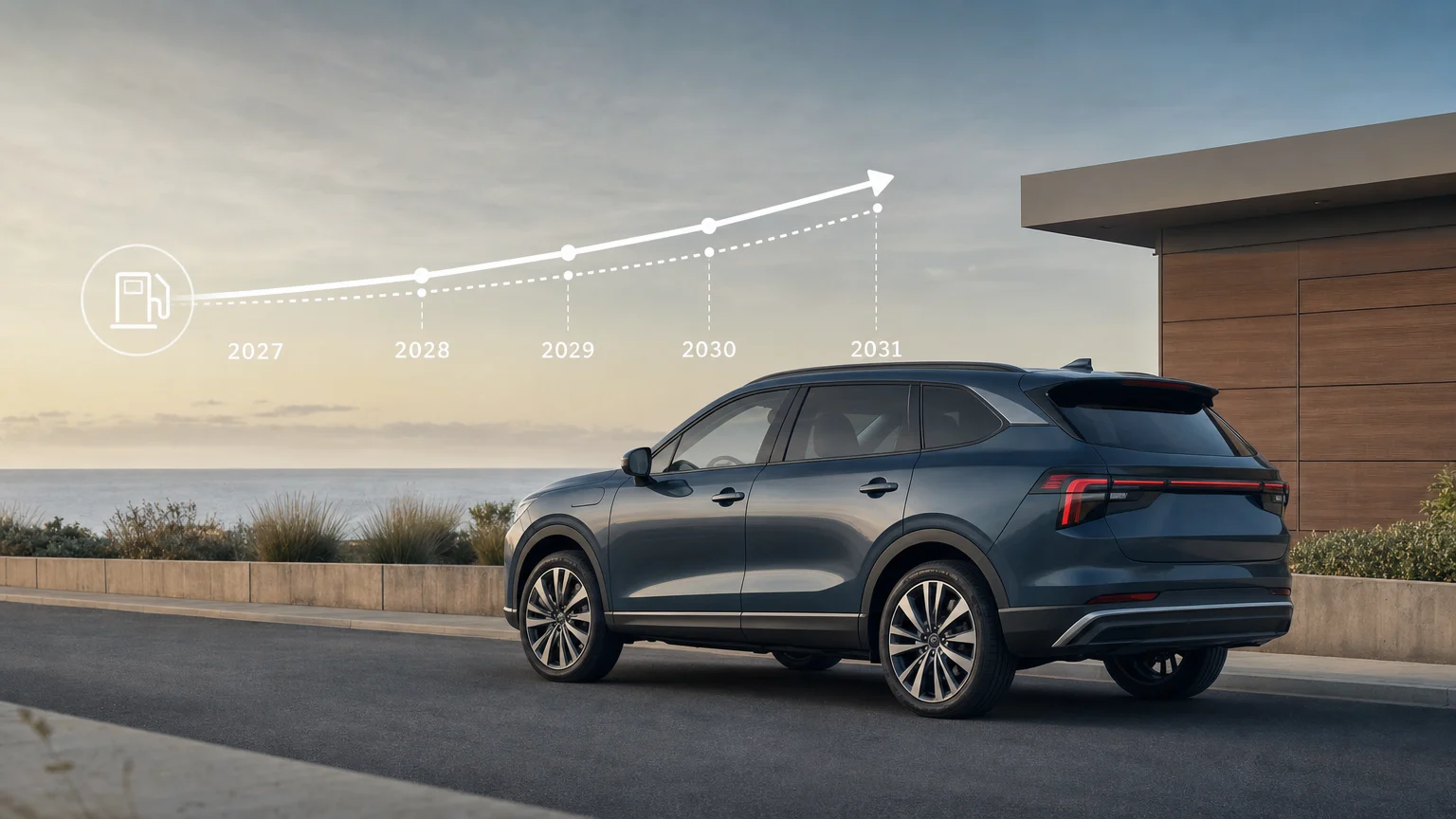
NHTSA’s final standards for model years 2027 through 2031 ease the prior federal trajectory. The change matters most in automakers’ product planning, while buyers should still assess each vehicle’s actual fuel costs and
Read articleBefore your next drive
Explore recall campaigns or find the official lookup for your specific vehicle.