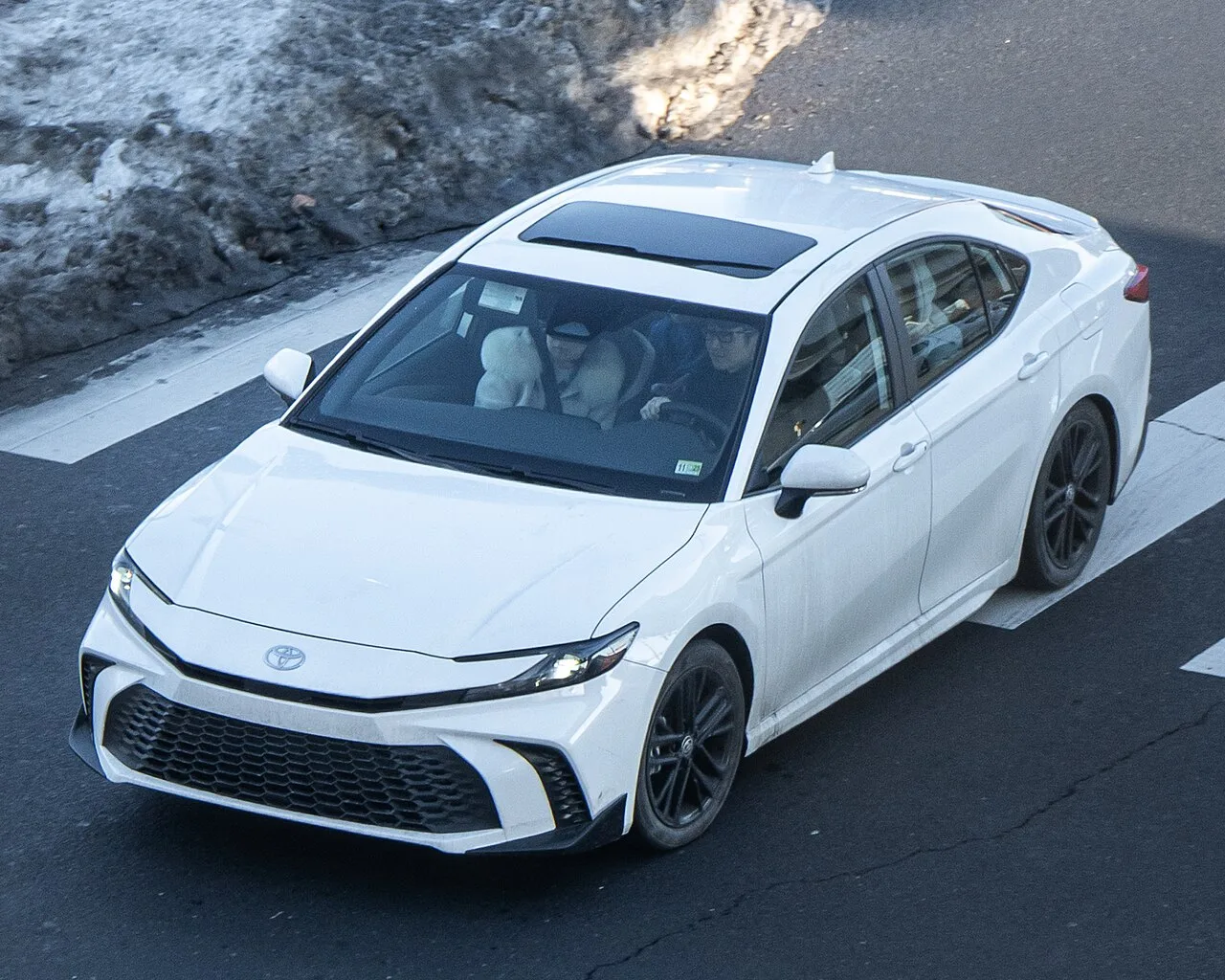
Toyota Camry vs Honda Accord: Which Sedan Fits Your Commute?
Compare 2026 Camry and Accord powertrains, fuel costs, passenger needs, safety equipment, and recall checks before choosing a midsize sedan.
Read articleRecallWire driver tools
Gas or electric. Put a number on it.
Compare the cost of covering the same miles with gasoline or electricity. Use your own rates to see which costs less in your situation.
01 / Your inputs
Start with the example below. Change any value to update your estimate.
Calculated in your browser. Your entries are not submitted or saved.
02 / Your estimate
ExampleEV costs less per year
Energy cost difference · 12,000 miles per year
Complete the highlighted fields to see your estimate.
At these efficiencies and gas price, energy cost per mile breaks even at $0.39 per kWh (38.89¢).
Free report · Print or save as PDF
03 / See the bigger picture
Cumulative energy costs with unchanged annual mileage, efficiency and prices. This is a scenario, not a price forecast or ownership-cost comparison.
Slide to explore. Use arrow keys for finer control.
Behind the numbers
Gas cost per mile = gas price ÷ MPG. EV cost per mile = kWh per 100 miles ÷ 100 × electricity rate. Multiply each by annual miles to compare yearly energy costs.
At 12,000 miles per year, 30 MPG and $3.50 per gallon, gasoline costs $1,400. An EV using 30 kWh per 100 miles at $0.16 per kWh costs $576. In this example, EV energy costs are $824 lower per year.
A little more clarity
No. The result depends on the vehicle efficiency, gas price and electricity rate you enter. Public fast charging can have a different rate from home charging. Try both rates to compare your own scenarios.
Use electricity consumption in kWh per 100 miles, rather than MPGe. The EPA fuel-economy label includes electricity lost during charging. If you enter an in-car consumption figure instead, you may underestimate electricity purchased.
Use an energy-weighted average price. For example, if 80% of purchased electricity costs $0.16/kWh and 20% costs $0.50/kWh, enter $0.228/kWh. Session, idle and subscription fees are not included.
No. It compares gasoline and electricity spending over the same distance. A full ownership comparison would also need purchase price, depreciation, insurance, maintenance and other costs.
From the RecallWire desk
More context for the decisions ahead.
Compare 2026 Camry and Accord powertrains, fuel costs, passenger needs, safety equipment, and recall checks before choosing a midsize sedan.
Read article
NHTSA’s new fuel-economy rule does more than slow the path to 2031: ending inter-manufacturer credit trading in 2028 shifts compliance pressure back onto each automaker’s own lineup.
Read article
NHTSA’s final standards for model years 2027 through 2031 ease the prior federal trajectory. The change matters most in automakers’ product planning, while buyers should still assess each vehicle’s actual fuel costs and
Read articleBefore your next drive
Explore recall campaigns or find the official lookup for your specific vehicle.