Toyota Camry vs Honda Accord: Which Sedan Fits Your Commute?
Compare 2026 Camry and Accord powertrains, fuel costs, passenger needs, safety equipment, and recall checks before choosing a midsize sedan.
What to know first
- The 2026 Camry is hybrid-only; the Accord comparison depends on its gasoline or hybrid trim.
- The fuel-cost example compares selected configurations with explicitly stated assumptions.
- Check passenger comfort, equipment, final pricing, and VIN-specific recall status before deciding.
Choose the Camry if you want a hybrid across the lineup or need an available all-wheel-drive configuration. Choose the Accord if you want to compare a lower-priced gasoline entry model with several hybrid trims. If you are already shopping hybrids, the decision becomes more about the exact equipment, seating position, purchase quote, and driving experience than a dramatic difference in fuel spending.
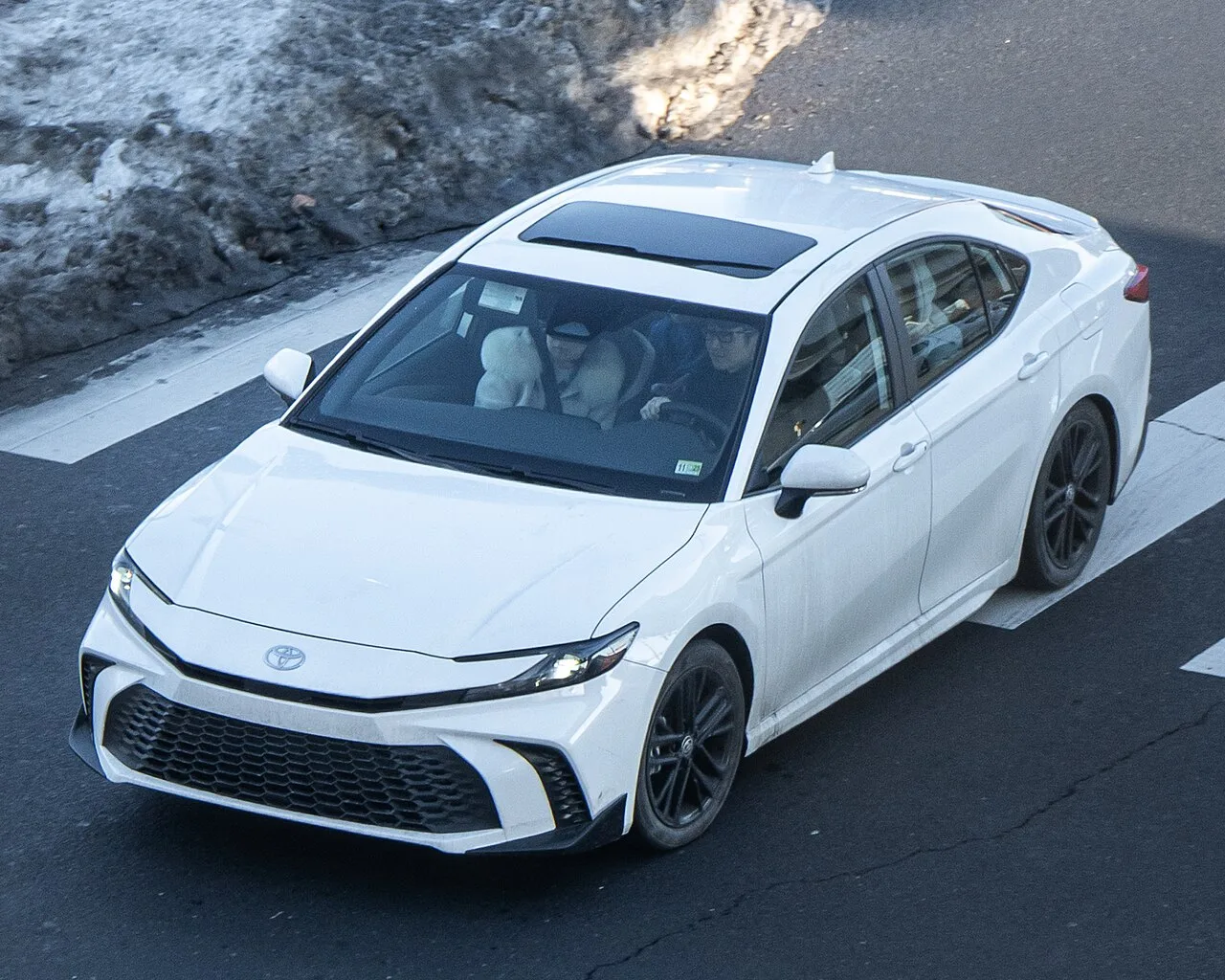
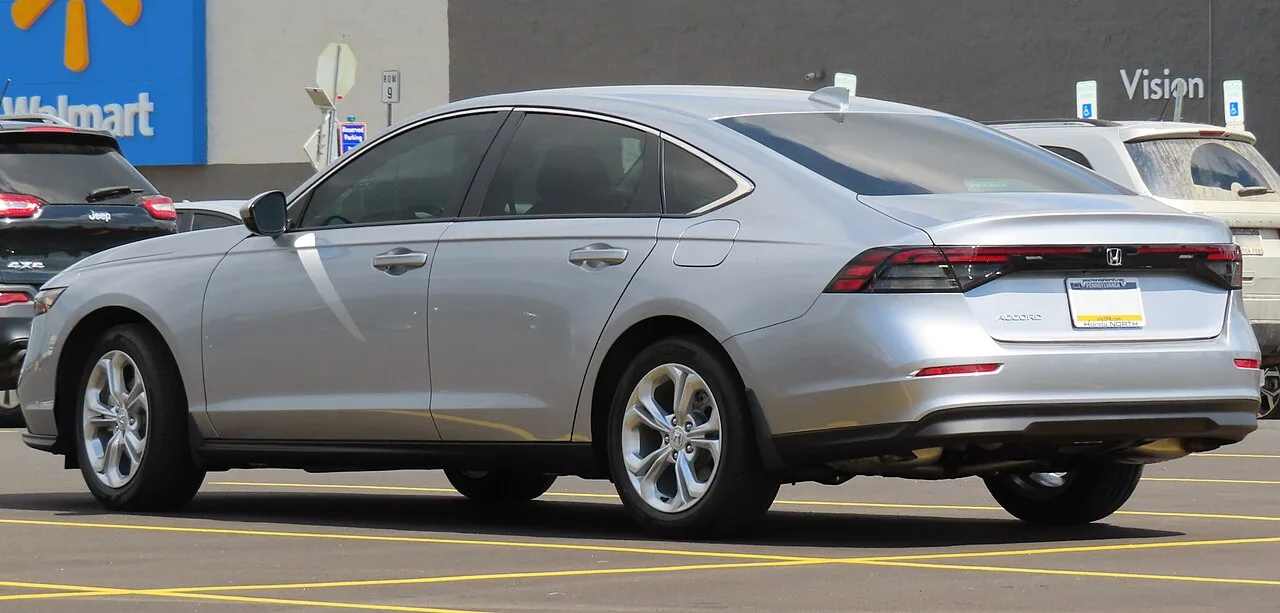
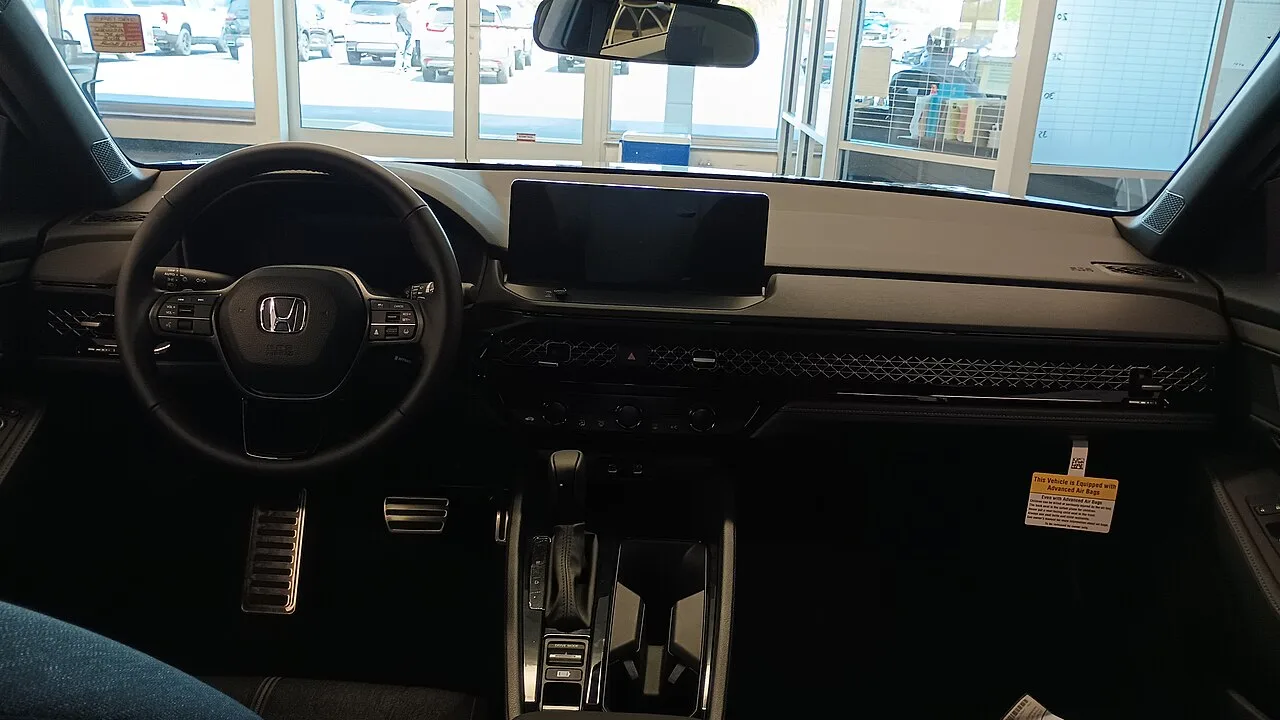
This Toyota Camry vs Honda Accord guide compares the 2026 U.S. lineups. Prices are manufacturer starting figures checked October 6, 2026, before applicable delivery charges, taxes, dealer adjustments, and options. Photos are identified by generation or year; they do not represent every trim discussed.
Current-generation Camry, photographed in the Washington, DC area. The pictured equipment is illustrative; the fuel calculation below uses the LE FWD. Photo: OWS Photography; CC BY 4.0. Converted to WebP by RecallWire; original framing retained.
_Washington_DC_Metro_Area,_USA_(1).jpg)
The differences that matter first
| Buying question | 2026 Toyota Camry | 2026 Honda Accord |
|---|---|---|
| Powertrain choice | Hybrid throughout the lineup | Gasoline LX and SE; hybrid Sport, EX-L, Sport-L, and Touring |
| Driven wheels | FWD or available AWD, depending on configuration | FWD |
| Efficiency example | LE FWD: 51 EPA-estimated combined mpg | EX-L Hybrid: 48 EPA-estimated combined mpg; LX: 32 |
| Published starting-price example | LE: $29,600 base MSRP | LX: $28,395 starting MSRP |
| Useful first comparison | Selected Camry hybrid against an Accord hybrid with similar equipment | LX/SE if purchase price is the priority; hybrid trims if fuel use is central |
These figures come from Toyota’s 2026 Camry trim information and Honda’s 2026 Accord specifications. The two starting prices are not delivered purchase prices, and the Camry LE and Accord LX do not have equivalent powertrains. Get itemized quotes before treating the advertised difference as money you will save.
A buyer who needs AWD can narrow the search immediately. A buyer who does not need it should compare FWD examples first rather than paying for a capability that never enters the weekly routine.
Compare the right engines and trims
The Camry makes the powertrain decision relatively straightforward: the 2026 lineup is hybrid. The Accord asks a second question. Its LX and SE use a turbocharged gasoline engine; its remaining listed trims use Honda’s hybrid system. That means “Camry versus Accord” can describe two quite different shopping exercises.
For a hybrid comparison, write down the features you actually want before choosing trim names. Heated seats, a particular display, wheel size, audio equipment, and driver-assistance functions may require different price steps on each car. An expensive trim with equipment you will rarely use can erase years of modest fuel savings.
For a purchase-price comparison, include the Accord LX alongside a Camry LE, but acknowledge what changes. You are weighing a gasoline sedan against a hybrid sedan, not proving that one manufacturer’s equivalent car is cheaper.
Toyota advertises up to 232 net combined horsepower for AWD Camry configurations; Honda lists 204 total system horsepower for Accord hybrids. Those numbers describe particular systems, not a measured acceleration comparison. They also should not be combined with the fuel economy of a different trim. A useful test drive checks the actual cars on your shortlist: merging response, low-speed smoothness, braking feel, and noise on your usual kind of road.
Put the fuel-economy difference in dollars
A three-mpg difference sounds meaningful until you translate it into gallons. At a hypothetical 12,000 miles annually and $3.50 per gallon, the selected trims produce the following energy-only estimate:
| Selected 2026 configuration | EPA combined mpg | Calculated annual gasoline cost |
|---|---|---|
| Camry LE FWD | 51 | $824 |
| Accord EX-L Hybrid | 48 | $875 |
| Accord LX gasoline | 32 | $1,313 |
Formula: annual miles ÷ combined mpg × gasoline price. Values are rounded to the nearest dollar. Efficiency inputs come from the manufacturer pages linked above. Mileage and gasoline price are illustrative assumptions, not national averages or forecasts. This excludes financing, insurance, maintenance, and resale value.
The selected hybrids differ by about $51 a year in this scenario. The Accord LX costs about $438 more in annual gasoline than the EX-L Hybrid, but that does not establish that the EX-L is the cheaper purchase: its equipment and price also differ. The comparison tells you which question to ask next, not which contract to sign.
If you drive fewer miles, the fuel difference shrinks. If your driving is largely high-speed highway travel, compare the highway ratings as well as the combined figures. Use the EPA’s vehicle comparison tool to select the exact year and drivetrain. Do not substitute the most efficient trim’s rating for a different car on a dealer lot.
Graphic: RecallWire calculation using the named manufacturer EPA combined ratings and the assumptions in the preceding table. Selected trims differ in equipment and price; this is energy cost only.
Test rear-seat space and daily cargo
Honda lists 40.8 inches of rear legroom and 16.7 cubic feet of trunk volume for the 2026 Accord. Those specifications are a useful starting point, but they cannot tell you whether your child seat fits behind your own driving position or whether a particular stroller passes through the trunk opening.
Bring the items that determine whether the sedan works. Install the child seat according to both manuals. Check whether a rear passenger can enter without moving the front seat. Try your usual suitcase, mobility aid, or folded stroller. Measure the opening as well as the available floor space.
For adult passengers, assess seat cushion support and headroom with the actual roof configuration. For the driver, set the steering wheel and seat before judging visibility. A sedan that feels roomy during a two-minute walkaround can become awkward once a tall driver and a rear-facing seat share the cabin.
This is also where wheel and tire choices deserve attention. Ask about replacement cost and listen for road noise on ordinary pavement. Do not assume that the visually sportier trim is the most comfortable commuter. The right answer is the configuration that fits your occupants and the roads you repeatedly drive.
Photo: MercurySable99; CC BY-SA 4.0. Converted to WebP by RecallWire; original framing retained.

Verify safety equipment on the actual car
Toyota lists Toyota Safety Sense 3.0 and blind-spot monitoring for the 2026 Camry. Honda’s specification table identifies the Honda Sensing functions and other equipment by Accord trim. Read those tables as equipment descriptions, not as promises that the car will prevent every crash.
Your comparison should separate crash protection from assistance features. Check the IIHS model-year ratings for the vehicle and relevant test category, including any qualifications involving equipment or production date. If a result is absent, do not fill the gap with the previous generation’s result.
During a demonstration, ask the salesperson to show how alerts appear and how you can adjust them. Can you understand an unfamiliar warning quickly? Can you find the wiper and defogger controls without a menu search? These ordinary tasks matter during a long commute, especially in bad weather.
One equipment-specific example is RecallWire’s 2025–2026 Camry Hybrid display campaign. The accompanying Toyota display recall analysis explains why screen configuration matters. It is not evidence that every Camry display or every 2026 Camry is affected.
Compare ownership terms before choosing
Ask for three written items for each shortlisted vehicle: an out-the-door purchase quote, the relevant warranty booklet, and an insurance quote using the actual VIN. Keep the ownership period the same. Comparing one car over three years with another over eight years changes the question.
Include your expected financing cost and the items that vary by trim, such as tires. If one dealer adds accessories you do not want, compare the final price rather than the base MSRP. If a lower payment requires a substantially longer loan, calculate the total paid and consider how long you intend to keep the car.
For a used example, inspect condition and records separately from the model comparison. A well-documented Accord and a poorly repaired Camry are not interchangeable representatives of their brands. RecallWire’s used-car red flags guide covers that purchase-screening task in detail.
Finish with a VIN-specific check through NHTSA and the manufacturer. Read the instructions for any applicable campaign, then confirm remedy completion with service documentation. RecallWire’s Toyota owner guide provides a separate route for Toyota-specific follow-up. Campaign counts alone cannot settle the buying decision.
Photo: deathpallie325; CC BY-SA 4.0. Converted to WebP by RecallWire; original framing retained.

Which sedan fits your commute?
Start with the Camry if available AWD is a requirement or you want to shop a hybrid without filtering out gasoline trims. Check whether a less expensive FWD configuration already meets your needs before selecting a higher trim.
Start with the Accord LX or SE if the initial purchase budget is tight and your annual mileage makes the hybrid premium difficult to justify. Then compare an Accord hybrid quote to see exactly what the extra spending buys.
Compare both hybrids directly if you drive extensively and plan to keep the car. The selected efficiency figures are close enough that a better seat fit, more convenient service location, or a materially better purchase quote can reasonably decide the result.
Before leaving either dealer, write one sentence explaining why that exact vehicle works for you. “It fits our child seat, includes the equipment we use, and costs this amount over our planned ownership period” is a stronger decision than “this brand always wins.”
Sources and methodology
Source review: October 6, 2026. Manufacturer specifications apply to the stated model year and configuration. Illustrative calculations are identified beside the data. This guide synthesizes published documentation; it does not report hands-on vehicle testing.
Selected 2026 sedans: modeled annual fuel cost
Camry LE FWD · 51 mpg: $824; Accord EX-L Hybrid · 48 mpg: $875; Accord LX gasoline · 32 mpg: $1,313. See the visible article table for assumptions and sources.
USD/year · 12,000 miles/year · $3.50/gallon · selected U.S. configurations. Energy only. Selected trims have different equipment and purchase prices.
View data table
| Label | Cost | Note |
|---|---|---|
| Camry LE FWD · 51 mpg | 824 | Selected configuration; see article assumptions and citations. |
| Accord EX-L Hybrid · 48 mpg | 875 | Selected configuration; see article assumptions and citations. |
| Accord LX gasoline · 32 mpg | 1313 | Selected configuration; see article assumptions and citations. |
Frequently asked questions
Is the 2026 Camry always a hybrid?
Yes. Toyota's 2026 U.S. Camry lineup is hybrid. FWD and available AWD configurations have different specifications; use the rating for the vehicle you intend to buy.
Is the Accord Hybrid more economical than the gasoline Accord?
The selected 2026 EX-L Hybrid has a higher EPA combined rating than the LX gasoline model. Whether it saves money overall depends on the price difference, financing, annual mileage, fuel price, and ownership period.
Does the Camry recall mean I should buy an Accord instead?
The linked campaign concerns particular Camry Hybrid vehicles and equipment. Check VIN eligibility and remedy status. It does not establish a general reliability or safety ranking between these sedans.
Sources used for this guide.
- Toyota. 2026 Camry trims and specifications. Accessed October 6, 2026.Source ↗
- Honda. 2026 Accord specifications by trim. Accessed October 6, 2026.Source ↗
- EPA. Find and compare vehicle fuel economy. Accessed October 6, 2026.Source ↗
- IIHS. Vehicle ratings. Accessed October 6, 2026.Source ↗
- NHTSA. Safety recall lookup. Accessed October 6, 2026.Source ↗
- NHTSA. Camry campaign 26V511 Part 573 report. Accessed October 6, 2026.Source ↗