Ford F-150 vs Chevrolet Silverado 1500: Choosing the Right Truck
Compare 2026 F-150 and Silverado 1500 configurations for payload, towing, engines, family use, equipment, and vehicle-specific ownership checks.

What to know first
- Use the towing and payload information for the exact truck configuration.
- A headline maximum does not describe every engine, cab, drivetrain, or option package.
- Check passenger and cargo loads, ownership costs, and VIN-specific campaign applicability.
Choose between specific trucks, not the largest numbers in the brochures. An F-150 or Silverado 1500 is useful only if its actual cab, bed, engine, drivetrain, packages, and load limits suit your work. For towing buyers, available payload can decide the purchase before advertised maximum trailer weight does.
This Ford F-150 vs Chevrolet Silverado 1500 guide focuses on the 2026 combustion-engine and hybrid half-ton buying decision. Silverado HD and Silverado EV are separate vehicles. Use the linked 2026 documents when shopping that year, even if a manufacturer’s main website has moved to a newer lineup.
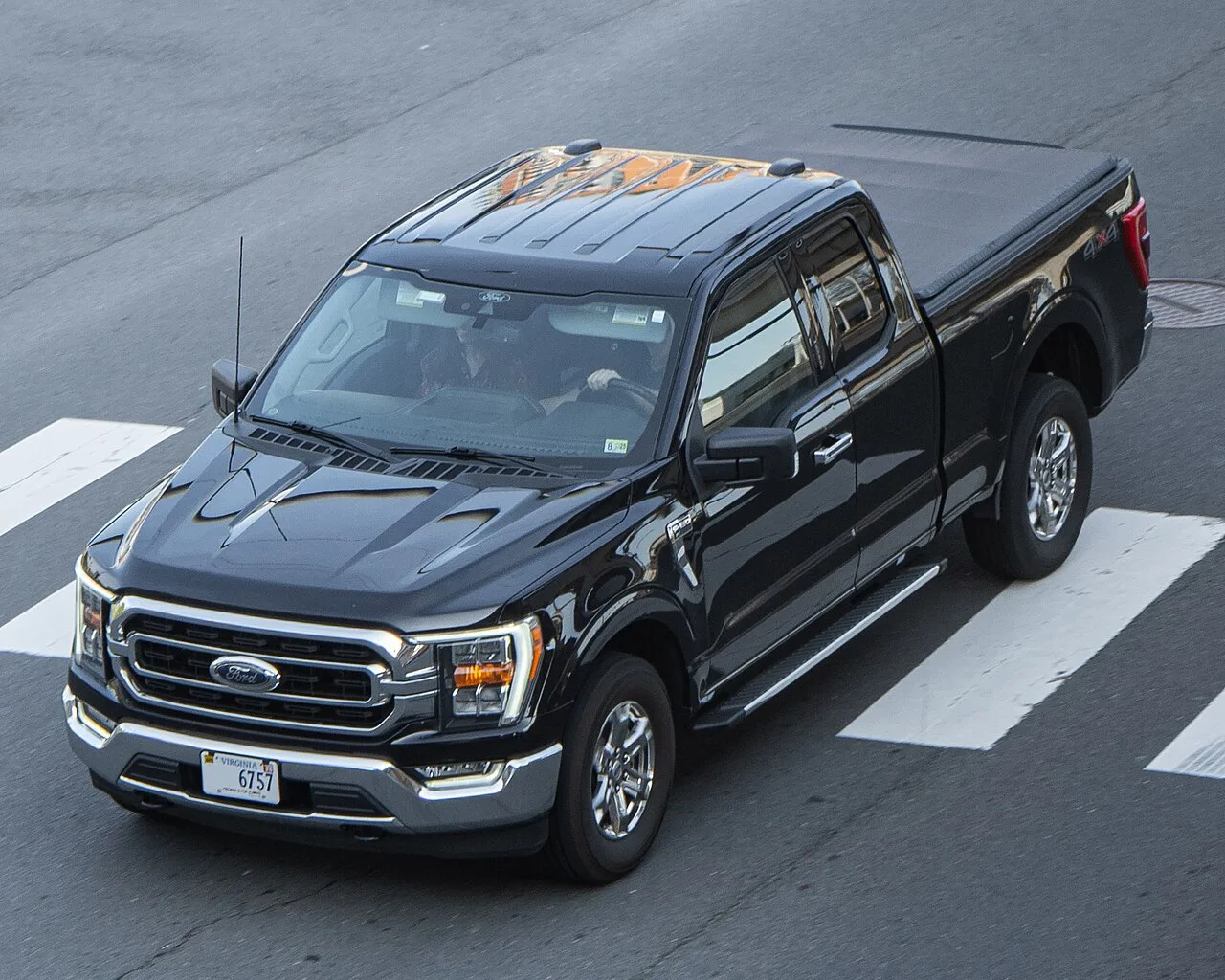
A current-generation F-150 illustrates the model family. The photograph does not establish its year, engine, towing package, or payload label. Photo: OWS Photography; CC BY 4.0. Converted to WebP by RecallWire; original framing retained.

Define the truck you need before comparing brands
Write down the heaviest job you actually expect to do. For a trailer, use its loaded weight and relevant hitch load, not merely the empty specification. For work cargo, include tools, materials, people, and equipment that stays in the truck permanently.
Then define the everyday job. Where will the truck park? How many passengers must it carry? How often will a long bed be useful, and how often will the extra length create a problem?
| Configuration item | Why it belongs in the comparison |
|---|---|
| Model year and engine | Ratings and required equipment can change |
| Cab and bed | Passenger room, load shape, vehicle length, and limits vary |
| Drivetrain and axle ratio | Capability and efficiency depend on the configuration |
| Towing and other packages | A receiver hitch alone does not establish the full rating |
| Actual load labels | Installed equipment affects remaining carrying capacity |
| Intended loaded trailer | The complete operating case must fit all applicable limits |
Use Ford’s 2026 RV and Trailer Towing Guide and Chevrolet’s 2026 Silverado 1500 trailering chart to match the configurations. Neither document justifies assigning the lineup’s maximum to every truck on a lot.
Decide which engine choices are relevant
The F-150 offers multiple powertrains, including an available PowerBoost hybrid. Chevrolet’s 2026 trailering chart organizes Silverado 1500 ratings around its listed gasoline and diesel engine configurations. Check the actual chart rather than relying on engine information from a newer-year landing page.
A powertrain label should lead to an ownership question. What are the applicable towing ratings for the truck you can buy? What does its service schedule require? Does the engine choice add equipment or capability that you will use, and what does it cost in the written quote?
If the hybrid F-150’s available onboard-power equipment interests you, confirm the exact output and installed package. Identify the tools you intend to run and their requirements. Do not assume every hybrid truck has the same electrical equipment.
For a diesel candidate, price fuel and the relevant service requirements for your usage. A favorable highway efficiency figure does not establish the lowest total cost for a short-trip household. For any engine, compare applicable EPA information and real purchase terms using the same driving assumptions.
Avoid combining one engine’s efficiency, another’s towing figure, and a third trim’s lowest price into a single imaginary truck.
Make payload the first towing calculation
Payload is the carrying capacity available for people, cargo, and applicable hitch load, subject to the truck’s documentation and other limits. Read the actual vehicle’s labels and instructions. The amount available on a heavily equipped truck can differ materially from a headline maximum.
Here is an illustrative arithmetic example, not a rating for either model:
| Assumed item | Weight |
|---|---|
| Available payload on a hypothetical label | 2,000 lb |
| Occupants | 600 lb |
| Cargo and added equipment | 200 lb |
| Hitch hardware not already accounted for | 100 lb |
| Assumed tongue load | 840 lb |
| Unallocated payload in this example | 260 lb |
Calculation: 2,000 − 600 − 200 − 100 − 840 = 260. The assumed tongue load is 12% of an assumed 7,000-lb loaded trailer. That percentage is only an example; use the actual trailer and manufacturer requirements.
This worksheet is not approval to tow. Gross vehicle, axle, combined-weight, receiver, tire, and other applicable limits still need checking. Weight-distributing equipment does not create additional vehicle rating. Have the complete intended setup evaluated using the correct documentation and measured weights where appropriate.
The exercise shows why a truck can advertise an impressive towing maximum yet leave little carrying room once a family and its belongings are aboard.
Compare configured towing capacity
Locate the row in each manufacturer’s guide that matches engine, cab, drivetrain, axle, bed or wheelbase where relevant, and required equipment. Save the row and its footnotes with the purchase quote.
Ask the dealer to identify the installed towing package and the rating for that exact truck. A rear camera, receiver, or trailer-control menu can be useful, but none independently establishes the full configured capacity.
Then compare the trucks against the same loaded trailer. Confirm the braking and hitch requirements and how the chosen accessories affect the load calculation. If you expect to tow in challenging terrain or frequently near a limit, discuss the actual use with a qualified provider rather than treating a marketing maximum as comfortable operating room.
Keep capability and cost in separate columns. A configuration that meets the job at a lower complete cost may be preferable to a more powerful option you do not need. Conversely, a low purchase price is not a bargain if the truck cannot do the intended job.
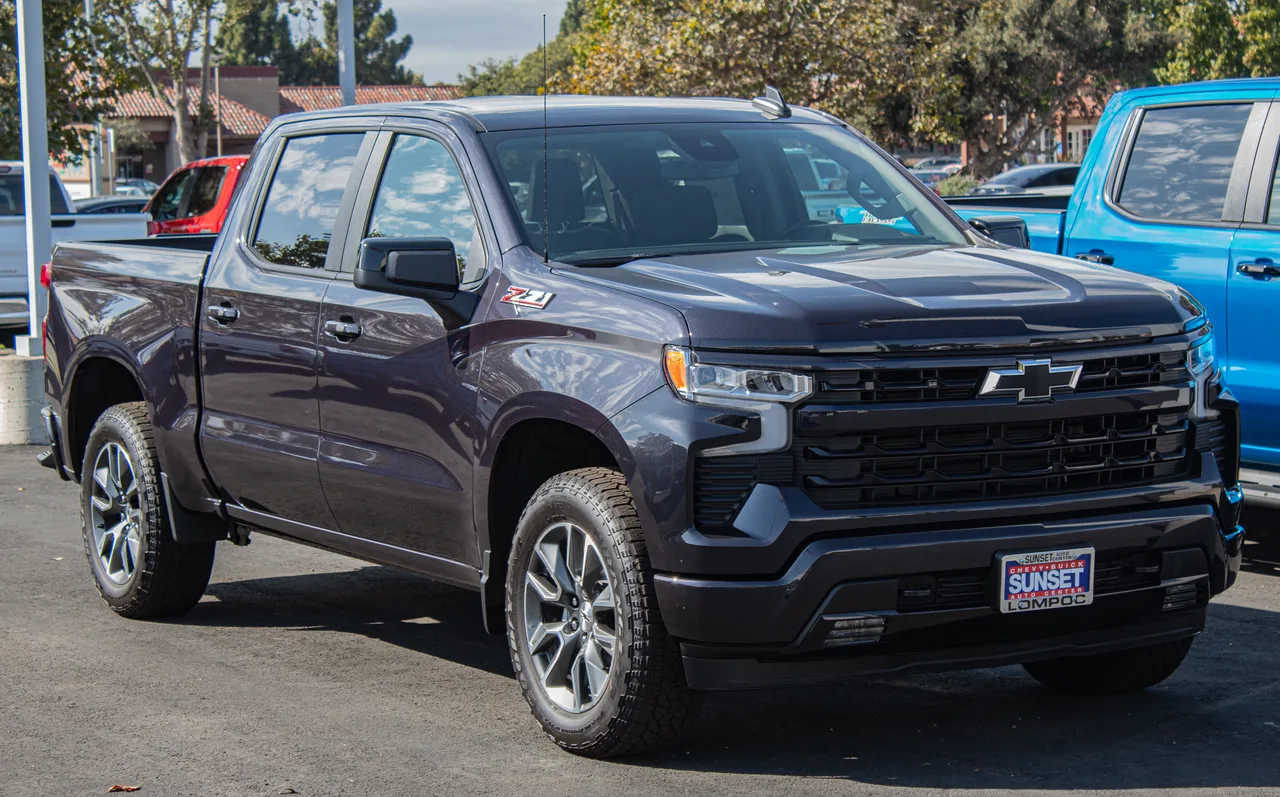
Photo: LukaCali; CC BY-SA 4.0. Converted to WebP by RecallWire; original framing retained.

Test the cab and bed together
Bring the people and representative equipment that determine whether the truck works. With a crew-cab candidate, set the front seats for the actual driver and passenger, then test rear-seat access and any child-restraint installation.
For the bed, measure the cargo rather than relying on a nominal length category. Check the usable floor, wheel-well clearance, tie-down locations, and the loading method. A long item that fits with the tailgate down still needs appropriate support and securement.
Try reaching gear near the cab, operating the tailgate, and loading something with the weight and shape you regularly handle. Step equipment and bed covers can help, but they also have prices, weight, and compatibility considerations.
Finally, simulate parking. Check length, mirror clearance, and maneuverability in the places the truck will spend time. If a large work configuration creates daily access problems, decide whether those compromises are worthwhile or whether a different cab and bed better balance the two jobs.
Check equipment without confusing convenience and capacity
Trailer-camera functions, blind-spot information, and driver assistance can improve usability, but their availability and operating limits vary. Confirm the installed functions and read the exact owner’s instructions. A feature’s presence does not increase mechanical capacity.
Assess ordinary controls too: climate settings, mirrors, wipers, and defogging. During a safe demonstration, ask how the truck reports a trailer-related fault and how to review the relevant warnings.
For independent safety information, check the applicable IIHS ratings. Cab and test qualifications matter; do not assume every body configuration is covered by a single result.
Ask about tires and replacement cost for the chosen wheels. Work, highway, and specialty tire choices may involve tradeoffs. The right equipment is the equipment that supports your actual use, not the longest options list.
Include ownership documents and recall status
Get insurance quotes for the actual VINs and itemized purchase terms. Compare the service schedules, local service access, and the tires and equipment you expect to maintain. Keep the ownership period and annual mileage equal.
For an F-150 candidate, RecallWire’s fuel-tank campaign coverage and strap-focused analysis provide a particular campaign to investigate. Check the listed scope and the actual VIN; the article is not evidence that every F-150 is affected or that a Silverado is unaffected by other campaigns.
Use NHTSA and the manufacturer for both trucks, then save remedy documentation. RecallWire’s Common Ford Issues is useful context for Ford-specific follow-up, not a direct reliability ranking against Chevrolet.
Correct labels deserve attention as well. Our Subaru weight-label analysis concerns different vehicles, but explains why documented weight information is consequential. It does not establish a label defect on either pickup here.
Photo: OWS Photography; CC BY 4.0. Converted to WebP by RecallWire; original framing retained.

Choose the complete configuration that does the job
Favor the F-150 candidate if its verified configuration meets your loads and an available Ford-specific powertrain or equipment package provides a benefit you will use. Compare the actual premium rather than treating availability as a free advantage.
Favor the Silverado 1500 candidate if its configured capacity, engine choice, cab and bed, and complete purchase terms fit the same job better. Evaluate its specific equipment and service requirements with equal scrutiny.
If both pass the capability checks, choose using the remaining evidence: cabin fit, loading convenience, service access, insurance, and final price. If either fails an essential limit, remove that configuration regardless of its brochure maximum.
The result should identify a particular truck and why it works. “This VIN has the required equipment and enough verified capacity for our loaded setup” is a buying conclusion. “Ford beats Chevy” is not a load plan.
Sources and methodology
Source review: October 6, 2026. Manufacturer specifications apply to the stated model year and configuration. Illustrative calculations are identified beside the data. This guide synthesizes published documentation; it does not report hands-on vehicle testing.
Frequently asked questions
Which truck tows more?
It depends on the exact configuration and required packages. Match the relevant 2026 guide rows and verify the actual vehicle before comparing ratings.
Does a higher towing rating solve a payload shortfall?
No. Each applicable limit must be satisfied. Occupants, cargo, accessories, and hitch load can become the deciding constraint.
Is Silverado 1500 the same comparison as Silverado HD or EV?
No. Those are separate vehicle choices with different documentation and configurations. Keep them out of a half-ton F-150-versus-Silverado 1500 worksheet.
Sources used for this guide.
- Ford. 2026 RV and Trailer Towing Guide. Accessed October 6, 2026.Source ↗
- Chevrolet. 2026 Silverado 1500 maximum trailering chart. Accessed October 6, 2026.Source ↗
- Ford. F-150 lineup. Accessed October 6, 2026.Source ↗
- EPA. Vehicle efficiency comparison. Accessed October 6, 2026.Source ↗
- IIHS. Vehicle ratings. Accessed October 6, 2026.Source ↗
- NHTSA. Recall information. Accessed October 6, 2026.Source ↗