Subaru’s 541,000-Vehicle Weight-Label Recall Explained
Subaru’s recall concerns incorrect axle-weight information on the doorjamb label. It is not a mechanical repair, but the corrected label matters when owners load their vehicles heavily.
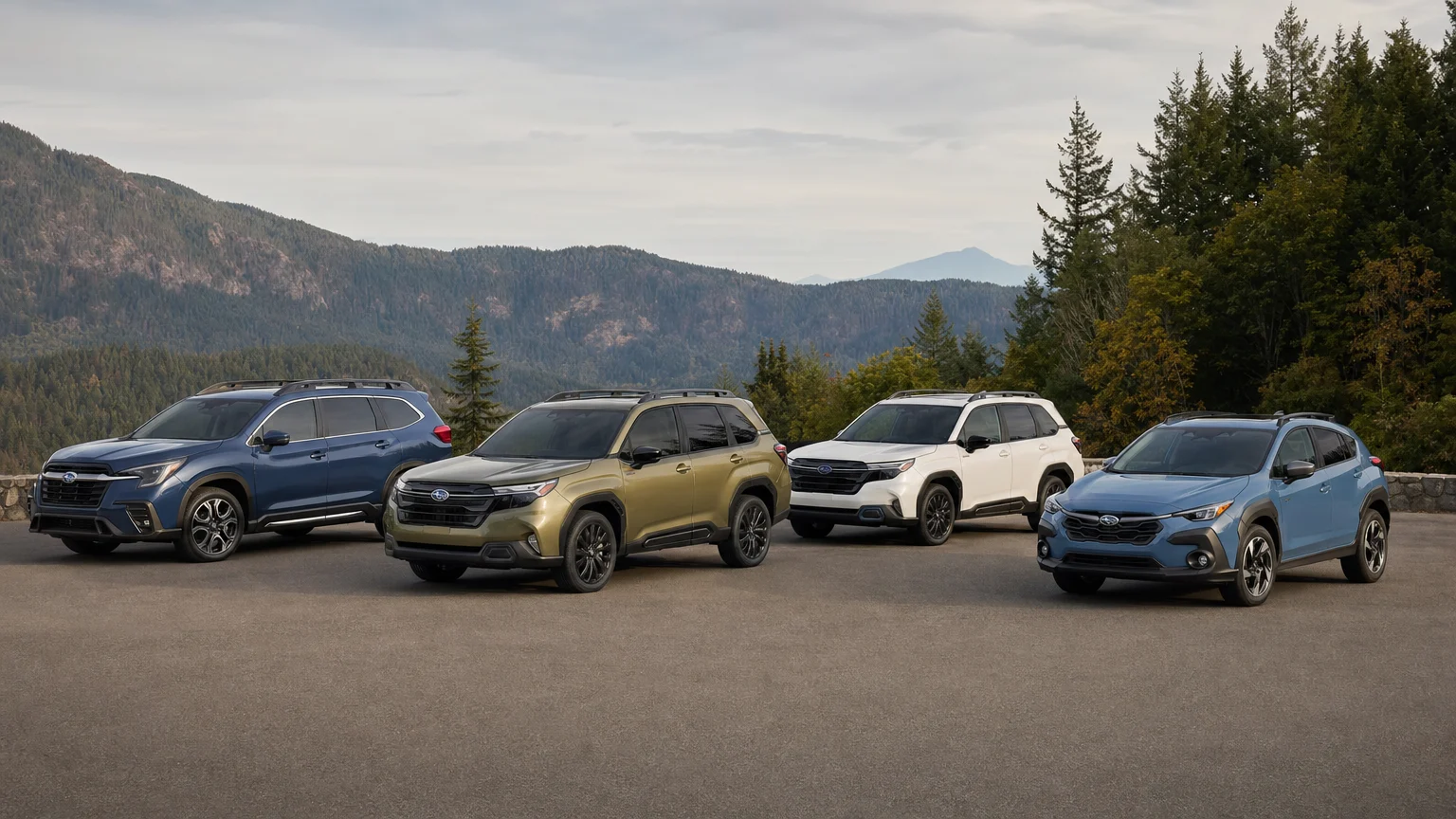
Subaru is recalling more than 541,000 vehicles in the U.S. because their federally required certification labels carry incorrect axle-weight information. The campaign covers certain 2019-2026 Ascent SUVs, 2025-2026 Forester and Forester Hybrid models, and 2026 Crosstrek Hybrid vehicles.
This is not a recall for a broken axle, suspension component or tire. The issue is the label, generally located on the driver-side doorjamb, that identifies vehicle loading information. Subaru’s specified remedy is a corrected overlay label, rather than a mechanical repair.
That makes the campaign less disruptive than many recalls, but not meaningless. Accurate axle ratings matter most when a vehicle is carrying several passengers, dense cargo, roof gear or a hitch-mounted accessory. Owners should check whether their individual vehicle is included and complete the free correction when it becomes available.
The problem is incorrect axle-load information
The affected labels list an incorrect gross axle weight rating, commonly called GAWR. GAWR is the maximum permitted load for an individual axle system. It differs from gross vehicle weight rating, or GVWR, which is the maximum allowable loaded weight for the vehicle as a whole.
This campaign also appears in RecallWire’s July 2026 vehicle recall roundup alongside the month’s other major owner-safety notices.
That distinction matters because weight is not always spread evenly. A vehicle could be below its overall weight limit while concentrating too much load at the front or rear. Passengers in the third row, cargo stacked at the back of the cabin, a loaded rear carrier or trailer-related tongue weight can all change axle loading.
Subaru told federal safety regulators that incorrect GAWR information could lead an owner to overload an axle, raising crash risk. Reporting on the recall said Subaru had not identified crashes or injuries connected to the label issue at the time of the announcement.
The recall does not mean every affected vehicle has been overloaded, nor does it establish that ordinary use creates an immediate mechanical problem. It means the factory-applied label is not the correct reference for owners making decisions near a vehicle’s loading limits.
Why a label recall still matters to owners
A doorjamb label can look like background information until a vehicle is used for a family vacation, a camping trip or a move. That is when owners may add people, luggage, coolers, bikes and other equipment without considering how the load is distributed.
The practical value of the correction is greatest for drivers who routinely use their Subaru at the heavier end of its normal mission. An Ascent used with all seating positions occupied is an obvious example. Forester and Crosstrek Hybrid owners may also need to pay closer attention when combining passengers, outdoor equipment and a loaded cargo area.
Owners should not try to derive a replacement axle limit from a similar vehicle, an online discussion or the overall vehicle-weight rating. Equipment and configuration can matter. Until the correct label is installed, a dealer can provide vehicle-specific assistance for an owner with an unusually heavy planned load.
The campaign also has relevance after the first owner sells the vehicle. The certification label remains a visible point of reference for used-car buyers, service personnel and later owners. Completing the recall helps ensure that information stays accurate over the vehicle’s life.
The remedy is simple, but owners should finish it
Subaru’s planned remedy is a corrected certification-label overlay and instructions for applying it. Owners who do not want to install the overlay themselves can have a Subaru dealer apply it at no charge, according to recall reporting.
A label replacement is far less inconvenient than a repair requiring parts, diagnostic work or a lengthy dealer visit. But it should still be completed. The corrected information is intended to replace the inaccurate factory figure, not merely serve as an optional reminder.
There is no indication in the reporting that owners must park their vehicles, stop driving them or replace tires because of this campaign. The appropriate response is more targeted: verify whether the vehicle is included, follow Subaru’s notice and use the corrected label for future loading decisions.
NHTSA recommends using a vehicle identification number, rather than model year alone, to check open recalls. That is important here because recall coverage does not necessarily include every example of a listed model and model year. NHTSA’s VIN tool shows unrepaired recalls; it does not list recalls already repaired. A blank result is not a repair-history record. Ask Subaru or the dealer for confirmation and keep the installation or service documentation.
Source update — September 16, 2026: Campaign 26V436000 (Subaru WRH-26) covers 541,237 vehicles in the July 13 amended report, up from 540,450 in the July 7 filing. NHTSA’s current record says interim letters were mailed August 27 and that another notice will follow when the remedy is available. The amended report lists a planned January 7–14, 2027 remedy-notification window; that remains a plan, not confirmation that a label has shipped. Read Subaru’s amended certification-label recall report for the campaign details.
What affected Subaru drivers should do now
Start by locating the 17-character VIN, which can be found at the base of the windshield on the driver’s side and on registration or insurance documents. Enter it in NHTSA’s recall-search tool. Subaru owners can also contact a dealer for confirmation.
Next, keep an eye out for the owner-notification materials and retain the installation instructions if Subaru mails a label overlay. Owners who prefer dealer assistance should schedule the no-cost installation rather than leaving the old label in place.
Finally, use sensible loading discipline until the corrected information is available. Avoid assuming that a cargo area that looks only partly full is necessarily light, and distribute heavy items as evenly and securely as practical. That is good practice for any vehicle, but it is especially relevant when the accuracy of axle-specific guidance is the subject of the recall.
Keep the corrected label and repair record
Subaru’s campaign is a compliance recall rather than evidence of a failed axle or suspension system. Still, the label correction has a real purpose: it gives owners accurate axle-load information before they carry a heavy combination of passengers and cargo. Check the VIN, complete the free label update and treat the corrected doorjamb information as the vehicle’s loading reference.
Sources used for this analysis.
References checked September 16, 2026.
- Associated Press. Subaru issues recall for 541,000 SUVs over label with incorrect weight rating. Accessed August 11, 2026.Source ↗
- CBS News. Subaru recalls more than 541,000 vehicles over labeling error. Accessed August 11, 2026.Source ↗
- National Highway Traffic Safety Administration. Check for Recalls. Accessed August 11, 2026.Source ↗
- National Highway Traffic Safety Administration. Subaru certification-label recall 26V436: amended July 13 report. Accessed September 16, 2026.Source ↗
Vehicle Recall Briefing: August 21, 2026
August 21, 2026 recall briefing covering Ford, Kia, Ram and other vehicles, with affected models, repair plans and dated owner-notification updates.
Vehicle Recall Briefing: August 14, 2026
August 14, 2026 recall briefing covering Ford, Lincoln, Ram and other vehicles, with affected models, repair plans and dated owner-notification updates.
Vehicle Recall Briefing: August 7, 2026
August 7, 2026 recall briefing covering Ford, Kia, Lincoln and other vehicles, with affected models, repair plans and dated owner-notification updates.