Car Safety Features Explained: What Matters When Buying
Understand car safety features, their limits, and how to verify installed equipment and crash-test results before buying a specific vehicle.
What to know first
- Confirm the safety equipment fitted to the exact vehicle, rather than relying on a model name.
- Driver-assistance features have limits and still require an attentive driver.
- Crashworthiness, crash avoidance, and equipment condition answer different safety questions.
Useful car safety features combine crash protection, crash avoidance, visibility, and clear information for the driver. Start with the exact vehicle’s installed equipment and applicable test results. Then check what each system does, when it works, and what remains your responsibility.
A feature name on a listing is only the beginning. Two manufacturers may use similar names for systems with different operating limits, and two trims of the same model may not have the same equipment. This guide helps you turn the feature list into questions you can resolve before purchase, without treating driver assistance as a replacement for an attentive driver.
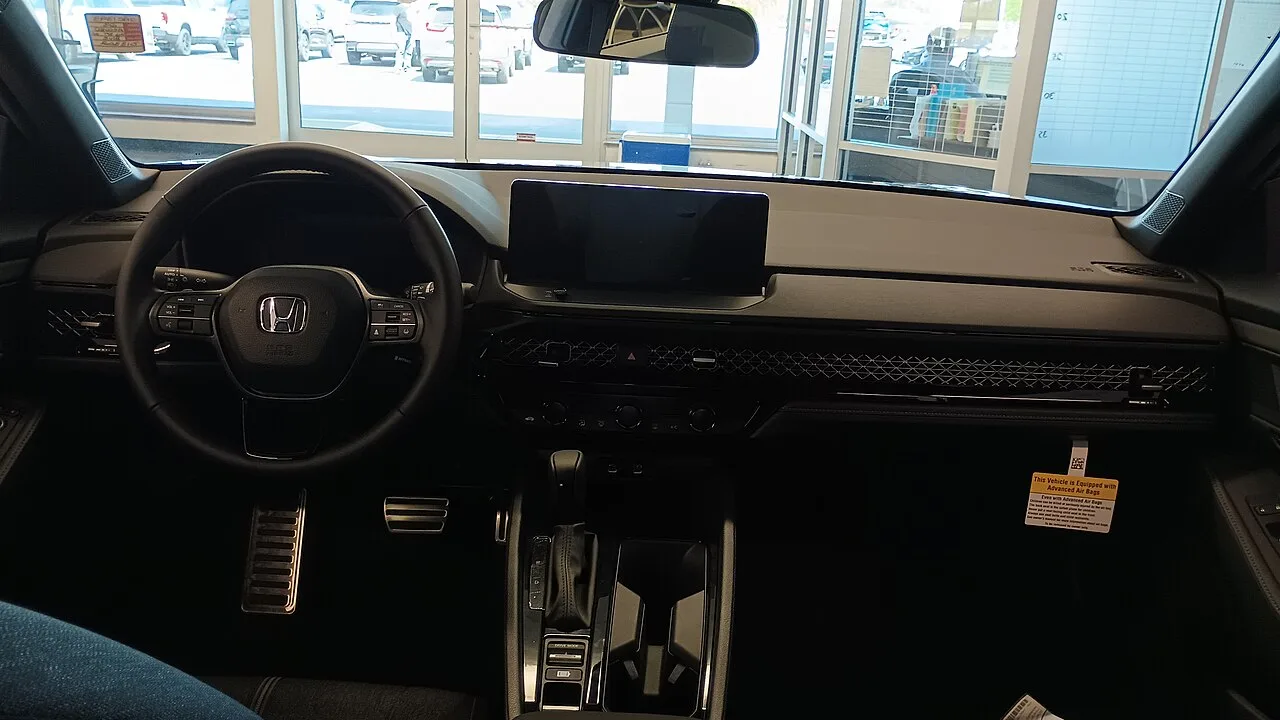
Cabin controls and warnings are part of the safety assessment. The photograph illustrates a layout, not verification of every system installed on a particular vehicle. Photo: deathpallie325; CC BY-SA 4.0. Converted to WebP by RecallWire; original framing retained.

Separate protection from assistance
Crash protection concerns what happens if a crash occurs: the vehicle structure, restraints, airbags, and seating arrangement. Crash avoidance concerns reducing the likelihood or severity of a collision. Visibility, tire condition, and readable controls support both everyday driving and emergency decisions.
The IIHS shopping-for-safety guide explains how to use safety information when evaluating vehicles. Treat ratings and equipment as complementary evidence. A long list of alerts cannot establish crashworthiness, and a strong crash-test result does not tell you whether a particular assistance option is installed.
Before comparing vehicles, write three questions: how well does this exact model protect occupants in the available tests; which assistance functions are installed; and can the driver use the car’s controls and warnings clearly? Each question needs its own evidence.
For family vehicles, add the intended restraints and occupants. A seat-belt or child-seat arrangement that does not work for your passengers is not resolved by an attractive award badge elsewhere in the brochure.
Understand the major assistance functions
NHTSA’s driver-assistance overview distinguishes warnings from systems that may intervene. That distinction should remain visible in your comparison.
| Function | Intended help | Question to ask before buying |
|---|---|---|
| Forward-collision warning | Alerts the driver to a potential frontal collision | What objects and situations can it detect? |
| Automatic emergency braking | May apply braking in a detected collision situation | What speed ranges, targets, and conditions apply? |
| Blind-spot warning | Warns of detected vehicles in adjacent areas | Is it installed, and how does it communicate? |
| Lane-departure warning or lane assistance | Warns or assists when leaving a detected lane | What markings and operating conditions are required? |
| Adaptive cruise control | Adjusts speed relative to detected traffic | What must the driver monitor, and when does it disengage? |
| Rear cross-traffic alert | Warns about detected crossing traffic while reversing | What directions and objects are within its scope? |
This table describes purposes, not guaranteed outcomes. The exact owner’s manual is the source for operating limits. A warning function and an intervention function should not be listed as if they do the same thing.
Ask for a normal, safe demonstration of controls and displays. Do not test collision-avoidance performance by approaching an obstacle deliberately. The purchase task is to confirm equipment and understand instructions, not conduct an improvised crash experiment.
Check installed equipment by trim and build
Start with the manufacturer specification table for the exact year and market. Then check the window sticker, build information, and owner documentation for the actual vehicle. Dealer listing text can be abbreviated, copied, or incomplete.
Create a short matrix with “standard,” “optional,” “confirmed installed,” and “not established.” A feature that is available somewhere in the model range does not belong in the confirmed column until you have evidence for the car you are buying.
For a used vehicle, ask about repairs that may affect cameras, sensors, or their alignment. Obtain documentation of required calibration after applicable work. Do not assume a functioning touchscreen proves that every assistance system is correctly configured.
Software versions and subscriptions can add another layer. Determine which functions are included with the vehicle, which require activation or payment, and whether terms change when ownership transfers. Pay for capabilities you can actually use, not an ambiguous promise that the hardware may support something later.
If an important feature cannot be established from the documents, resolve it before placing the order or signing the contract.
Read ratings without creating a false score
Use IIHS model-year ratings and, where applicable, NHTSA’s ratings for the correct vehicle. Check generation, model year, test category, equipment qualifications, and any production-date conditions.
Different tests examine different situations. Do not convert a categorical result into a homemade numerical “safety score,” average it with an unrelated rating scale, or assume an award means every category was evaluated identically.
A redesigned vehicle deserves particular care. An outgoing generation’s result is not automatically evidence for the new one. Likewise, a missing result means that particular evidence is missing; it does not by itself prove poor performance.
RecallWire’s analysis of NHTSA’s pedestrian test explains why test scope and applicability matter. Use that context when reading new evaluations rather than assuming a familiar badge covers every pedestrian scenario.
For a comparison worksheet, keep the original category labels and link the results. This makes the evidence easier to check and avoids presenting more certainty than the testing provides.
Assess airbags and restraint arrangements
Airbags belong to a system that includes the vehicle’s structure, seat belts, seating position, and occupant detection where fitted. Their presence does not remove the need to use the restraints correctly or follow the manual’s instructions.
Check the seating and child-restraint setup you actually need. Read the vehicle and child-seat instructions together. Confirm the appropriate locations and attachment method rather than assuming a seat fits correctly because it fits physically through the door.
Occupant-detection equipment can also be the subject of a safety campaign. RecallWire’s Kia EV9 occupant-detection campaign concerns specified 2025–2026 vehicles. It is an example of why equipment and campaign scope matter, not a finding about all SUVs or all airbag systems.
For a vehicle with collision or interior repair history, obtain appropriate inspection and repair documentation. A VIN recall search answers a campaign question; it is not a complete assessment of replacement components or repair quality.
Include visibility, tires, and ordinary controls
Sit in the actual driving position. Adjust the mirrors and steering wheel, check the sight lines, and assess whether roof pillars or cabin fittings obstruct views you need in your normal driving. Camera views are useful information, but you still need to understand their field of view and limitations.
Try the defogger, headlights, wipers, hazard lights, and frequently used climate controls while parked. A control that requires a distracting search is a daily-use issue even when the vehicle offers sophisticated assistance.
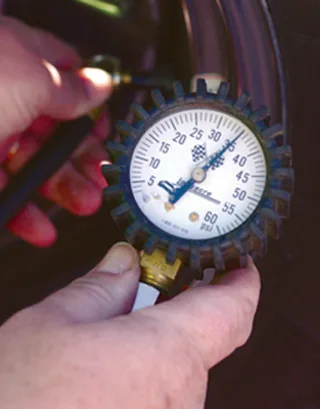
Tires deserve the same attention as electronics. Read NHTSA’s tire guidance and inspect the selected vehicle’s tires and recommended pressures. A tire-pressure warning is not a complete condition report. RecallWire’s Jeep warning-system campaign supplies a specific example of a monitoring fault, with its own limited applicability.
For night driving, consult the applicable headlight assessment when available and check installed equipment. For a used purchase, determine whether lamps or windshields were replaced and whether the required work was performed correctly. Physical condition remains relevant alongside published specifications.
Photo: (U.S. Air Force photo by Airman Frank Snider); Public domain. Converted to WebP by RecallWire; original framing retained.


Understand assistance limits before daily use
Read the manual’s descriptions of conditions that can affect sensing and operation. Visibility, markings, obstructions, and operating speed may matter differently for different systems. Do not assume an alert will appear in every situation involving a hazard.
Adaptive cruise control and steering assistance need particular clarity. Confirm where the functions may be used, what attention or hands-on requirements apply, and how the vehicle communicates an unavailable or disengaged state. A system’s marketing name does not establish autonomous driving capability.
Ask yourself whether the warnings are easy to distinguish. Can you tell a lane alert from a collision warning? Can you recognize a system fault? Learn those displays in the owner’s documentation and a parked demonstration before relying on familiarity during a busy trip.
Avoid judging a system only by how rarely it interrupts a test drive. A quiet drive does not show what it would do in an emergency. Your assessment should rest on documented functions, applicable testing, and whether you can operate it correctly.
Finish with a vehicle-specific safety check
Check outstanding recalls through NHTSA and the manufacturer, then confirm the instructions and any remedy documentation. RecallWire’s VIN search guide explains the scope of that lookup.
Software-related safety remedies need completion verification too. The Rivian camera-recall analysis is a specific example; it should not be treated as evidence about unrelated camera systems.
Before purchase, save the equipment record, rating links, inspection findings if used, and applicable campaign documentation. Identify any unanswered requirement that would change your decision. An uncertain essential feature deserves more attention than a long list of optional conveniences.
Choose the vehicle with appropriate documented protection, equipment you understand, and a seating and visibility arrangement that works for you. That is a stronger foundation than choosing by the number of safety-feature names in an advertisement.
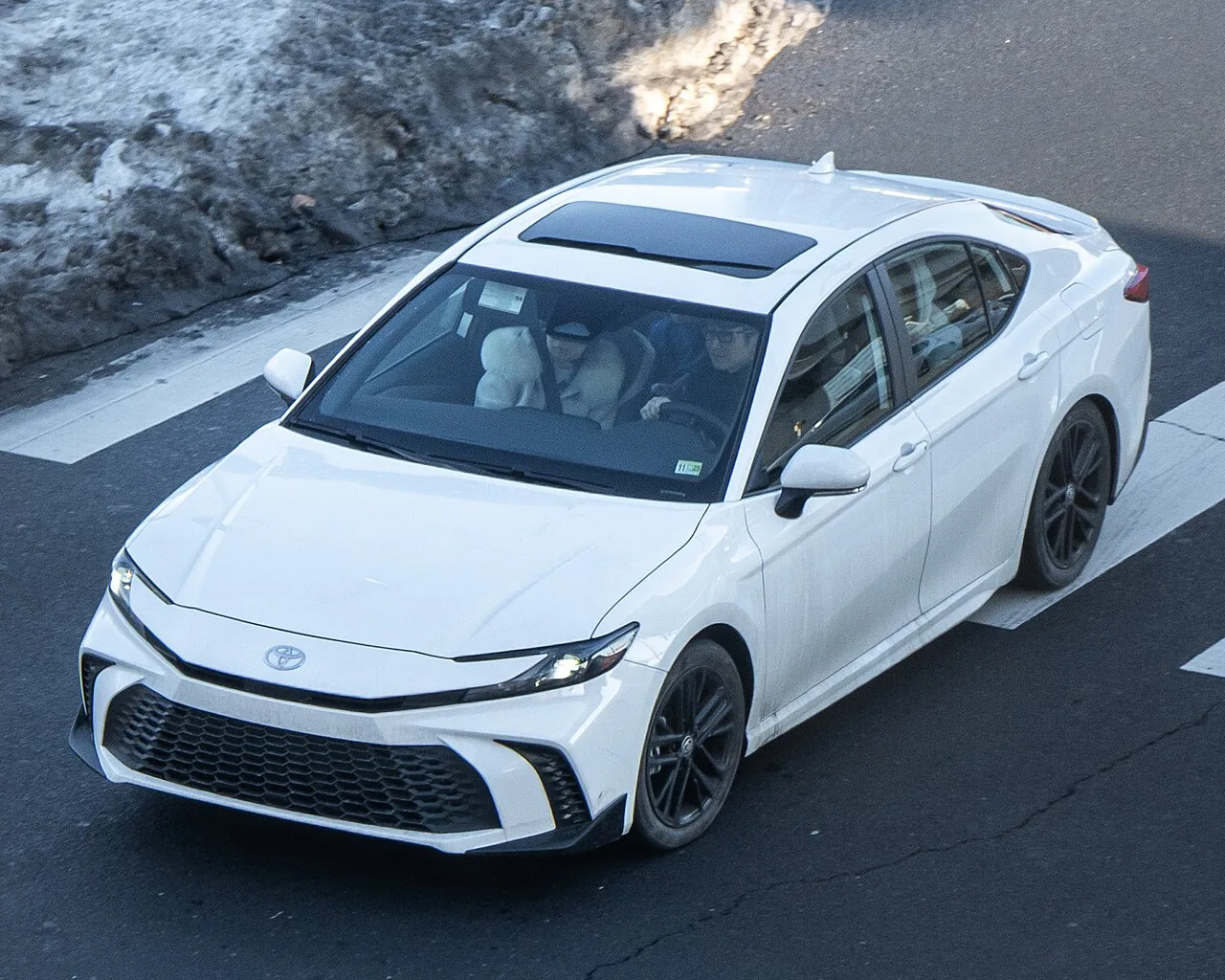
Photo: OWS Photography; CC BY 4.0. Converted to WebP by RecallWire; original framing retained.

Sources and methodology
Source review: October 6, 2026. Manufacturer specifications apply to the stated model year and configuration. Illustrative calculations are identified beside the data. This guide synthesizes published documentation; it does not report hands-on vehicle testing.
Frequently asked questions
Does automatic emergency braking prevent every crash?
No. Its operation has defined limits and depends on the particular system and conditions. Read the exact manual and remain responsible for driving.
Does an available feature mean my trim has it?
No. Confirm installation on the actual vehicle using manufacturer and build documentation. “Available” can describe an option elsewhere in the lineup.
Can I compare all safety ratings as one number?
Different tests and rating categories should retain their own meanings. Compare applicable results directly and preserve the category labels, qualifications, and source links.
Sources used for this guide.
- NHTSA. Driver-assistance technologies. Accessed October 6, 2026.Source ↗
- NHTSA. Vehicle ratings. Accessed October 6, 2026.Source ↗
- IIHS. Vehicle ratings. Accessed October 6, 2026.Source ↗
- IIHS. Shopping for safety. Accessed October 6, 2026.Source ↗
- NHTSA. Tire safety and maintenance. Accessed October 6, 2026.Source ↗
- NHTSA. Recall information. Accessed October 6, 2026.Source ↗