NHTSA’s New Pedestrian Test Is Useful—With a Catch
Federal pedestrian-protection results now give 2027-car shoppers a new safety signal, but the first list is a pass/fail screen, relies initially on manufacturer data and can vary by trim.
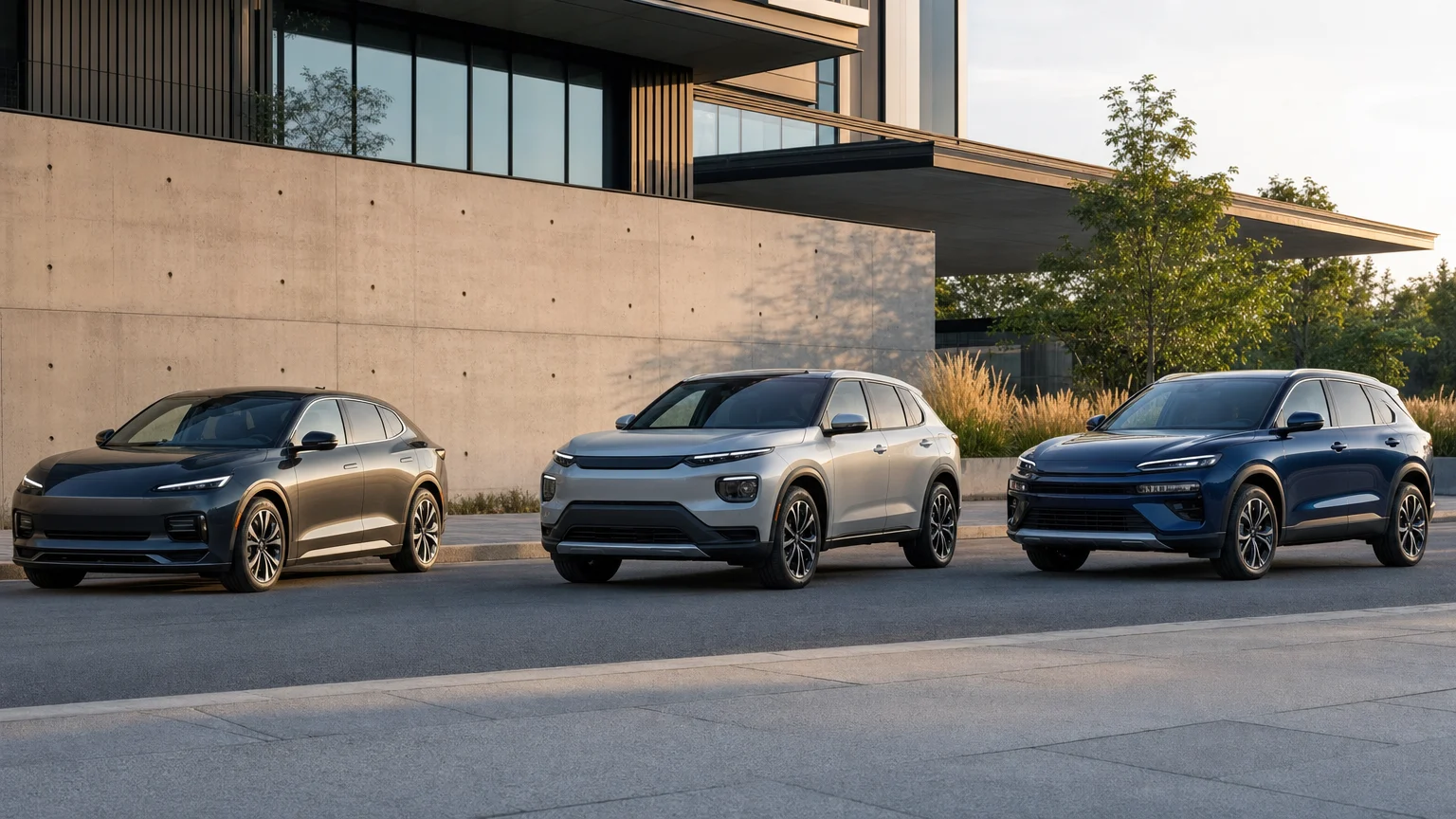
NHTSA has added something genuinely new to its familiar 5-Star Safety Ratings: an assessment of how the front of a vehicle may protect a person outside it in a collision. On September 18, the agency said 102 model-year 2027 vehicle models from 10 manufacturers met its inaugural pedestrian-protection performance criteria.
That is a meaningful change for car shoppers. Yet the early results should be read as a starting point rather than a league table. The new indicator is a minimum-threshold, pass/fail assessment—not a score that ranks one passing vehicle against another. Results are also still being added, and the designation may depend on the specific trim. The practical lesson is simple: shoppers should look up the exact 2027 vehicle configuration they are considering, not assume a badge or model name settles the question.
What NHTSA is measuring—and what it is not
The assessment concerns crashworthiness pedestrian protection: what may happen after the front of a vehicle strikes a pedestrian. It is distinct from crash-avoidance technology such as pedestrian automatic emergency braking, which is intended to prevent a collision or reduce its speed.
NHTSA’s test program evaluates injury risk to the head, upper legs, lower legs and knees. It uses child and adult headform impacts on the hood and windshield area, upper-leg impacts at the hood’s leading edge, and full lower-limb impacts at the bumper. The underlying program uses impactors representing those body regions, with the vehicle prepared and tested at defined points across its front end.
That distinction matters because a vehicle can be well equipped to detect pedestrians but still have a front-end design that performs differently when a collision cannot be avoided. Conversely, a favorable physical-impact assessment is not evidence that a vehicle’s automated braking will react correctly in every road, lighting or weather condition. For a complete safety view, buyers should consider this new result alongside the vehicle’s conventional crash ratings and its separate driver-assistance evaluations.
The agency’s approach reflects a broader safety reality: a vehicle’s safety performance is not limited to protecting its own occupants. But this is not yet an overall pedestrian-safety star rating, and it should not be treated as one.
A pass is useful, but it does not identify the best performer
NHTSA has set the initial line at 21.6 out of 36 available points, or 60 percent, across the head, upper-leg and lower-leg tests. A vehicle that clears that mark is listed as meeting the performance criteria. The agency deliberately chose this threshold method while it develops a more detailed comparative rating system.
For a consumer, that makes the result easy to understand: it identifies vehicles that meet the agency’s current minimum performance bar. What it cannot say is how far above the bar a particular model sits, or whether two listed vehicles provide the same margin of protection in different impact areas.
That limitation is especially important in a market where shoppers often use safety ratings to distinguish among closely matched crossovers, sedans and pickups. Two vehicles may both carry the new pedestrian-protection designation while reaching it through different balances of head, upper-leg and lower-leg performance. NHTSA’s current public result does not turn those differences into an intuitive consumer-facing ranking.
The result is still valuable. Until now, US shoppers had little standardized, federally presented information on front-end pedestrian crashworthiness. But the right reading is “meets NHTSA’s initial criteria,” not “is the safest vehicle for pedestrians.”
The first results are incomplete and configuration-specific
The September release is an inaugural wave, not a finished census of every 2027 vehicle. NHTSA says a yellow box on a vehicle’s ratings page will identify models that meet or do not meet the criteria, as well as results that are pending or not submitted. That is a critical distinction: an unavailable result is not the same as a failed result.
Independent review of the live ratings data also found that some qualifying model lines have different outcomes across trims. The 2027 Kia Telluride, for example, has qualifying versions but not every listed configuration meets the criteria. Ford’s Explorer appears among the qualifiers, while results for several other Explorer trims remain unavailable. This makes model-level headlines potentially misleading for a buyer choosing between trim packages.
There is another reason to avoid treating the early list as final. NHTSA’s program allows manufacturers to submit testing data, which the agency reviews. NHTSA plans verification testing on selected vehicles and will use its own tests for certain upper-leg and lower-leg impacts, plus selected head-impact locations. This structure can get useful information to buyers faster, but it also means the program depends initially on data submissions and ongoing federal oversight rather than full agency testing of every vehicle before publication.
That is not a flaw unique to this rollout; it is the program design. It does, however, reinforce the need to revisit the NHTSA listing close to purchase rather than relying on an early news report or a dealer’s broad claim about a model line.
How shoppers should use the new safety signal
For buyers comparing 2027 vehicles, the new rating is best used as a filter and a prompt for better questions. First, search the precise make, model and configuration on NHTSA’s ratings site. Confirm whether the pedestrian-protection result says it meets the criteria, does not meet them, or has no available result.
RecallWire’s NHTSA source guide explains how official ratings, recall records, complaints, and investigations answer different safety questions.
Second, do not substitute this result for the overall 5-Star rating. Occupant crash protection, rollover resistance and crash-avoidance features remain separate parts of the shopping decision. Families and frequent highway drivers may place greater weight on rear-seat protection, side-impact performance or driver-assistance behavior; urban drivers may reasonably give extra attention to pedestrian protection and pedestrian automatic braking.
Third, avoid assuming that an SUV, EV or luxury badge predicts the outcome. The assessment is about the tested front-end design and configuration, not powertrain type or price. A redesign, different bumper treatment or off-road-oriented trim can matter more than the nameplate itself.
Finally, use the result as one reason to keep vehicle safety research current. The 2027 data set is still evolving, so buyers who will not take delivery for months may see a different or more complete listing later in the model year.
A promising addition that needs careful reading
NHTSA’s first pedestrian-protection results fill a long-standing gap in US new-car safety information. They move attention beyond the people inside the vehicle and give buyers a standardized way to identify 2027 vehicles that meet a defined front-end injury-risk threshold.
But the first-round label is neither a comprehensive ranking nor a permanent verdict on an entire model line. It is an evolving, configuration-sensitive pass/fail signal. For now, its greatest value is practical: check the exact vehicle, pair the result with the rest of NHTSA’s safety information, and recognize that pedestrian safety involves both avoiding a crash and reducing harm when one occurs.
Sources used for this analysis.
- National Highway Traffic Safety Administration. Trump’s Transportation Department Releases First-Ever Pedestrian Safety Test Results for 2027 Vehicle Models. Published September 18, 2026. Accessed September 23, 2026.Source ↗
- National Highway Traffic Safety Administration. New Car Assessment Program Final Decision | Crashworthiness Pedestrian Protection. Published November 18, 2024. Accessed September 23, 2026.Source ↗
- Road & Track. NHTSA Says 102 Cars Meet Its New Pedestrian Safety Standard, But There’s a Catch. Published September 21, 2026. Accessed September 23, 2026.Source ↗