Lucid-Uber Robotaxis Go Driverless, but Not for Hire
Nuro’s Bay Area tests mark real progress. Passenger-service permits and Lucid’s fleet contracts explain why commercial scale remains a separate test.
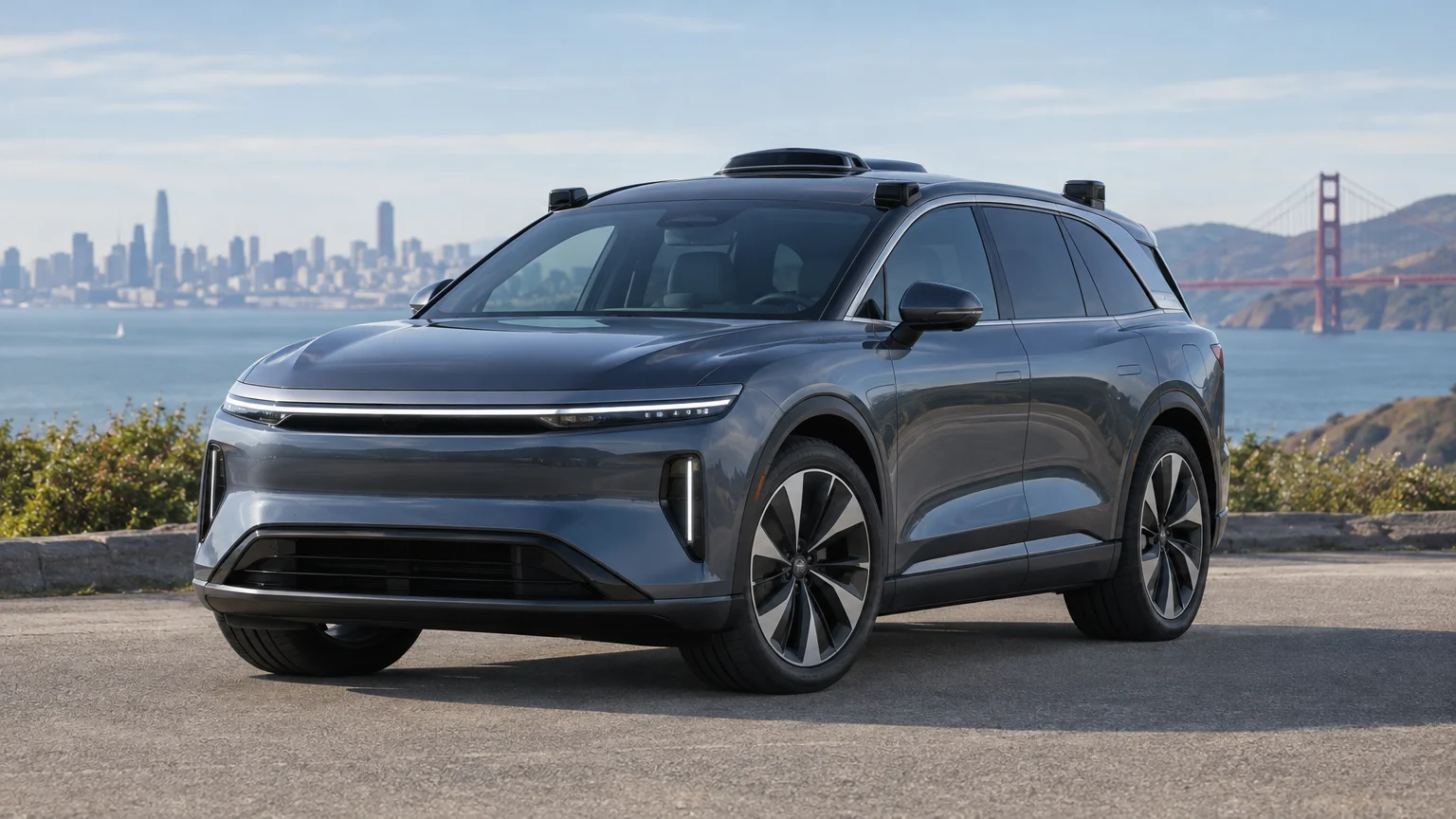
Lucid, Nuro and Uber announced November 24 that their Gravity-based robotaxis have begun public-road testing without an onboard safety driver in the San Francisco Bay Area. Public service remains targeted for the first quarter of 2027; this announcement does not make the vehicles available for hire.
The distinction matters beyond launch-date wording. California’s records separate permission to test a driverless vehicle from permission to operate a paid passenger service. Meanwhile, Lucid’s securities filing shows that the partnership’s large vehicle commitment extends into a future product cycle. Together, those documents describe meaningful technical progress, not a commercially deployed fleet.
Driverless testing has a defined map and speed limit
The companies identify Palo Alto, Mountain View, Los Altos and Sunnyvale as the initial driverless testing cities. California DMV’s published driverless-testing list includes the Lucid Gravity under Nuro’s authorization.
That authorization covers Santa Clara and San Mateo counties, allows day-and-night operation and specifies speeds up to 45 mph. Permitted conditions include dry or wet pavement, light rain and light-to-moderate fog. These boundaries describe where and under what conditions the system may be tested; they are not evidence of unrestricted capability.
For prospective riders, the implication is straightforward: a Bay Area milestone should not be read as coverage of every Bay Area journey. The published testing authorization does not establish a freeway-capable service or a regionwide pickup network. An eventual passenger service could also have operating boundaries narrower than the vehicle’s testing authorization.
Passenger permits remain the commercial dividing line
The CPUC permit table cited for this report lists Nuro under the Drivered Pilot program, rather than Driverless Deployment. That is a passenger-service classification, separate from DMV’s authorization for driverless vehicle testing. The two records therefore describe different permissions, not contradictory accounts of whether Nuro can remove a safety driver during testing.
The California Public Utilities Commission explains that its pilot programs do not allow fare collection. Deployment programs permit fares, and applicants must also obtain the corresponding DMV deployment authorization. Driverless passenger-service applicants must submit a Passenger Safety Plan. A testing milestone cannot substitute for those commercial-service approvals.
Nuro operating chief Andrew Chapin told Axios that the launch moved from late 2026 while product work and final permitting continued. The first-quarter 2027 target should therefore be treated as a company timetable, not a guaranteed opening date.
For consumers, the useful launch signal is passenger-service authorization followed by an actual booking offer with a defined service area. Another successful vehicle test would demonstrate progress, but would not by itself establish that paying riders can use the service.
The 35,000-vehicle commitment is not a launch fleet
Lucid’s November 9 quarterly filing provides an important check on the partnership’s scale. It describes an aggregate Uber purchase commitment of at least 35,000 modified Gravity and Midsize vehicles, not 35,000 robotaxis already delivered or ready to accept passengers.
The structure is more revealing than the headline total. The original agreement covered at least 20,000 Gravity vehicles. A subsequent agreement covers at least 25,000 Midsize-platform robotaxis over six years following their production start, targeted for late 2028. Offset provisions bring the aggregate commitment to at least 35,000; simply adding the two agreements would overstate the minimum.
Lucid also warns that realizing the agreements’ benefits depends on volume, specifications, quality, timely fulfillment and Nuro’s performance. Those are substantive execution conditions, not evidence that the commitment has disappeared.
Our reading is that the arrangement gives Lucid a potential fleet customer extending beyond Gravity, but the commercial opportunity must be evaluated through successive production and operating milestones. A multiyear purchasing commitment is a different measure from vehicles deployed, passenger trips completed or profitable service. The testing announcement does not establish those commercial outcomes.
This is a fleet vehicle, not a retail autonomy upgrade
The robotaxi’s connection to a familiar SUV should not obscure its specialized equipment. Nuro describes cameras, lidar and radar integrated into the body and a roof-mounted Halo module, along with dedicated autonomous-driving computing hardware. The Halo also displays information intended to help passengers identify their ride. These are company descriptions of the robotaxi configuration, not an independent assessment of its performance.
Nuro also describes configurations for up to six passengers and screens that allow riders to contact support or request a pull-over, alongside cabin controls. The practical design problem is therefore broader than steering and braking: passengers need to identify, use and obtain help from a vehicle without a driver serving as their first point of contact.
Nothing in this fleet announcement establishes equivalent driverless capability for a privately owned Gravity. Lucid’s filing specifically describes vehicles modified with autonomous-driving hardware and other features for the Uber program. Retail buyers should not interpret the robotaxi milestone as an announced upgrade for their own vehicles.
Safety evidence must stay specific to the operation
Nuro’s safety materials describe simulation, closed-course trials, supervised road testing and continued performance monitoring. They also explain that requirements and metrics are developed for the selected vehicle platform and operational conditions. These are descriptions of the company’s validation process, not an independent finding that this robotaxi is safer than a human driver.
That platform-specific approach is important when interpreting broad corporate safety claims. Nuro’s safety page advertises more than two million autonomous miles without an at-fault incident, but does not identify that headline figure as mileage accumulated by this newly driverless Gravity operation. It should not be presented as such.
For judging the next phase, we would prioritize clearly identified Gravity driverless mileage, incident reporting and operating conditions over a blended companywide total. Those measures would help readers assess the particular service within its actual limits. Neither a corporate mileage total nor permission to begin testing answers that operational question on its own.
A real milestone, with commercial proof still ahead
Removing the safety driver advances the Lucid-Nuro-Uber program, but testing permission, passenger-service approval and fleet purchasing remain separate facts. The first-quarter 2027 service target is still a company plan, not evidence of a service available today.
For riders, the next useful evidence is an authorized, bookable service with explicit geographic limits. For the industry, it is the conversion of long-term commitments into delivered vehicles and sustained operations. Until then, this is a significant driverless-testing development, not proof of commercial scale.
Sources used for this analysis.
- Nuro. Nuro, Lucid, and Uber Begin Driverless Testing on Public Roads in the San Francisco Bay Area. Published November 24, 2026. Accessed November 25, 2026.Source ↗
- California Department of Motor Vehicles. Autonomous Vehicle Permit Holders. Accessed November 25, 2026.Source ↗
- California Public Utilities Commission. Autonomous Vehicle Program Permits Issued. Accessed November 25, 2026.Source ↗
- Lucid Group. Form 10-Q for the Quarterly Period Ended September 30, 2026. Published November 9, 2026. Accessed November 25, 2026.Source ↗
- Nuro. Nuro-Lucid-Uber Robotaxi. Accessed November 27, 2026.Source ↗
- Nuro. Safety. Accessed November 27, 2026.Source ↗
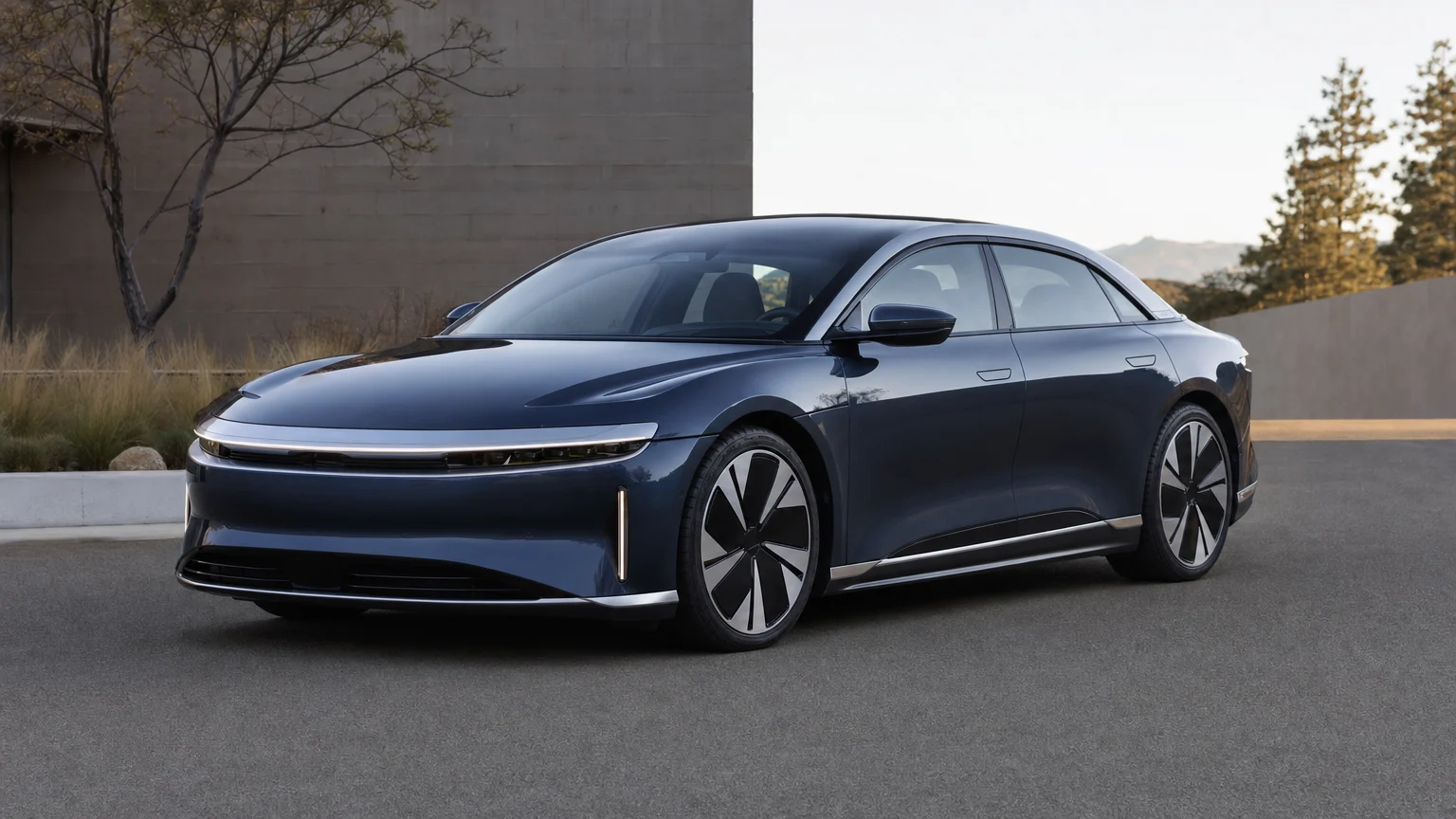
Lucid Air Recall Shows the Limits of an OTA Safety Fix
A recall covering 27,185 Lucid Air sedans pairs a fire warning with an over-the-air remedy. For owners, the important question is whether the update has actually finished.

August 2026 Vehicle Recall Roundup: Owner Guidance
August 2026 recall briefing covering Alfa Romeo, BMW, Chrysler and other vehicles, with affected models, repair plans and dated owner-notification updates.
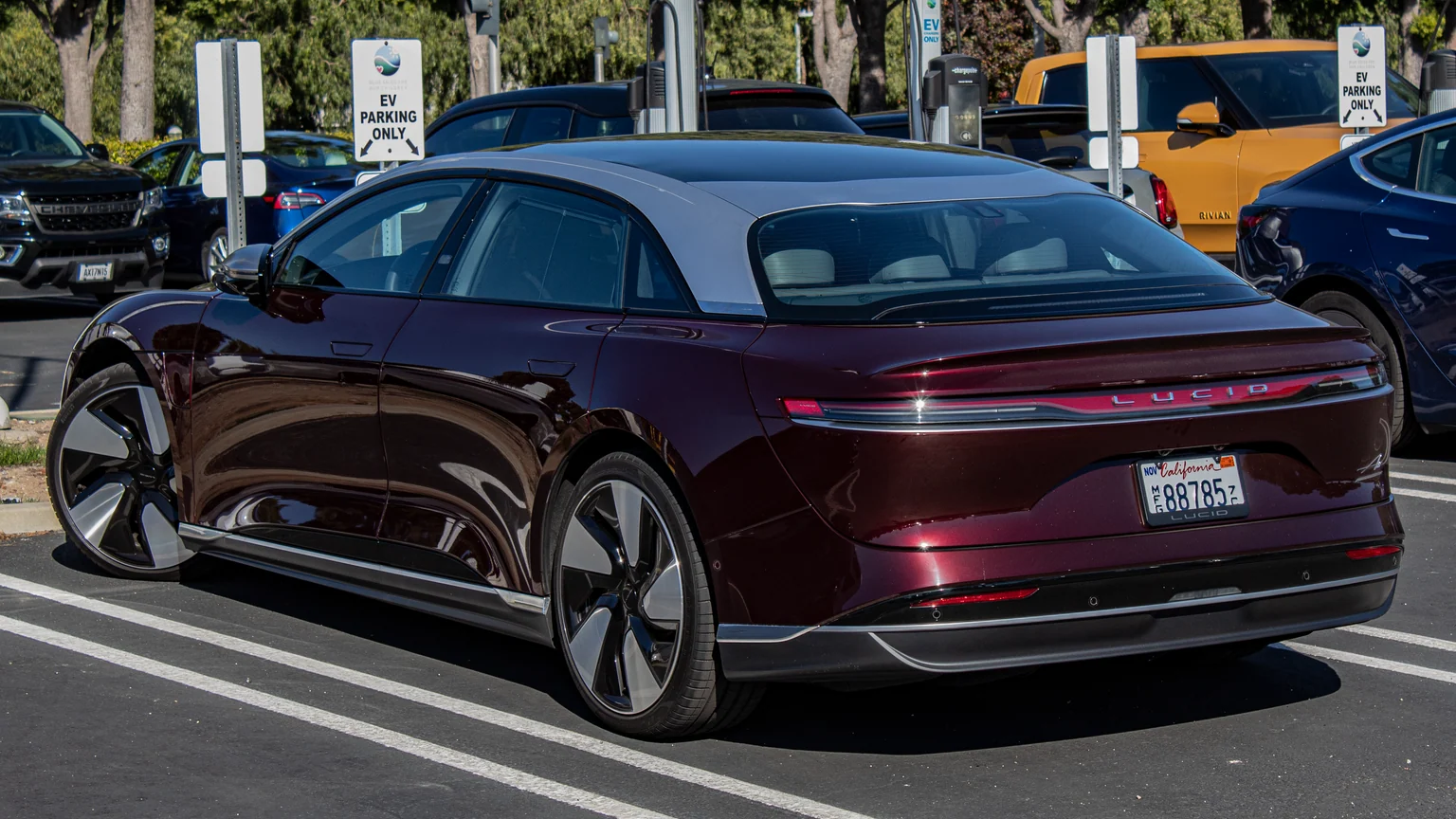
2022–2026 Lucid Air recall: park outside until software update
Lucid recalls 27,185 Air vehicles for a lighting-circuit fire risk. Owners should park outside until the free recall software update is completed.