Lucid Air Recall Shows the Limits of an OTA Safety Fix
A recall covering 27,185 Lucid Air sedans pairs a fire warning with an over-the-air remedy. For owners, the important question is whether the update has actually finished.
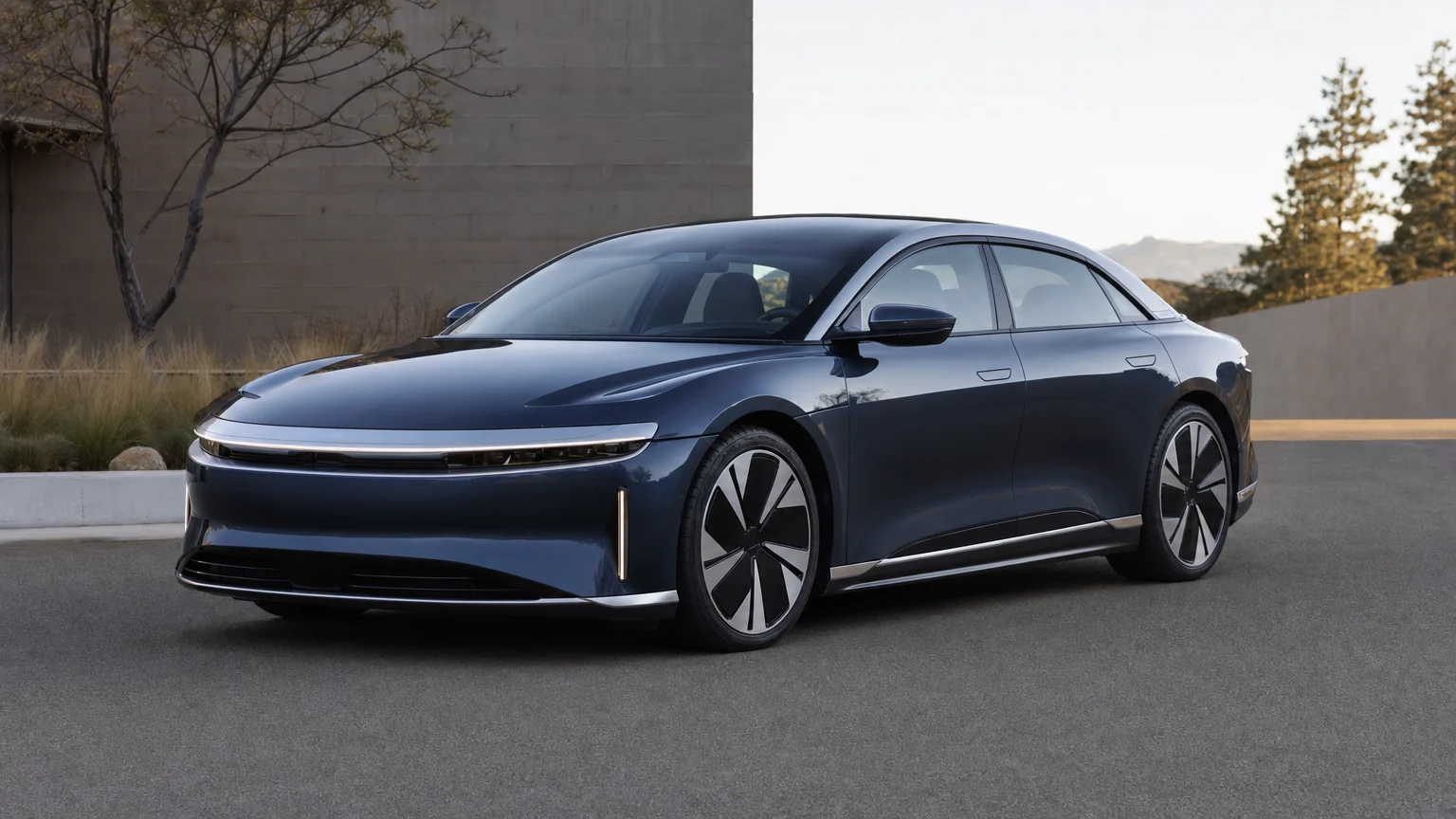
Lucid is recalling 27,185 model-year 2022-2026 Air sedans for a potential fire risk tied to an exterior-lighting circuit. Lucid’s filing says inadequate overcurrent protection can allow the circuit to overheat. The condition can also affect exterior lighting, including the center high-mounted stop lamp, creating a separate visibility concern while the vehicle is being driven.
The immediate guidance is more consequential than the usual recall notice: affected vehicles should be parked outside and away from structures until the remedy has been completed. Lucid’s specified remedy is an over-the-air software update, rather than a conventional parts replacement. That combination makes the campaign a useful test of a central promise of software-defined vehicles: remote repairs can reduce inconvenience, but safety still depends on the repair reaching—and finishing on—the individual car.
Source update — September 16, 2026: Lucid’s August 20 filing for campaign 26V540000 identifies software 2.10.0 or later as the remedy. It says 20,719 vehicles had already received that version or later when the report was prepared and 6,466 had not. These are filing-time figures, not a current completion count. Notices to owners still needing the update are planned for October 16, 2026.
The safety instruction comes before the notification letter
Owners should not interpret the availability of an over-the-air remedy as proof that their own Air has been repaired. A recall remains open for a specific vehicle until the remedy has been applied successfully. That distinction matters especially when the interim instruction is to park outside and away from buildings.
The reported defect concerns a low-voltage exterior-lighting circuit, not the Air’s traction battery. But the source of a fire risk does not make the interim precaution less important. Electrical overheating can pose a risk when a vehicle is parked, while a lighting failure can affect how well the vehicle is seen on the road.
The practical first step for an Air owner is a VIN-level recall check. NHTSA’s recall tools and Lucid can identify whether a particular vehicle is included. An owner should then review the vehicle’s update status and seek direct assistance from Lucid if the update is unavailable, incomplete, or unclear. Until that status is confirmed, the cautious approach is to continue following the parking guidance.
The 27,185 figure is the population of potentially affected vehicles in the recall, not a count of owners, fires, or vehicles known to have failed.
Why a lighting-circuit recall can involve fire and crash risk
This recall is notable because one electrical issue can produce two different safety consequences. According to Lucid’s Part 573 report, insufficient overcurrent protection may allow the exterior-lighting circuit to overheat, which creates the fire concern behind the park-outside instruction. The same underlying problem can also result in loss of front lighting or the center high-mounted stop lamp.
Those outcomes matter in different ways. A fire concern affects where an owner should park and whether the vehicle should be left near a home, garage, or other structure. Lighting loss is a road-safety issue: forward illumination can be important for the driver’s visibility, while a brake light helps following traffic recognize deceleration.
Owners should not use the absence of a warning message or visible lighting problem as evidence that their vehicle is unaffected. Recalls address a condition that may exist in a defined population, not only vehicles that have already displayed a symptom. A VIN check and remedy confirmation are more reliable than an informal inspection of the lamps.
An OTA remedy changes the logistics, not the safety obligation
A remote software update can be a meaningful advantage when it is appropriate for the defect. It can spare owners a service-center trip, eliminate scheduling delays, and let an automaker distribute a correction across a broad vehicle population without waiting for replacement parts. For a company with a comparatively small retail and service footprint, those benefits are especially meaningful.
RecallWire’s recall repair guide explains why owners should verify that a remedy is complete rather than treating software availability as completion.
There is, however, a last-mile limitation. An update has to be delivered, accepted by the vehicle, installed, and completed. Connectivity, vehicle settings, software state, and owner attention can all affect that process. A message saying that an update is available is not the same as confirmation that the safety recall remedy is active on the car.
That is why the park-outside guidance changes the owner’s decision. For a minor convenience update, a delayed installation may be largely harmless. For a safety recall with an interim fire precaution, delay has a different cost. Lucid owners should treat verification of the completed update as the relevant milestone, rather than assuming that the remote nature of the remedy resolves the issue automatically.
This does not mean over-the-air recalls are inherently less effective than dealer repairs. In many cases they may be faster. It means manufacturers need clear status reporting and practical support for vehicles that do not promptly receive an update, while owners still need to act on the safety instructions.
What the broad model-year coverage means for buyers
The recall spans the Air from model year 2022 through model year 2026. That breadth means a shopper cannot rely on model year, trim, or a seller’s assertion that a car has current software to determine recall status. It also means the issue is relevant to used-Air transactions as well as to original owners.
For a used-car buyer, the right sequence is straightforward: obtain the VIN before purchase, check open recalls, and ask for confirmation that the applicable remedy has been completed. A remote remedy may simplify the process after delivery, but it should not replace pre-purchase verification—particularly when the manufacturer’s interim advice includes parking away from structures.
For current owners, the campaign is a reminder that connected-car ownership includes maintaining a vehicle’s software as well as its mechanical systems. That does not shift responsibility for the safety defect away from the manufacturer. It does mean that completing a software remedy can require an owner to confirm a result that, with a traditional repair, would normally be documented at a dealership.
A completed update is the meaningful endpoint
Lucid’s Air recall demonstrates both the value and the limit of a remote safety repair. An over-the-air update can be an efficient remedy for a software-addressable problem, but availability is not completion. For potentially affected 2022-2026 Air sedans, owners should check the vehicle by VIN, follow the park-outside instruction, and confirm that the recall update has fully installed. The recall is not practically resolved until that final step is complete.
For affected years, the parking instruction and the remedy summary, see the Lucid Air lighting-circuit recall report.
Sources used for this analysis.
References checked September 16, 2026.
- Cars.com. Lucid Recalls 27,000-Plus Air Sedans for Fire Risk. Accessed August 28, 2026.Source ↗
- Car and Driver. Lucid Recalls 27,185 Air Sedans That Pose a Fire Risk. Accessed August 28, 2026.Source ↗
- Road & Track. Lucid Air Recall Battery Fire Issue. Accessed August 28, 2026.Source ↗
- National Highway Traffic Safety Administration. Lucid Air exterior-lighting recall 26V540: Part 573 report. Accessed September 16, 2026.Source ↗

August 2026 Vehicle Recall Roundup: Owner Guidance
August 2026 recall briefing covering Alfa Romeo, BMW, Chrysler and other vehicles, with affected models, repair plans and dated owner-notification updates.
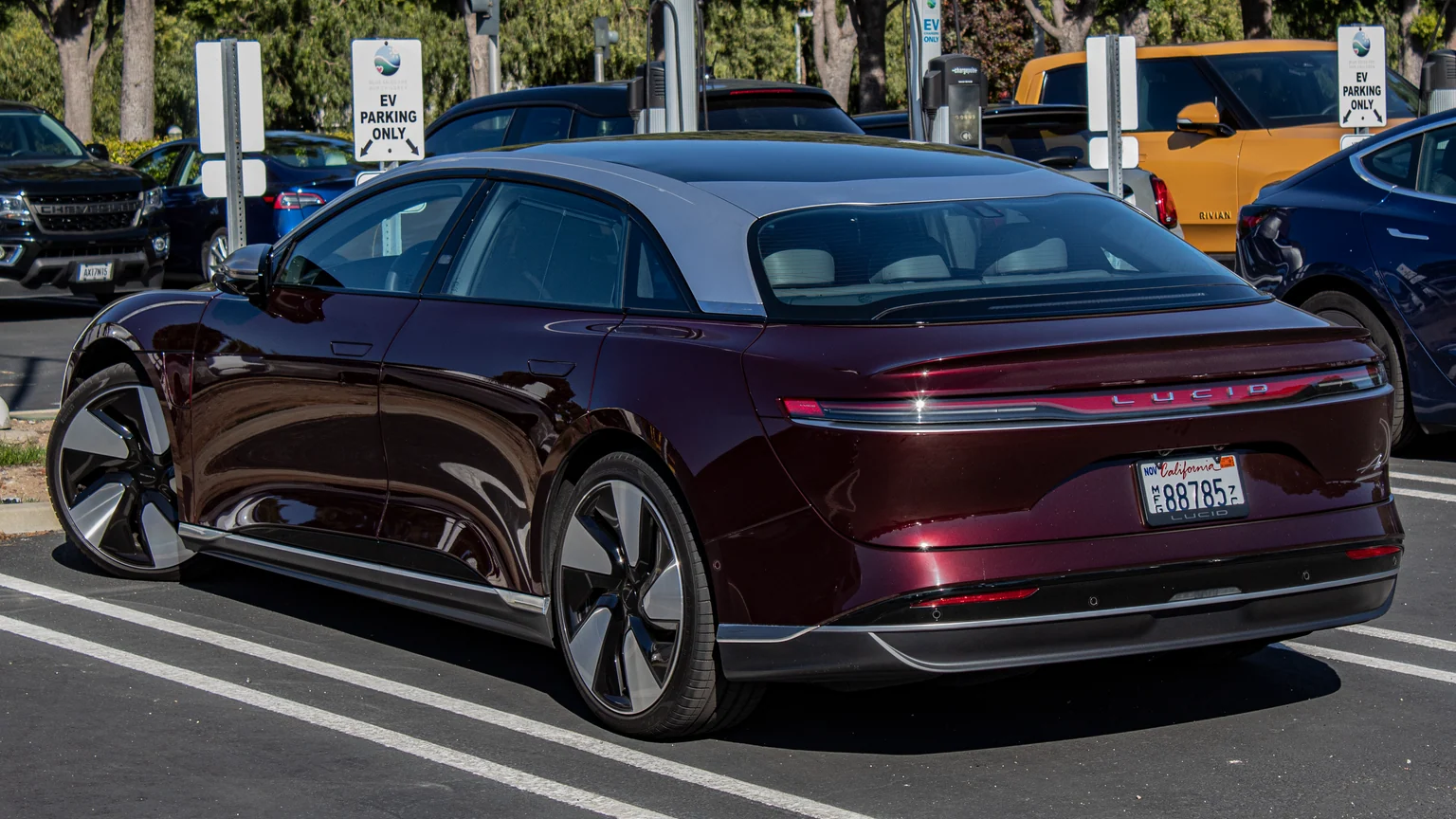
2022–2026 Lucid Air recall: park outside until software update
Lucid recalls 27,185 Air vehicles for a lighting-circuit fire risk. Owners should park outside until the free recall software update is completed.