Tesla Model Y vs Hyundai IONIQ 5: Which EV Fits Your Driving?
Compare Model Y and IONIQ 5 charging routes, cabin controls, family use, equipment, service access, and purchase terms before choosing an electric vehicle.
What to know first
- Compare charging access and the exact vehicle configuration before relying on range headlines.
- The cited Tesla manual and Hyundai specification sheet cover different stated model years.
- Verify software features, battery coverage, service access, and VIN-specific recall status.
Start with the Model Y if you prefer its screen-centered controls and Tesla’s integrated vehicle, navigation, and charging experience. Start with the IONIQ 5 if its separate driver-display layout and selected Hyundai equipment better fit your daily use. Then test both against the same charging routes, family cargo, service needs, and complete purchase budget.
This Tesla Model Y vs Hyundai IONIQ 5 guide covers current-generation U.S. shopping, using Tesla’s 2025+ North American owner’s manual and Hyundai’s 2027 U.S. specification table, reviewed October 6, 2026. It is not a matched-model-year range or price ranking. Dealer inventory may include earlier years; record the exact year, battery, drivetrain, and wheels before comparing numerical specifications.
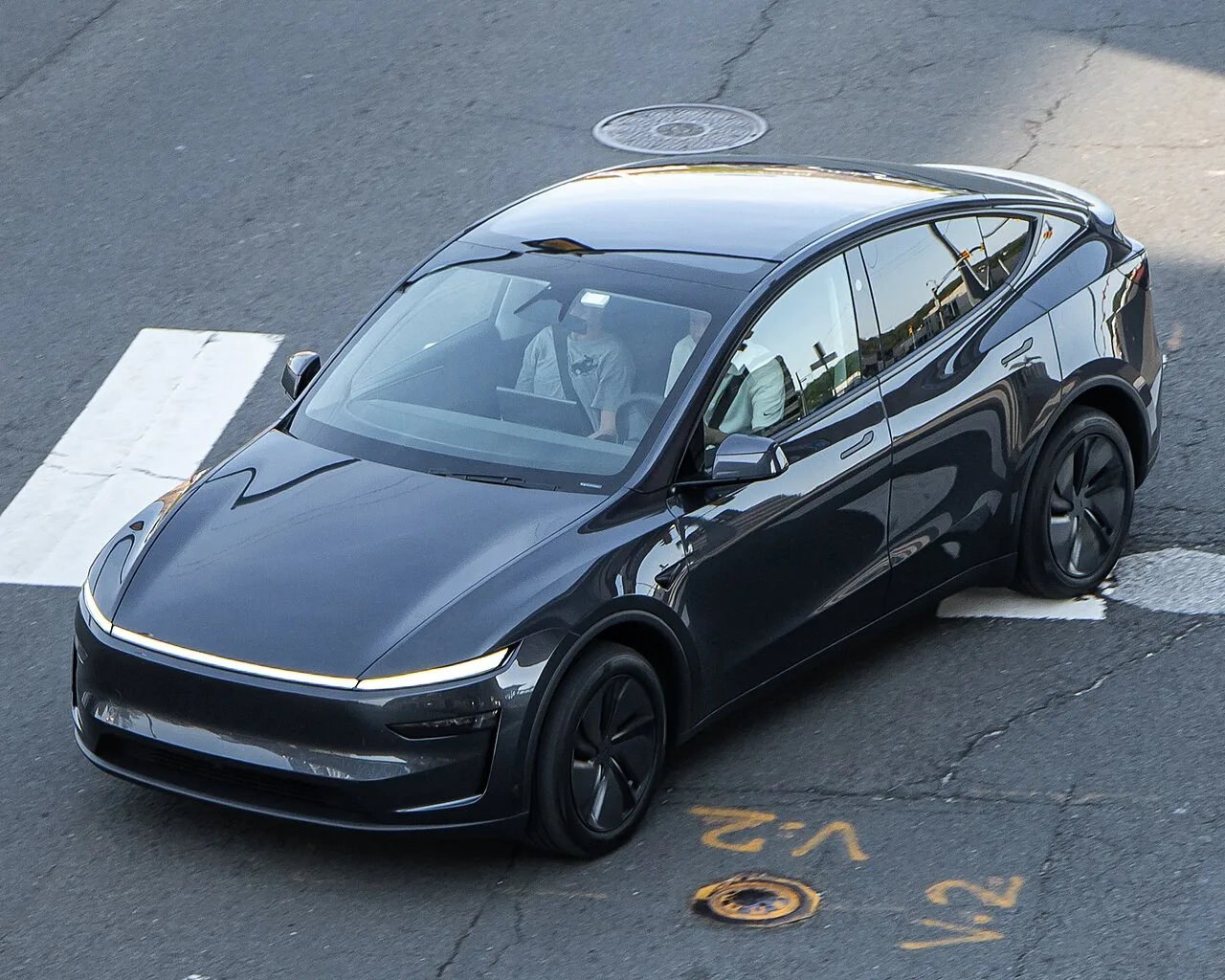
An updated Model Y illustrates the current generation. The image does not establish its battery, drivetrain, seating, or software package. Photo: OWS Photography; CC BY 4.0. Converted to WebP by RecallWire; original framing retained.

Compare the ownership experience before the headline range
Both vehicles belong on an electric-family-vehicle shortlist, but they ask you to interact with the car differently. Tesla’s touchscreen documentation describes using the central display for many functions traditionally controlled by physical buttons. Hyundai’s current IONIQ 5 table lists its displays and equipment by trim.
| Decision | Model Y assessment | IONIQ 5 assessment |
|---|---|---|
| Controls | Try common tasks in Tesla’s screen-centered layout | Try the driver-display and control arrangement on the actual trim |
| Charging | Plan compatible stops using the actual vehicle and route | Check connector, adapter, and station-specific charging conditions |
| Family fit | Install the restraints and load your normal cargo | Repeat the same test with the same items |
| Added features | Verify installed hardware, software access, and terms | Verify trim equipment and required accessories |
| Ownership support | Locate realistic Tesla service options | Locate Hyundai support for this EV and the required work |
The worksheet should describe the cars you can buy. Do not pair a basic trim’s price with a long-range trim’s rating or assume a photograph shows the equipment in a dealer quote.
Make home charging work before purchase
For most buyers with suitable parking, charging at home can make the daily ownership routine straightforward. But the relevant question is whether your particular parking and electrical arrangement supports it.
Have an appropriate installer assess the location, equipment, and any required work. If you rent or share parking, confirm permission and ongoing access. Include installation in the purchase budget rather than treating it as an invisible future expense. The DOE home-charging guidance explains the infrastructure considerations.
Use daily energy needs to assess the plan. For example, 40 miles of driving at an assumed 30 kWh per 100 miles measured at the wall uses about 12 kWh. That is a hypothetical workload, not a rating for either vehicle. Select each actual configuration’s applicable consumption information for your own estimate.
If the charging plan is marginal after a normal day, check how you would recover from a late arrival or longer trip. An extra battery-range purchase may help with an occasional route, but it does not fix an inconvenient everyday parking arrangement.
Compare the charging stops you will actually use
Do not treat a shared connector shape as proof of identical charging access or speed. Confirm the vehicle, station, adapter where required, payment method, and network eligibility together. The DOE public-charging guide provides the equipment context.
Hyundai’s 2027 specification table distinguishes charging scenarios using NACS equipment at 400 volts from a high-power CCS-adapter scenario at 800 volts. It lists a 20-minute 10–80% figure for the specified greater-than-250-kW, 800-volt CCS-adapter conditions. That is a conditioned manufacturer figure, not a promise for every station or every charge.
Tesla’s Model Y manual documents navigation and charging operation. For either car, plan two routes you actually take, with compatible primary stops and alternatives. Check whether the useful station locations fit food, restroom, and passenger needs.
Peak power alone cannot rank travel speed. Charging changes during a session, and battery condition, temperature, arrival charge, and equipment affect the result. Compare a defined charge interval under stated conditions when reliable information is available, then consider the total stop including access and any waiting.
The practical winner is the vehicle whose compatible stops fit your routes most naturally, not the one whose brochure contains the highest instantaneous power number.
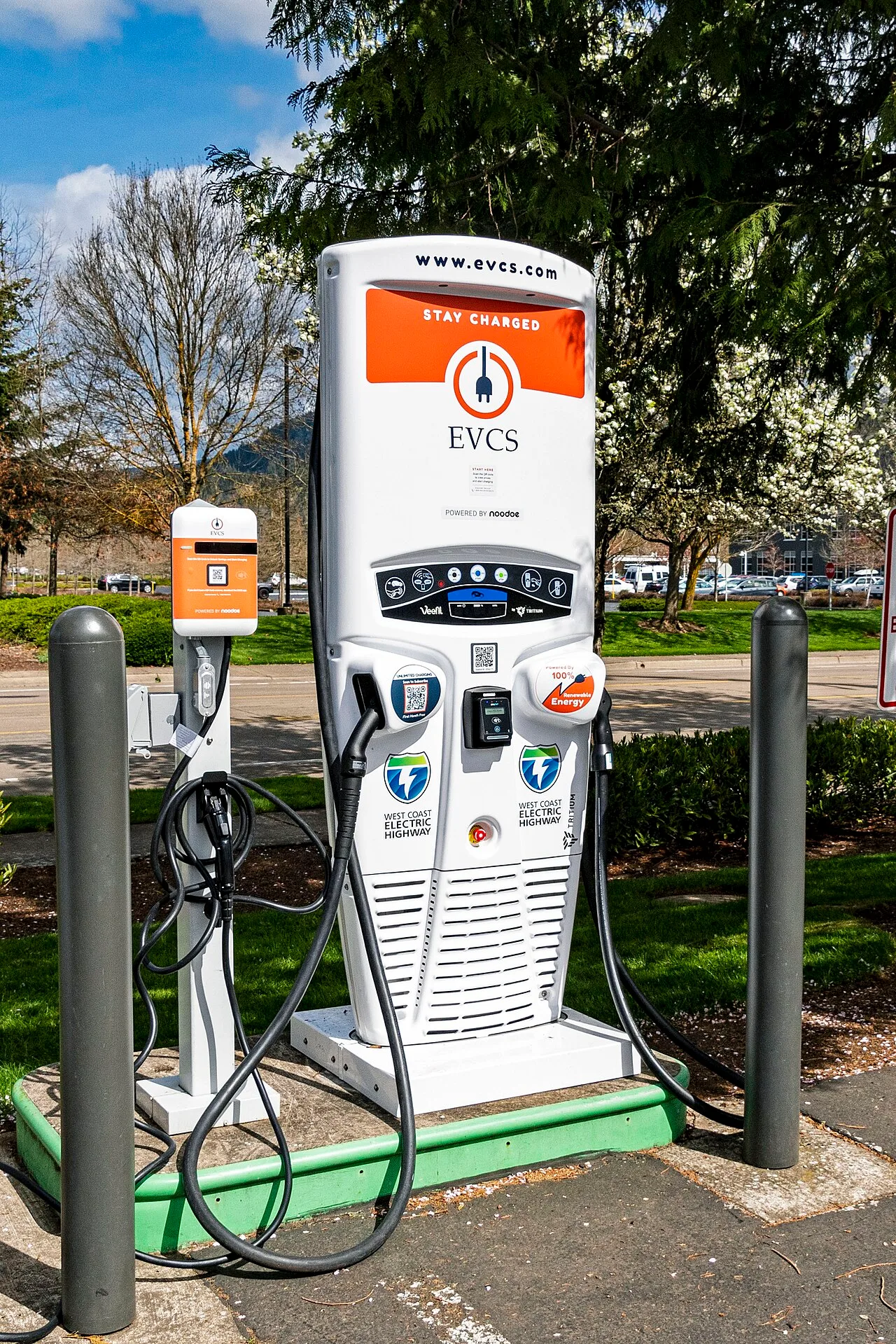
Photo: Oregon Department of Transportation; CC BY 2.0. Converted to WebP by RecallWire; original framing retained.

Check range and electricity cost on equal terms
Select the exact model year, battery, drivetrain, and wheels in the EPA comparison tool. Preserve the distinction between EPA results and manufacturer estimates. A larger range number from another year or testing method is not a clean comparison.
Then calculate electricity spending using your expected home and public rates. If one car has lower energy consumption but costs significantly more to buy, estimate how many years of your driving the energy difference represents.
A useful sensitivity example does not require pretending to know either car’s future costs. If a configuration consumed 2 kWh per 100 miles less than another, at 12,000 miles a year it would save 240 kWh. At an assumed $0.16 per kWh, that is about $38 annually; at $0.45 it is $108. This is an illustrative difference, not a reported Model Y-versus-IONIQ 5 result.
Consider range margin separately from efficiency. A longer usable interval between stops can matter on your route even when annual energy savings are modest. Use your travel needs to decide whether the added battery or trim expense provides that benefit.
Test the controls you use every day
In the Model Y, set the seat and mirrors, find climate and defogging functions, and try navigation and charging information while parked. Tesla’s touchscreen documentation advises avoiding adjustments that distract from driving. Decide whether the layout is comfortable for the people who share the car.
In the IONIQ 5, repeat the same sequence using the actual trim. Evaluate the driver-information display, visibility, and the location of frequently used controls. Display size and menu design are different questions; a larger screen does not automatically mean an easier task.
Try both without relying solely on a salesperson’s rehearsed demonstration. Can you find the function from the starting screen? Can a second household driver understand it? Is an important setting easy to restore after someone else uses the car?
These observations are personal usability evidence, not a claim that one interface is universally safer. The appropriate choice is the one you can operate comfortably and correctly with minimal attention taken from the road.
Bring your passengers and cargo
Install the actual child restraints according to both sets of instructions, with the front seats positioned for the people who drive. Check rear access, buckling reach, and space for any additional passenger.
Load the stroller, mobility aid, luggage, or dog crate that determines whether the vehicle works. Compare the opening, usable floor, and seat-folding arrangement rather than assuming headline cargo figures use identical methods.
If cargo requires folded seats, decide whether that conflicts with the passengers you carry on the same trip. Check where charging accessories and everyday bags will go without displacing essential luggage.
Hyundai lists features such as a sliding center console and vehicle-to-load equipment differently across trims. If either matters, confirm the installed feature and required accessories. Likewise, a feature appearing somewhere in Tesla’s manual does not establish that the exact vehicle has the necessary hardware or software access. Availability needs vehicle-specific confirmation on both sides.
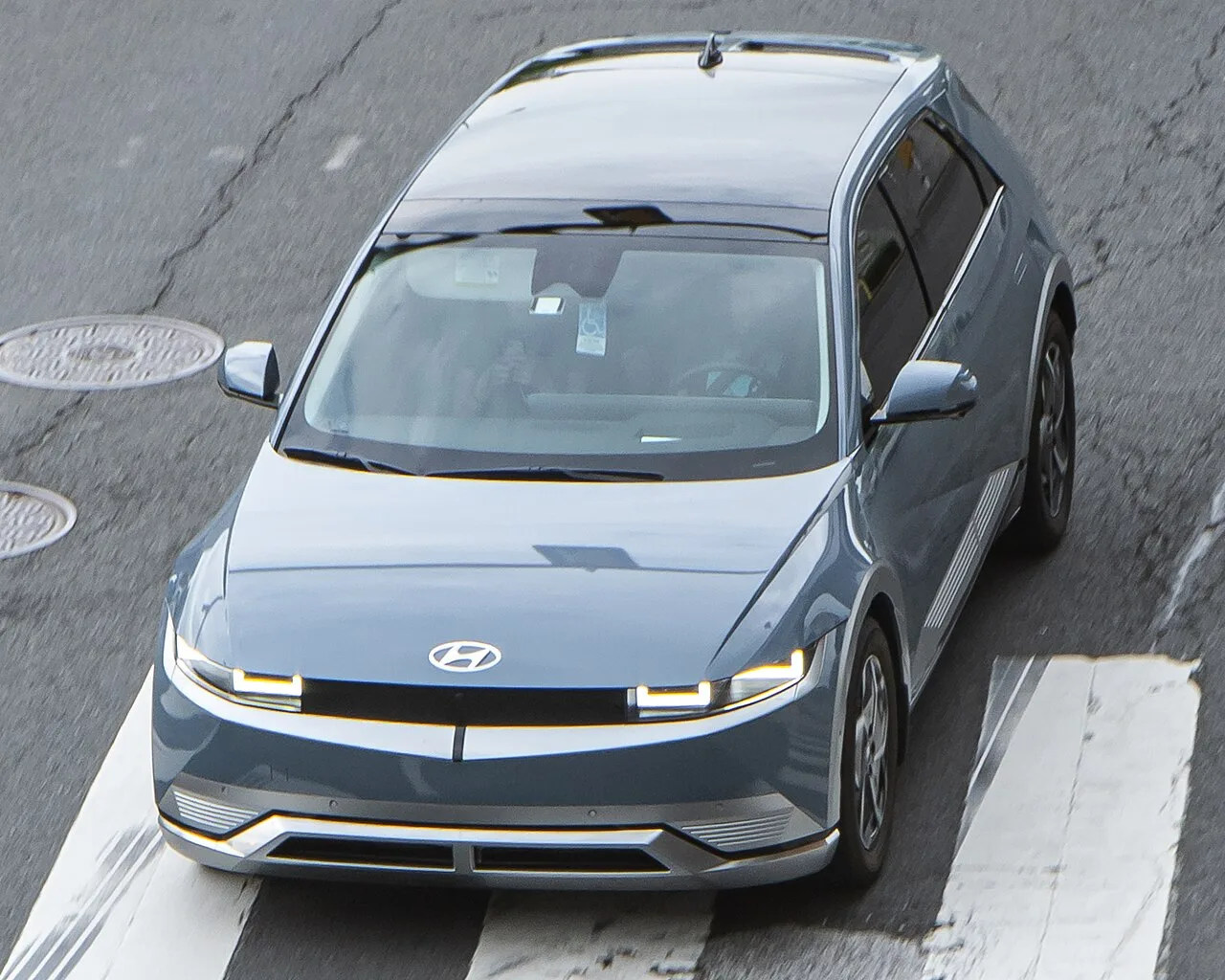
Photo: OWS Photography; CC BY 4.0. Converted to WebP by RecallWire; original framing retained.

Understand assistance and software terms
Read the exact installed assistance-system instructions. Tesla’s manual explicitly distinguishes its supervised driving features and limitations; feature names do not remove driver responsibility. Confirm the selected package, subscription or purchase terms, and transfer rules if used.
For the IONIQ 5, check the trim’s specified assistance functions and their operating conditions. Do not compare an optional Hyundai package with an unpurchased Tesla feature as though both are included in the starting price.
Use applicable IIHS ratings separately from equipment marketing. Generation, year, category, and production qualifications matter. A missing current result should not be replaced by an unrelated configuration’s score.
Software updates can change functionality, but a downloaded update is not by itself evidence that every safety campaign is resolved. RecallWire’s Lucid OTA-remedy analysis explains that distinction using a specific campaign. It is not a defect claim about these two vehicles.
Compare support and used-vehicle history
Locate the service options you would actually use. Ask where the required work can be performed, how appointments are arranged, and what transportation support is available under the relevant terms. Service convenience varies by location; it cannot be settled by a national brand impression.
Review the warranty booklets for the selected cars, including battery coverage and any capacity-retention provisions. Get insurance and tire-replacement quotes. Include charging equipment and paid software you intend to use in the complete budget.
For a used purchase, verify generation, installed hardware, repair history, and condition separately. RecallWire’s Tesla headlight campaign lists 2020–2023 Model Y vehicles in its scope. It should not be applied to a current-generation Model Y merely because the model name matches.
Check the exact VIN through NHTSA and the manufacturer for either vehicle, then obtain relevant remedy records. RecallWire’s VIN recall-search guide explains the lookup’s purpose and limits.
Choose the EV that makes ordinary use easy
Favor the Model Y candidate when its interface and verified charging-route experience suit your household and the complete price includes the features you want. Confirm the equipment rather than buying on assumptions about the model family.
Favor the IONIQ 5 candidate when its displays, seating and cargo arrangement, selected equipment, and local support work better for you. Check the charging conditions relevant to your routes instead of relying on its fastest advertised scenario.
If both pass those checks, compare the actual delivered prices, insurance, financing, and service requirements over the same ownership period. A small theoretical energy advantage should not outweigh an essential seating or charging constraint.
The best choice is the EV that turns your normal week into a manageable routine. The comparison should end with a specific vehicle, a workable charging plan, and a budget you can support.
Sources and methodology
Source review: October 6, 2026. Manufacturer specifications apply to the stated model year and configuration. Illustrative calculations are identified beside the data. This guide synthesizes published documentation; it does not report hands-on vehicle testing.
Frequently asked questions
Does Supercharger access make charging identical?
No. Confirm compatible stations, connector or adapter requirements, network eligibility, and vehicle-specific charging behavior. Access and charging speed are separate questions.
Should I choose only by maximum range?
Use the exact comparable rating, then consider route coverage, charging stops, purchase price, and daily needs. A headline figure from a different year or method is not sufficient evidence.
Does a driving-assistance package make either car autonomous?
Do not infer autonomy from marketing names. Read the installed system's instructions and attention requirements. The driver remains responsible where the system requires supervision.
Sources used for this guide.
- Tesla. 2025+ Model Y North America owner manual. Accessed October 6, 2026.Source ↗
- Hyundai. Current U.S. IONIQ 5 trim specification table. Accessed October 6, 2026.Source ↗
- U.S. Department of Energy. Public charging. Accessed October 6, 2026.Source ↗
- EPA. Vehicle efficiency comparison. Accessed October 6, 2026.Source ↗
- IIHS. Vehicle ratings. Accessed October 6, 2026.Source ↗
- NHTSA. Recall information. Accessed October 6, 2026.Source ↗