Car Maintenance Schedule: What to Check and When
Organize car maintenance around the correct owner manual, time, mileage, driving conditions, tires, brakes, fluids, and clear service records.
What to know first
- Use the maintenance documentation for your exact model year and powertrain.
- Track both time and mileage, and check whether severe-use conditions change the schedule.
- Routine service, new warning symptoms, and safety recalls require separate checks.
Your car maintenance schedule is the schedule for your exact vehicle, adjusted for the operating conditions the manufacturer specifies. Use elapsed time, mileage, and any applicable maintenance-monitor instructions together. A generic “every 5,000 miles” list cannot account for different engines, fluids, powertrains, or driving patterns.
You can still build a simple system: keep the correct documentation, make a small set of routine observations, record what is due next, and investigate new symptoms promptly. The objective is not to service everything at every visit. It is to perform the right work at the right trigger and preserve evidence of what was done.
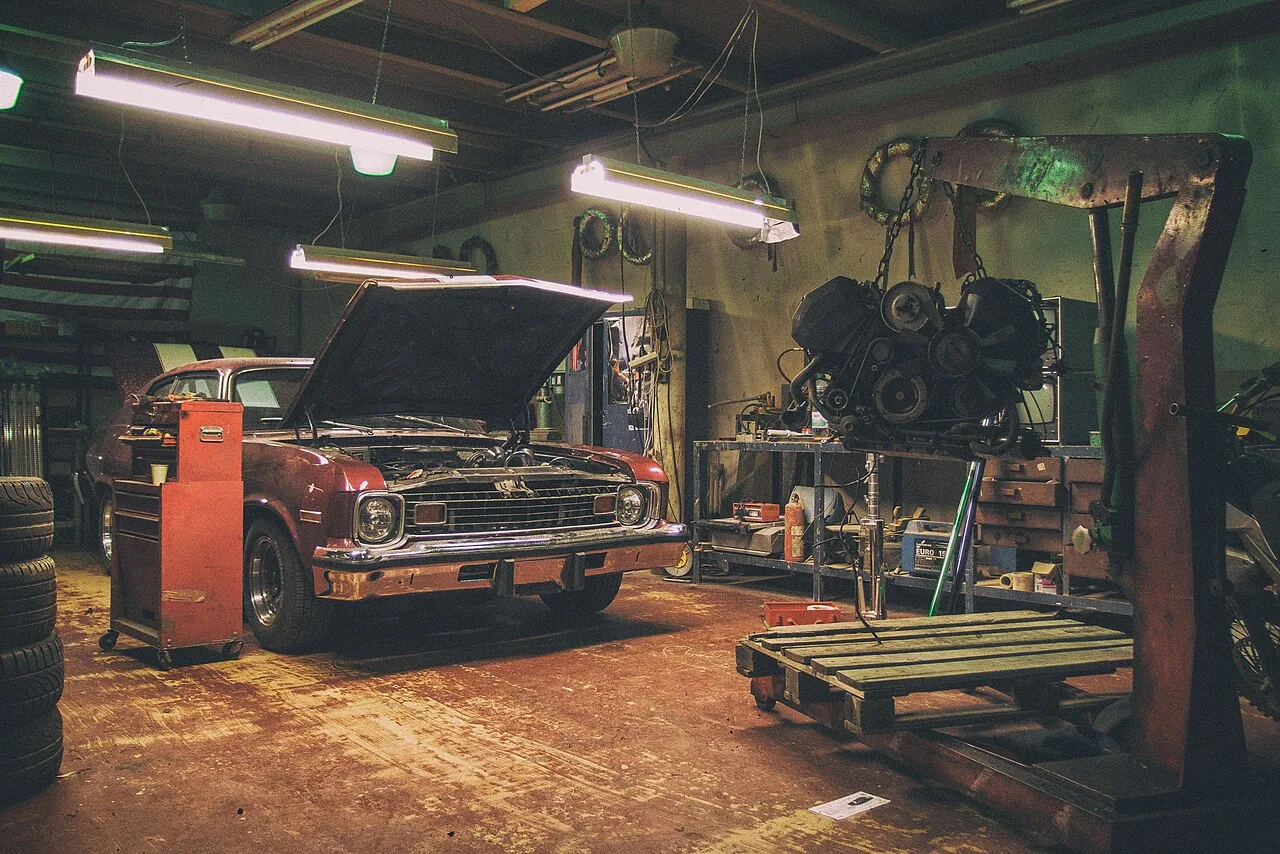
Illustrative repair-shop scene with a vintage car and detached engine. Your own vehicle requires its exact schedule and appropriate service procedures. Photo: Martin Vorel; CC BY-SA 4.0. Converted to WebP by RecallWire; original framing retained.

Find the schedule for your exact vehicle
Start with the year, model, engine or powertrain, and market. Find the owner’s manual and any separate maintenance or warranty booklet. For a used vehicle, do not assume the glovebox contains the correct edition.
Manufacturer portals are useful starting points. Ford’s owner-manual locator helps find vehicle documentation; Honda’s 2026 warranty booklet directs owners to the applicable maintenance instructions. Neither source supplies a universal schedule for another vehicle.
Identify how the manufacturer expresses service requirements. Some items have distance or time intervals; others use a maintenance monitor or require inspections with decisions based on condition. Note any definitions of severe or special operating conditions.
Create a one-page record of the requirements that actually apply. Include the required fluid specifications, the next due date or mileage, and the source section. If a dashboard message uses a code, look up that code in the correct manual rather than accepting a generic interpretation from another model.
Keep time and mileage in the same record
A low-mileage vehicle still ages between trips. A high-mileage commuter can reach a distance trigger long before a calendar trigger. When the manufacturer gives both, follow its stated rule rather than choosing whichever lets you postpone service longer.
Use a record with four columns: service item, last completed date and mileage, next applicable trigger, and supporting invoice. A calendar reminder helps with time-based work; an odometer check helps with mileage-based work.
| Record category | What you track | Where the requirement comes from |
|---|---|---|
| Routine owner checks | Tire pressure, visible damage, lights, and other specified observations | Owner manual and applicable guidance |
| Scheduled replacement | Correct item, fluid, or filter; date and mileage | Exact manufacturer schedule |
| Condition-based work | Inspection result and reason for replacement | Measured condition and service documentation |
| New symptom | When it started and how it appears | Prompt diagnosis, not the next routine interval |
| Safety recall | Campaign, eligibility, and remedy status | Manufacturer and NHTSA instructions |
The table is an organizational framework. It deliberately does not assign universal replacement intervals. Your mechanic should be able to explain whether a recommendation comes from the schedule, a measurement, or a diagnosed problem.
Make tire checks a repeatable habit
NHTSA recommends checking tire pressure at least monthly and using the vehicle manufacturer’s recommended pressure. Check under the cold-tire conditions described in the guidance and your manual. The maximum pressure printed on a tire sidewall is not the vehicle’s normal target pressure.
Look for damage and uneven wear as well as low pressure. Repeated pressure loss or unusual wear needs investigation; repeatedly adding air does not establish that the underlying problem is solved. Include the spare if the vehicle has one and the documentation calls for it.
Tire age and tread condition are different questions. Read the tire’s date information and follow the vehicle and tire manufacturers’ recommendations. Do not decide that every tire is safe because it has visible tread or unsafe solely because a generic online list gives a particular birthday.
A tire-pressure warning system also needs its own checks. RecallWire’s Jeep TPMS warning campaign illustrates a specific warning-system problem. It applies only to the stated vehicles; the broader owner lesson is to follow pressure-check instructions rather than relying exclusively on the absence of a dashboard warning.
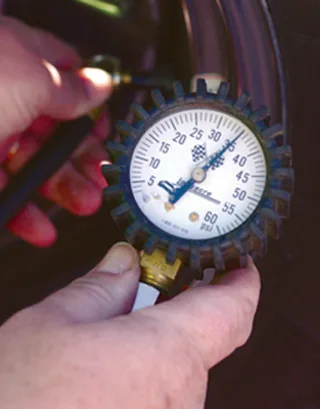
Photo: (U.S. Air Force photo by Airman Frank Snider); Public domain. Converted to WebP by RecallWire; original framing retained.


Separate fluid checks from fluid replacement
Use the manual to identify which levels an owner can safely check, how the vehicle must be positioned, and what conditions are required. Some systems are not intended for a casual owner-level check. Never open a hot pressurized cooling system or improvise a procedure because another car has an accessible reservoir.
Oil and other fluid specifications matter. “The same color” is not evidence that a fluid is suitable. Ask the service provider to identify the specification used on the invoice, particularly when a vehicle requires a particular grade or formulation.
Distinguish topping up from fixing a loss. A new leak, repeatedly falling level, or warning message may require diagnosis. It should not simply become an extra task at each fuel stop.
Replacement intervals also differ across systems and vehicles. Before authorizing a package of fluid services, ask which items are due under the manufacturer schedule and which are recommended because of observed condition. That question encourages a useful explanation without assuming every additional recommendation is unnecessary.
Give brakes and new symptoms their own attention
Brakes are assessed by condition and the applicable inspection schedule, not only by a mileage number remembered from a previous car. Ask for measurements and a description of the findings when replacement is recommended. Request clarification about what was inspected and what remains serviceable.
Changes in braking feel, persistent new noises, pulling, or vibration deserve diagnosis. Record when they occur: cold starts, highway braking, wet conditions, or low-speed turns. Specific observations help the technician reproduce a concern.
Apply the same approach to steering and suspension. A new symptom can be ordinary wear, damage, or something covered by a safety campaign. RecallWire’s Grand Cherokee coil-spring campaign shows why a particular defect should be distinguished from routine upkeep. It is not a diagnosis for other vehicles with suspension noise.
If braking or steering ability changes materially, or the vehicle displays a warning that calls for stopping, follow the manual and obtain appropriate assistance. The existence of a future service appointment is not a reason to continue driving through a serious symptom.
Check whether your use changes the schedule
Read the manufacturer’s definitions of special or severe service. Conditions may involve repeated short trips, dust, towing, prolonged idling, or other uses, but the exact definitions and affected service items vary. Do not apply a severe-service label indiscriminately to every system.
Consider how you actually use the vehicle. A short commute with little annual mileage can differ from sustained highway travel. A truck towing frequently can differ from an identical truck carrying only its driver.
Bring that information to the appointment. Instead of saying “normal driving,” describe the trip pattern, environment, and loads. Ask which schedule applies and have the answer recorded with the service recommendation.
Also check any change in usage. A new job, move, trailer, or regular unpaved route may change the relevant maintenance plan. Your schedule is a continuing ownership document, not a one-time list created when you bought the car.
Adapt the plan for hybrids and electric vehicles
A hybrid still has a combustion engine and its associated requirements. The DOE hybrid overview explains the combined powertrain. Use the manufacturer’s instructions for all applicable systems rather than assuming reduced fuel use removes engine maintenance.
A battery-electric vehicle has a different set of service items, but tires, brakes, suspension, cabin filters, and other specified systems still need attention. DOE’s all-electric overview provides powertrain context. The correct maintenance plan comes from the vehicle documentation.
Regenerative braking is not proof that the friction brakes need no inspection. Likewise, a software update does not inspect mechanical components. Follow the procedures and conditions the manufacturer specifies.
Avoid copying battery-care advice between models. Charging limits, storage instructions, and thermal-management requirements can differ. If a vehicle will sit unused for an extended period, consult its storage guidance before leaving it parked and assuming the battery system will manage every condition automatically.
Photo: OWS Photography; CC BY 4.0. Converted to WebP by RecallWire; original framing retained.

Prepare appointments and keep useful records
Before a visit, send the due items and symptom notes. Ask for an estimate separating scheduled work from diagnosis and any proposed additional work. Agree on how the service provider will contact you before authorizing changes.
Keep the final invoice, including mileage, date, specifications, measurements, and work performed. If a maintenance monitor is reset, confirm that the corresponding work was actually completed. A reset is a recordkeeping action, not the service itself.
Review the next due trigger after the visit and update reminders. This makes the schedule useful to the next technician and, eventually, a future owner. Clear documentation also helps resolve a warranty question without relying on memory.
Track safety campaigns separately through NHTSA and the manufacturer. RecallWire’s recall-repair guide explains that process. Routine service, a completed recall remedy, and a symptom diagnosis are separate records even when the work happens during one appointment.
Sources and methodology
Source review: October 6, 2026. Manufacturer specifications apply to the stated model year and configuration. Illustrative calculations are identified beside the data. This guide synthesizes published documentation; it does not report hands-on vehicle testing.

Frequently asked questions
Can I use a universal mileage checklist?
Use it only as a reminder to consult the actual schedule. Different vehicles, fluids, monitors, and operating conditions can require different work and triggers.
Does low mileage mean I can ignore time intervals?
No. Follow the manufacturer's stated time and mileage rules. Limited driving does not stop every component or fluid from aging.
Is a recall repair part of routine maintenance?
It is a separate safety remedy for eligible vehicles. Keep its campaign and completion documentation alongside, but distinct from, scheduled-service records.
Sources used for this guide.
- Honda. 2026 Honda warranty booklet: operation and maintenance. Accessed October 6, 2026.Source ↗
- Ford. Owner-manual locator. Accessed October 6, 2026.Source ↗
- NHTSA. Tire safety and maintenance. Accessed October 6, 2026.Source ↗
- NHTSA. Recall information. Accessed October 6, 2026.Source ↗
- U.S. Department of Energy. Hybrid vehicles. Accessed October 6, 2026.Source ↗
- U.S. Department of Energy. All-electric vehicles. Accessed October 6, 2026.Source ↗