NHTSA’s Tesla Cybercab Audit Tests the AV Rulebook
NHTSA’s September 4 Cybercab audit examines Tesla’s self-certification after Austin deployment. The case shows why driverless capability and federal compliance are separate questions.
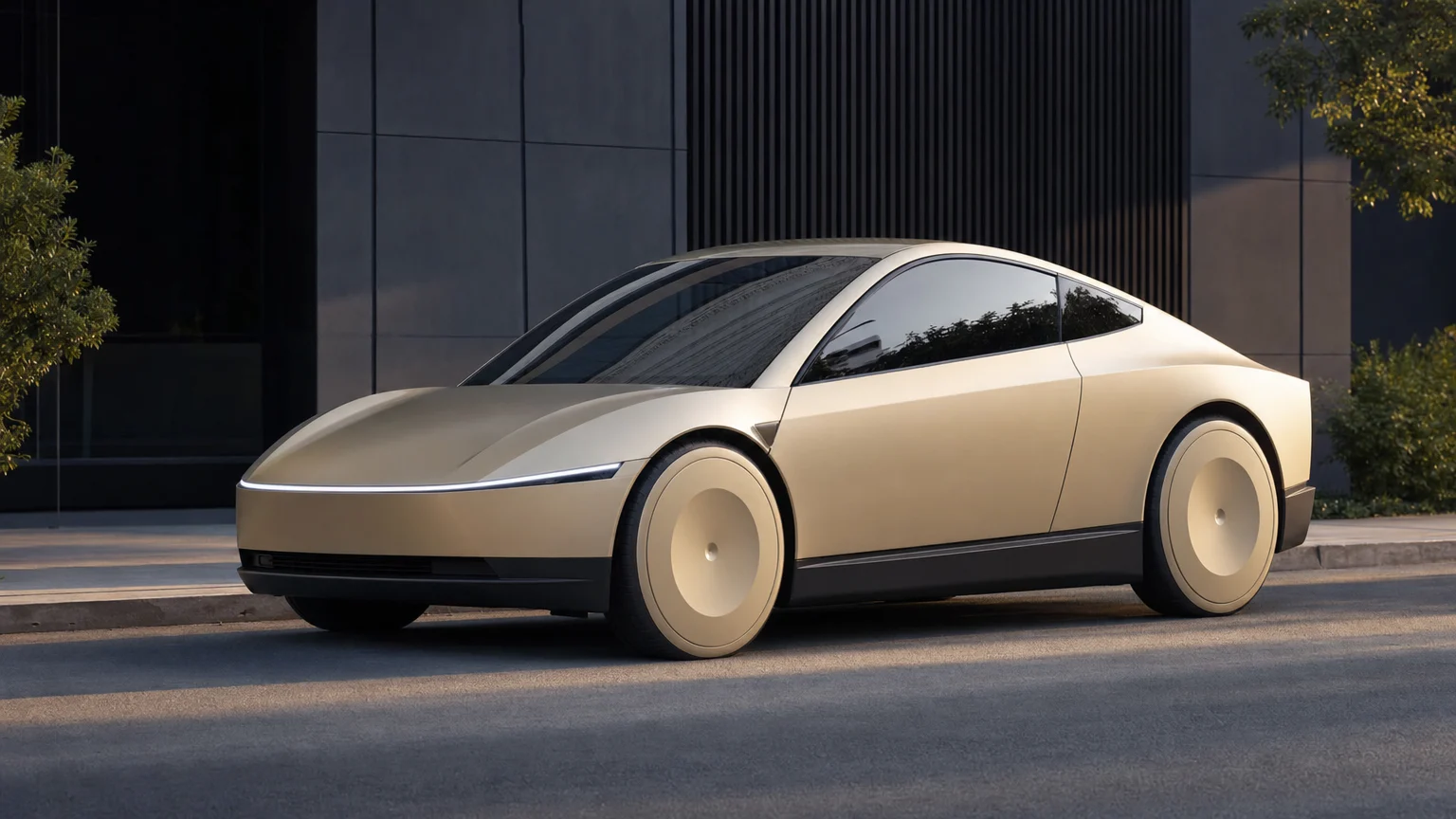
Tesla’s purpose-built Cybercab has moved from concept to limited passenger service in Austin, Texas. That makes its first federal regulatory test unusually consequential. On September 4, the National Highway Traffic Safety Administration said it opened an Audit Query into Tesla’s certification that the Cybercab complies with applicable Federal Motor Vehicle Safety Standards. The inquiry follows Tesla’s commercial deployment of a vehicle designed for full autonomy, with no permanently attached steering wheel, accelerator pedal, brake pedal or conventional mirrors.
The key point in NHTSA’s September 4 announcement is precise: it announced an audit, rather than a recall or a conclusion that Cybercab is unsafe. It is examining the technical data and legal reasoning behind Tesla’s self-certification while the vehicle is operating. That distinction matters because the case is less about a single component failure than whether the United States’ longstanding vehicle-certification structure can accommodate a car built without a human driver’s controls before every relevant rule has been rewritten.
An audit of certification, not a verdict on autonomy
U.S. automakers generally certify for themselves that their vehicles comply with federal safety standards; NHTSA does not grant advance type approval before every model goes on sale. The agency can, however, investigate a certification when it sees reason to question whether a vehicle meets the standards.
NHTSA says its Audit Query will assess the process and technical information Tesla used to support Cybercab compliance. It will specifically consider whether Tesla’s position relies on treating some standards as inapplicable to a vehicle without traditional manual controls. That is the central issue. A vehicle can be engineered to drive autonomously, yet still encounter rules written around a seated human driver who can steer, brake, see through mirrors, operate wipers and receive specified warnings.
NHTSA’s September 4 announcement describes a commercially deployed vehicle without conventional manual controls in Austin. Tesla’s July 22 investor update said Cybercab production had begun and that employee rides at Gigafactory Texas preceded deployment. The company’s production and service statements do not resolve the compliance questions in the audit.
This article analyzes the opening of the audit; it does not establish the service’s present operating permission or the audit’s eventual outcome. For Tesla, the question raised by that announcement is whether its documentation can support deployment under the applicable standards.
The rules are changing, but the existing ones still apply
The timing makes this case more complicated than a simple argument over whether a steering wheel is necessary. NHTSA has already updated certain occupant-protection rules to account for automated-driving-system vehicles that lack conventional controls. Those amendments were intended to preserve occupant crash protection while making terms such as “driver’s seat” and “steering wheel” workable for a new vehicle layout.
But that work did not settle every federal requirement. In 2026, NHTSA proposed additional changes to crash-avoidance standards covering such areas as windshield defrosting and wiping for vehicles with no manually operated controls. It has also been working on how braking rules should distinguish between conventional vehicles and those designed to be operated only by an automated driving system.
NHTSA’s September 4 announcement acknowledges that regulatory overhaul is under way. Its position is equally clear, though: until rules are changed, current requirements remain in force. The Cybercab audit therefore exposes a transition problem for the broader robotaxi business. Developers want to deploy specialized vehicles now; regulators are still translating safety rules originally written for people driving cars into performance requirements for software-driven vehicles.
That does not mean an automated vehicle necessarily must duplicate every human-oriented piece of equipment. It means the manufacturer must establish why each applicable requirement is met, or why a requirement does not apply, under the present legal framework. The distinction will determine whether future purpose-built robotaxis can enter service through self-certification or must wait for further rulemaking, exemptions or revised vehicle designs.
Texas allows driverless operation—but requires federal compliance
Texas’s automated-vehicle provisions as amended by SB 2807 permit automated operation without a human driver, subject to statutory conditions. The amendments took effect September 1, 2025; the older version of Chapter 545 previously linked here should not be treated as the complete current framework.
State permission is not a substitute for federal vehicle compliance. The amended law retains federal-compliance requirements and establishes a state authorization process for commercial driverless operations, along with an emergency-response interaction plan. Whether a particular operator meets those requirements needs its own evidence; this analysis does not verify Tesla’s state authorization.
This division of responsibility is why Austin can host Cybercab service while NHTSA investigates its certification. States principally govern vehicle operation on their roads; federal standards govern the safety design and performance of new motor vehicles. For companies pursuing driverless fleets, clearing one level of government does not eliminate scrutiny from the other.
The issue is also broader than Tesla. A clear NHTSA outcome could offer a road map—or a warning—for every company building a vehicle that dispenses with manual controls rather than adapting a conventional car for autonomous use.
Related RecallWire coverage: NHTSA’s broader shift toward a faster federal path for robotaxis
What buyers and riders should watch next
The September 4 announcement concerns a ride-hailing deployment, so the immediate consumer questions are those of passengers and other road users. The near-term indicators are straightforward: whether NHTSA releases further requests or findings from the Audit Query; whether Tesla changes the vehicle, operating conditions or deployment pace; and whether NHTSA completes pending rulemakings affecting controls-free automated vehicles.
Riders should avoid reading the audit as either an all-clear or a finding of a safety defect. It is a federal examination of certification, and the September 4 announcement does not establish its outcome. The useful consumer standard remains more basic: a robotaxi operator should be able to explain where the service runs, how the vehicle handles an emergency, how passengers can contact support and what happens if the automated system cannot continue its trip.
For the industry, the stakes are larger. Purpose-built robotaxis promise packaging and cost advantages because they omit equipment intended solely for a driver. But those advantages only become scalable when the vehicles have a durable regulatory pathway. Tesla’s Cybercab audit is an early test of whether self-certification can provide that pathway under the current rules.
The real test is whether deployment can outrun rulemaking
NHTSA’s Cybercab Audit Query does not decide that Tesla’s vehicle is noncompliant, nor does it invalidate the broader case for autonomous transport. It does show that a driverless vehicle’s technical capability and its legal eligibility to operate are separate questions. Tesla has put that distinction on public roads in Austin. Now the agency must determine whether the company’s certification rationale fits federal standards as written—or whether the rulebook must catch up before purpose-built robotaxis can expand with confidence.
Sources used for this analysis.
References checked September 16, 2026.
- National Highway Traffic Safety Administration. NHTSA Opens Investigation into Tesla Cybercab Self-Certification Following Austin Deployment. Published September 4, 2026. Accessed September 7, 2026.Source ↗
- Tesla Investor Relations. Tesla Q2 2026 Update. Published July 22, 2026. Accessed September 7, 2026.Source ↗
- Associated Press. Feds open probe into Musk's steering-wheel-free taxis a day after he began offering rides in them. Published September 4, 2026. Accessed September 7, 2026.Source ↗
- Texas Legislature. Texas SB 2807: enrolled automated-vehicle amendments. Accessed September 16, 2026.Source ↗
- National Highway Traffic Safety Administration. Occupant Protection for Vehicles With Automated Driving Systems: final rule. Published March 10, 2022. Accessed September 16, 2026.Source ↗
Tesla Model 3 and Model Y Recall: Low Beams May Be Too Bright
Tesla recalls 20,349 Model 3 and Model Y vehicles for low beams that may be too bright for oncoming drivers. The remedy remains under development.