NHTSA’s AV Shift Opens a Faster Path for Robotaxis
Federal actions now give automated-vehicle developers a clearer route to limited U.S. deployment. The unresolved question is whether oversight and public evidence will keep pace.
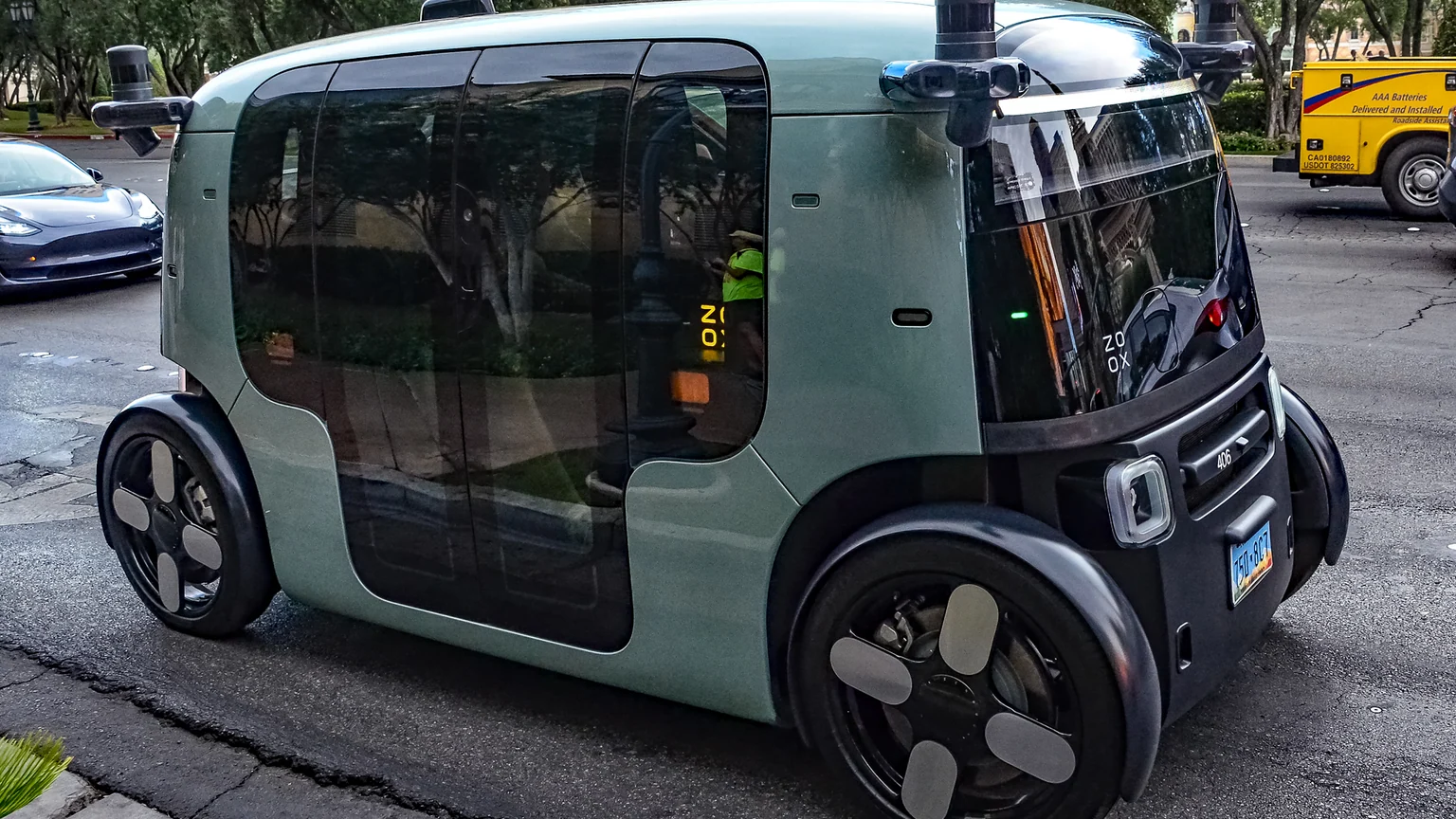
The next phase of U.S. robotaxi deployment may be shaped less by a new vehicle launch than by a change in the federal regulator’s approach. On July 30, the National Highway Traffic Safety Administration announced a package of automated-vehicle actions: a temporary exemption allowing Zoox to commercially deploy up to 2,500 purpose-built robotaxis annually for two years, a revised route for certain exemption applicants, and a three-year effort intended to support automated-vehicle performance standards. For riders, other road users and companies building driverless vehicles, the important change is practical: vehicles without conventional steering wheels or pedals have a more defined way to reach limited commercial service before a complete set of federal standards exists.
That does not mean a blank check for autonomous vehicles. The exemption is limited in scope and NHTSA says it will use an enhanced oversight structure. But the policy is a meaningful pivot from a framework that sought voluntary participation, third-party assessment and detailed operational reporting. NHTSA formally withdrew that proposed AV STEP program in June after concluding that industry and safety advocates alike doubted the voluntary program would achieve its aims. The agency is now choosing narrower deployment tools, existing exemption authority and standards work that is still in development.
What NHTSA changed—and what Zoox received
NHTSA’s July 30 announcement combines several separate actions that are easy to conflate. The most concrete is the Zoox decision. The agency granted a temporary exemption for commercial deployment of up to 2,500 vehicles per year for two years. Zoox’s vehicle is designed as a driverless shuttle rather than as a conventional passenger vehicle with a driver’s position, so the exemption matters because several long-standing Federal Motor Vehicle Safety Standards were written around manual controls and traditional seating layouts.
A temporary exemption is not an unconditional certification that an automated-driving system is safe in every setting. It is a limited regulatory pathway under which NHTSA can permit a vehicle that does not meet particular standards when statutory conditions are met. The precise operational areas, fleet size and ongoing obligations remain central to evaluating the real-world effect of the decision. For consumers, it also means that a vehicle appearing on public roads may be lawful under a federal exemption even though it lacks features Americans associate with a normal car.
NHTSA also issued an interim final rule that lets the administrator apply certain temporary exemptions to vehicles built before the exemption itself takes effect. That sounds procedural, but it can reduce a major deployment hurdle. Without that flexibility, an automaker or AV developer could be left with vehicles built to a proposed configuration but unable to use them commercially while an exemption decision is pending. The revised approach can make small, controlled launches faster and less capital-intensive.
The agency says it will pair the Zoox approval with enhanced, adaptable oversight. That qualifier deserves attention: the public value of the exemption will depend on how clearly NHTSA defines performance expectations, what data it obtains, and how quickly it acts if a safety trend emerges.
The biggest policy change is the retreat from AV STEP
The July actions follow an important June 26 decision: NHTSA withdrew its proposed Automated Driving System Safety, Transparency, and Evaluation Program, known as AV STEP. The proposal would have created a voluntary federal framework for developers seeking to operate ADS-equipped vehicles. It contemplated applications, operational information, ongoing reports and a third-party assessment of a company’s safety case.
NHTSA’s withdrawal notice is unusually candid about the political and technical impasse. Industry commenters argued that the voluntary program’s reporting and operating requirements could outweigh its benefits. Safety advocates, labor groups and some elected officials argued in the opposite direction: a voluntary structure lacked the mandatory safeguards necessary for a credible oversight tool. NHTSA concluded that neither side believed the proposal would accomplish its intended balance of encouraging participation and providing sufficient oversight.
That outcome changes the policy debate. AV STEP was intended to create a broad, data-rich federal channel for evaluating automated operations. The new approach places more weight on individual exemptions, separate crash-reporting requirements and future performance standards. In our assessment, that is a more usable route for a developer ready to operate a defined service, but a less comprehensive answer to the question of how the federal government will compare safety across competing driverless systems.
For the public, the distinction matters because a commercial authorization is not the same thing as a universal safety benchmark. A rider may reasonably assume that all robotaxis approved to operate have passed the same objective tests. NHTSA has not yet created that kind of common performance regime.
Standards work is promising, but it is not a finished safety rulebook
NHTSA announced a partnership with SAE Industry Technologies Consortia for a three-year, $5 million project called A2SCEND. Its stated purpose is to gather expertise and data that can accelerate the development of the first automated-vehicle performance standards and inform a single national approach.
The direction is consequential. Vehicle standards have traditionally been written around physical equipment: brakes, lamps, occupant protection, mirrors and other components that can be specified and tested. A driverless system must instead make safe driving decisions across an enormous range of conditions—construction zones, emergency vehicles, vulnerable road users, unusual weather and unpredictable human behavior. Performance standards will need to identify measurable outcomes without freezing technology in place or assuming that one sensor suite and software architecture is best.
NHTSA has already made clear that first-responder interaction is one immediate concern. In a July 8 letter to driverless-vehicle developers, the agency said it expected companies to prioritize safe interactions with emergency personnel and warned that it could use its enforcement authority when developers do not address significant safety concerns. That is a reminder that operational behavior—not just whether a vehicle has a steering wheel—will determine public acceptance.
The standards project should therefore be viewed as an investment in a future framework, not proof that an agreed federal safety test exists today. Three years is a long time in software development and a short time in the regulatory process. State and local rules, company operating restrictions and federal defect authority will remain important in the interim.
Crash reporting remains a necessary, imperfect backstop
NHTSA’s standing general order still provides an important window into reported crashes involving automated-driving systems and Level 2 driver-assistance systems. Data update — September 16, 2026: The agency’s crash-reporting page now lists data through August 17, 2026, replacing the June 15 cutoff cited in this article’s original version. NHTSA warns that the figures have limits: reporting entities can revise classifications, a single crash can generate more than one report, and some Level 2 events may be missing when the company cannot establish whether the system was engaged.
Those caveats mean raw crash totals cannot establish that one system is safer or less safe than another. Exposure matters. A fleet driving more miles in denser urban conditions will naturally encounter more opportunities for conflict. Severity, responsibility, operating domain and whether the automated system was engaged are all critical context.
Still, reporting is indispensable. It gives investigators a way to identify patterns, supports defect investigations and can reveal whether a narrowly granted exemption is producing risks that were not evident in testing. As commercial robotaxi service expands, NHTSA should make the evidence supporting exemptions as understandable as possible while protecting legitimately confidential technical information. Public trust will be earned through observable performance and transparent enforcement, not through the label ‘autonomous.’
A clearer launch path, not the final answer
NHTSA has made it easier for a purpose-built driverless vehicle to move from development into limited commercial operation. That is a significant win for companies such as Zoox, and it may help the United States avoid a regulatory system that effectively requires every automated vehicle to resemble a conventional car.
A later RecallWire analysis examines how that evolving framework is being tested in NHTSA’s Tesla Cybercab audit.
But the July 30 actions do not settle the harder issue: how the country will establish, measure and enforce a common safety floor for vehicles that make their own driving decisions. The Zoox exemption is a real deployment decision; the standards consortium is a longer-term project; and crash reporting is an imperfect monitoring tool. Buyers are not yet shopping for these vehicles in the usual sense, but anyone sharing the road with them has an interest in the gap between those three things being closed carefully.
Sources used for this analysis.
References checked September 16, 2026.
- Associated Press. Some robotaxis approved to operate without steering wheels and losing the brake pedal could be next. Published July 30, 2026. Accessed August 19, 2026.Source ↗
- Advocates for Highway and Auto Safety. Statement on Action Announced Today by NHTSA to Fast-Track AV Deployment. Published July 30, 2026. Accessed August 19, 2026.Source ↗
- National Highway Traffic Safety Administration. Trump’s Transportation Department Cuts Red Tape to Safely Fast-Track Automated Vehicle Innovation. Published July 30, 2026. Accessed September 16, 2026.Source ↗
- U.S. Government Publishing Office. Federal Register, June 26, 2026: NHTSA withdrawal of the proposed AV STEP program. Published June 26, 2026. Accessed September 16, 2026.Source ↗
- National Highway Traffic Safety Administration. Standing General Order on Crash Reporting. Accessed September 16, 2026.Source ↗
- National Highway Traffic Safety Administration. ADS Developer Letter, July 2026. Published July 8, 2026. Accessed September 16, 2026.Source ↗