Kia EV9 Airbag Recall Requires a VIN Check
Kia is recalling 21,290 EV9 electric SUVs over a front-passenger occupant-detection issue. The recall underscores why family-SUV owners should verify repair status by VIN rather than rely on model year alone.
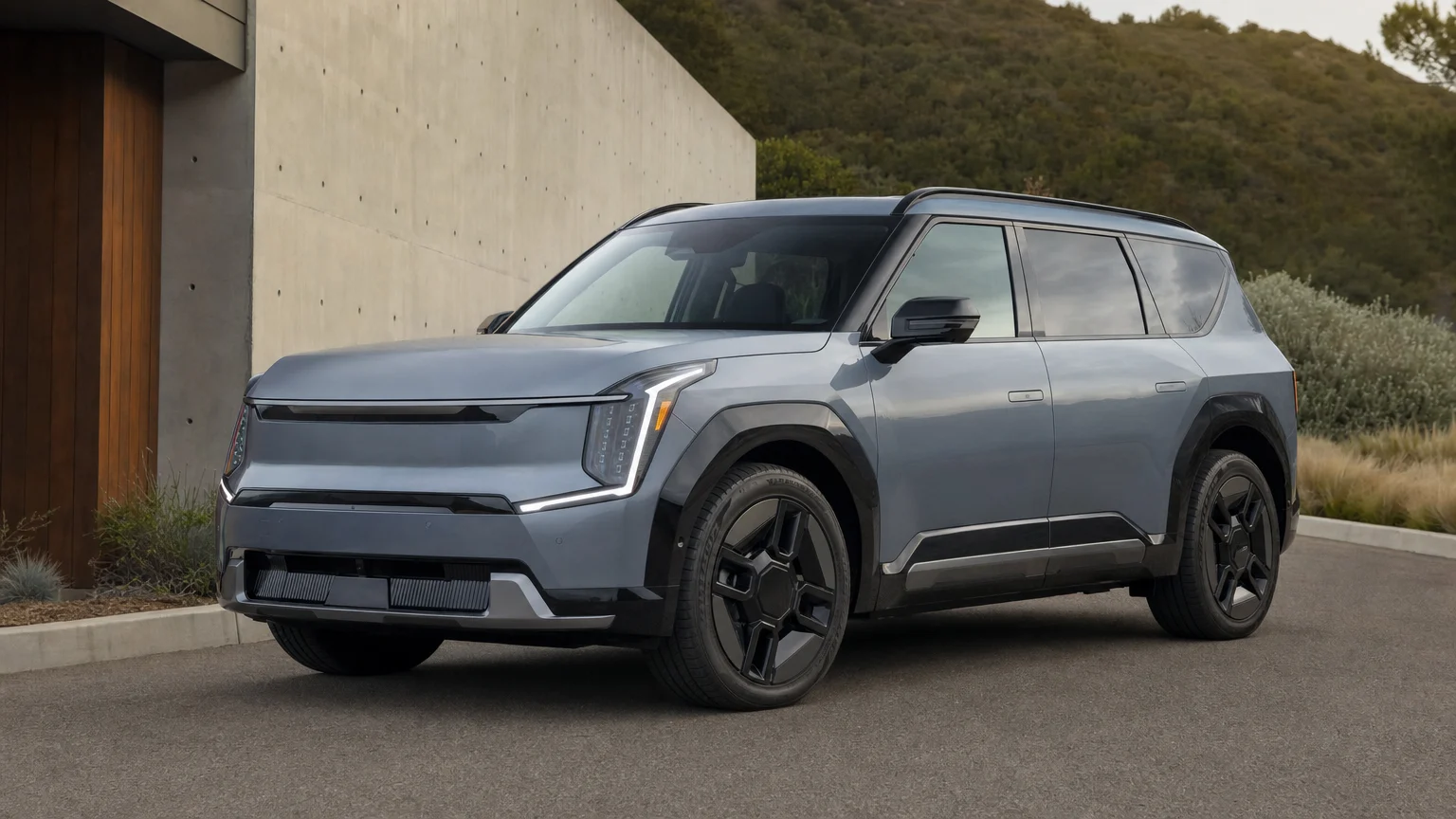
Kia America is recalling 21,290 EV9 electric SUVs from the 2025 and 2026 model years for an issue involving the front-passenger occupant-detection system. Kia’s filing says an improperly routed occupant-detection mat bladder tube can be pinched when the front passenger seat is raised and damaged by repeated adjustment, potentially affecting the vehicle’s ability to determine when the passenger-front airbag should be suppressed for a child restraint.
The campaign matters because the EV9 is a three-row electric SUV often considered by families. This is not an electric-drive, charging or battery concern. It involves the safety equipment intended to manage airbag behavior based on who—or what—is occupying the front passenger seat.
The practical takeaway for owners is straightforward: do not assume an EV9 is covered or cleared solely because of its model year, and do not wait for a warning light to check. Recall eligibility and completed-repair status are vehicle-specific, so a VIN lookup through Kia or the federal recall system remains the useful next step.
Source update — September 16, 2026: Kia’s official report for 26V545000 / SC379 limits this campaign to affected EV9s built at Kia Georgia from May 17, 2024 through May 13, 2026; 2025 EV9s built in Korea are excluded. The report planned VIN lookup availability from September 4 and owner notices for October 20, 2026. Confirm the current result and repair arrangements with Kia.
What the EV9 recall concerns
The reported defect centers on the EV9’s front-passenger occupant-detection system. Modern passenger-airbag systems use sensors to help determine whether the passenger airbag should deploy in a crash. In the condition described in reporting on Kia’s recall, a tube under the front passenger seat can be pinched or damaged through seat adjustment.
The potential consequence is especially important when a child restraint is installed in the front passenger position. If the system does not properly identify that condition, the passenger airbag may not be suppressed as intended. That is why this is being handled as a safety recall rather than as a routine service campaign.
Owners should resist two easy assumptions. First, an EV9 that drives normally may still be included in a recall. The issue concerns a component hidden within the seat and its occupancy-detection hardware, not an obvious change in propulsion or handling. Second, a dashboard warning is not the sole test of recall eligibility. A VIN-specific recall search is the definitive consumer check.
The figure of 21,290 is the recall population: the number of vehicles included in the campaign. It does not mean that every included EV9 has a damaged part, and it is not a count of individual owners. Manufacturers commonly recall the full population when production records identify vehicles that may contain the condition.
Why rear-seat child seating remains the right practice
Kia’s campaign instructions say never to install a child restraint in the front passenger seat and that children age 13 and under should ride in the rear. NHTSA’s general guidance says children 12 and younger should ride properly restrained in the rear seat; the manufacturer’s campaign guidance is broader here. The agency also emphasizes that airbags are designed to work with seat belts and that young children are safest when kept away from the front-passenger airbag.
That guidance is relevant even for owners whose EV9 does not appear in the campaign. The rear seat is generally the appropriate location for children using rear-facing seats, forward-facing car seats or booster seats, with the specific restraint selected and installed according to the child’s size and the seat manufacturer’s instructions.
For an EV9 owner, the recall should not be interpreted as evidence that the vehicle is inherently unsafe for family use. Rather, it is a reminder that advanced airbag systems depend on physical sensors and correctly functioning components. An occupant-classification fault can be consequential precisely because the system is designed to make a split-second safety decision during a collision.
Parents and caregivers should also avoid treating a recall repair as permission to disregard normal seating guidance. A completed repair restores the vehicle’s intended design, but it does not replace the broader recommendation to keep children in the rear seat whenever possible.
A dealer repair is more meaningful than a software notice
The reported issue is associated with hardware in and beneath the front passenger seat. That distinction matters in an EV market where owners increasingly encounter over-the-air updates for infotainment, charging and some vehicle-control functions.
Not every safety action can be delivered digitally. Kia specifies inspection of the bladder-tube routing and, if needed, replacement of the ODS mat and bladder tube with correct routing. The report also calls for replacement of the seat-cover assembly. This is dealer work, not an OTA software remedy. Owners should confirm with an authorized Kia dealer whether parts are available and whether their particular vehicle requires the recall work.
For used-car shoppers, the same point applies. A dealer advertisement, clean vehicle-history report or lack of a dashboard warning should not substitute for checking open recalls by VIN. Before taking delivery, a buyer can ask the selling dealer to document whether the EV9 is included and, if so, whether the recall remedy has been completed.
This is also a useful ownership distinction: an open recall is not necessarily a sign of poor maintenance by a prior owner. Recalls are manufacturer safety campaigns. But a completed remedy provides a more concrete answer than a general statement that a vehicle has been “checked.”
What EV9 owners should do now
Start by checking the vehicle identification number through Kia’s owner recall portal and NHTSA’s recall resources. Recall records can take time to populate after a campaign is announced, so an owner who gets no result but has reason to believe the EV9 may be included should check again or contact a Kia dealer directly.
When speaking with a dealer, owners should provide the full VIN and ask whether there is an open occupant-detection or passenger-airbag recall on the vehicle. They should also ask what the dealer will inspect, whether parts are in stock and how long the appointment is expected to take. Keeping a copy of the completed repair order is sensible for maintenance records and a future sale.
If an airbag warning indicator appears, or if the vehicle displays an unusual message related to the passenger seat or restraint system, owners should arrange prompt service rather than trying to diagnose the condition themselves. Those symptoms may have causes other than this recall, but airbag-system warnings merit professional attention.
Until a VIN-specific answer is available, families should continue to follow normal child-restraint practices: follow Kia’s campaign instruction to use the rear seat for children age 13 and under, use an appropriate restraint and follow the vehicle and child-seat instructions. That is prudent safety practice, not merely a temporary recall workaround.
The VIN, not the model year, is the answer
Kia’s EV9 campaign is important because it concerns the system that helps control front-passenger airbag deployment around child-restraint use. The reported population is limited to 21,290 2025 and 2026 EV9s, but model year alone does not establish whether any individual SUV needs service.
RecallWire’s VIN lookup tools guide explains how to run that vehicle-specific check and interpret the result.
For owners, the sensible response is calm and specific: keep children properly restrained in the rear seat, check the VIN through Kia and NHTSA resources, and schedule the dealer repair if the vehicle is included. For shoppers, an open-recall check should be part of the purchase process—not an afterthought once the keys are handed over.
Read the Kia EV9 occupant-detection recall report for the affected years and dealer remedy.
Sources used for this analysis.
References checked September 16, 2026.
- Cars.com. Kia Recalls 21,000-Plus EV9 SUVs for Airbag Issue. Published August 26, 2026. Accessed September 2, 2026.Source ↗
- National Highway Traffic Safety Administration. Vehicle Air Bags and Injury Prevention. Accessed September 2, 2026.Source ↗
- Kia America. Kia Owners Recall Portal. Accessed September 2, 2026.Source ↗
- National Highway Traffic Safety Administration. Resources for Investigations and Recalls. Accessed September 2, 2026.Source ↗
- National Highway Traffic Safety Administration. Kia EV9 occupant-detection recall 26V545: Part 573 report. Accessed September 16, 2026.Source ↗

August 2026 Vehicle Recall Roundup: Owner Guidance
August 2026 recall briefing covering Alfa Romeo, BMW, Chrysler and other vehicles, with affected models, repair plans and dated owner-notification updates.
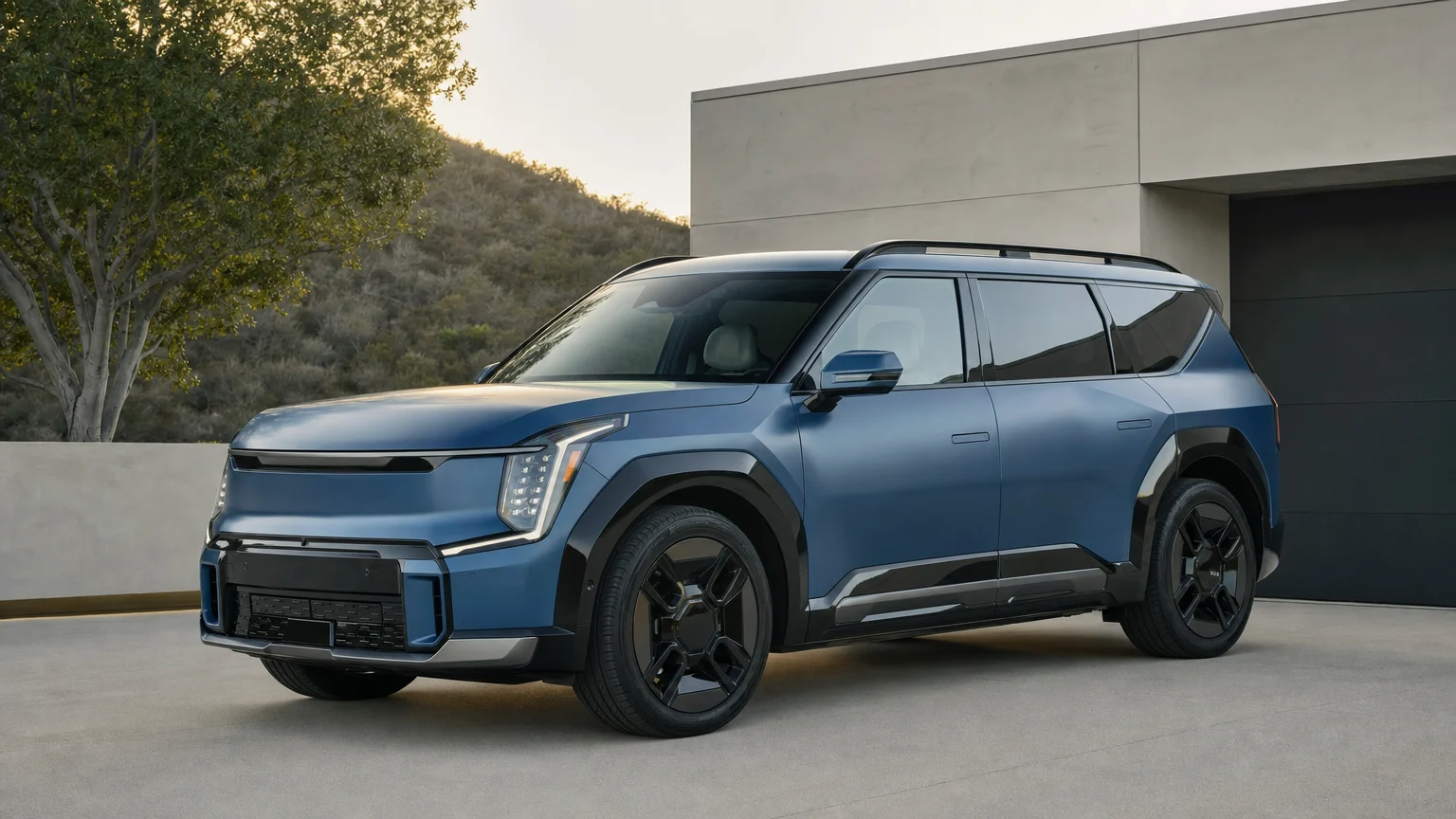
2025–2026 Kia EV9 recall: passenger airbag detection issue
Kia recalls 21,290 EV9s because the passenger airbag may stay active for a child or child seat. See the free repair and planned October notices.