Dodge Durango Spoiler Recall Revisits Earlier Repairs
A new 74,578-vehicle recall covers 2021-2023 Dodge Durangos whose rear spoilers can be damaged during liftgate use and detach on the road—including SUVs repaired in two earlier campaigns.
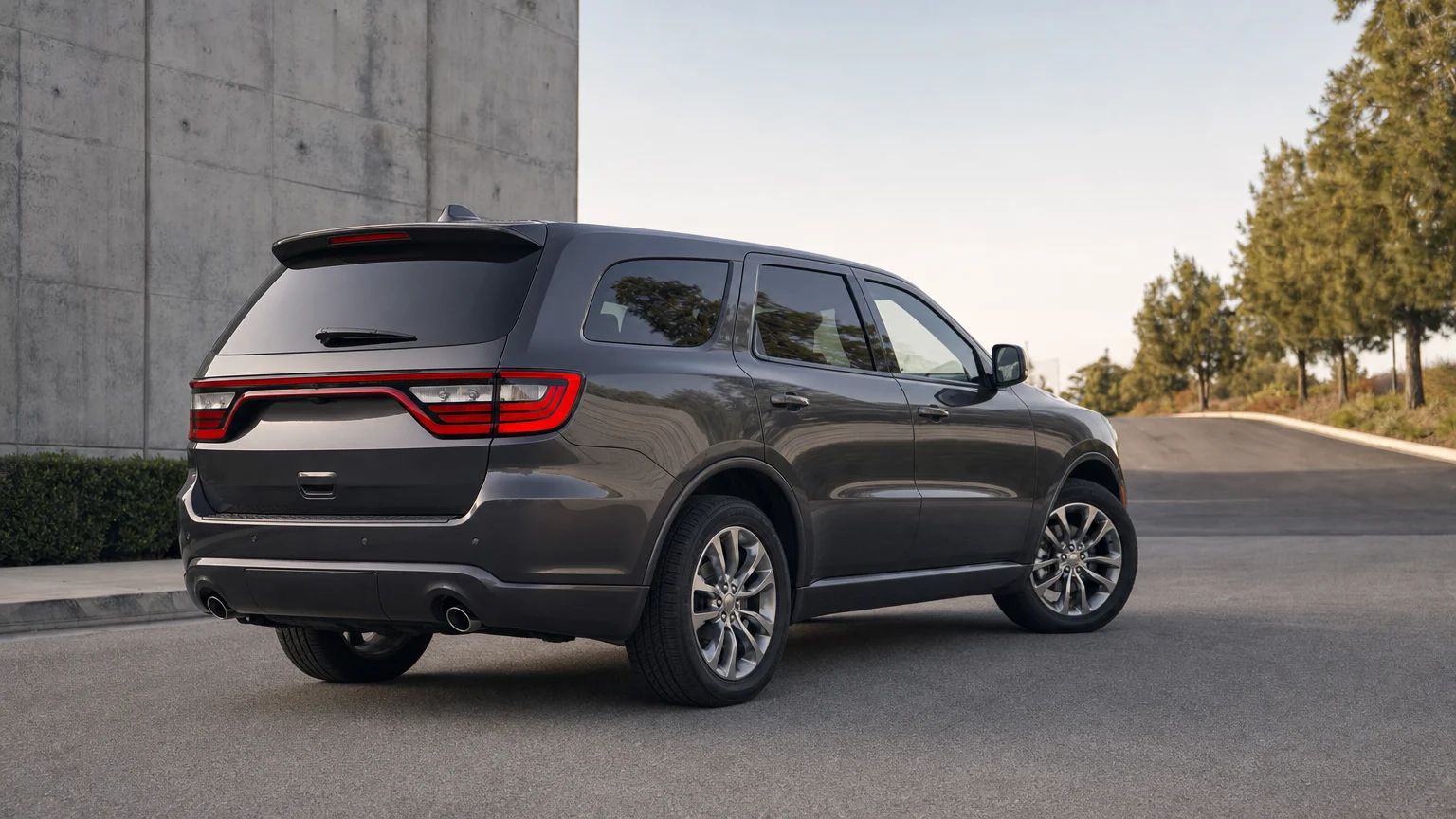
A new recall of 74,578 Dodge Durango SUVs is more consequential than its part description might initially suggest. Chrysler is recalling certain 2021-2023 Durangos because the rear liftgate spoiler may be misaligned with the roof. The company says repeated liftgate use can damage the spoiler; a damaged piece may detach while the SUV is being driven, becoming a road hazard.
The new campaign is NHTSA recall 26V528000 and Chrysler campaign 61D. Its most important detail is that vehicles previously repaired under two earlier spoiler recalls—21V842 and 23V115—are included and will require this new repair, too. That makes this a useful case study in the difference between a recall being marked complete and a vehicle being permanently cleared of later safety actions involving the same area.
For owners, the practical message is straightforward: check the vehicle identification number now, confirm the new remedy with a dealer, and do not assume a prior dealership visit means this campaign does not apply.
What the new Durango recall covers
The recall applies to certain model-year 2021, 2022 and 2023 Dodge Durangos. Chrysler’s filing describes a roof-to-spoiler alignment condition that can damage the rear spoiler when the liftgate is opened or closed. If damage progresses, the spoiler can separate from the vehicle and create a hazard for other road users.
This is not a warning about every Durango of those model years. Recall populations are VIN-specific: production dates, trim, prior repair history and other manufacturing information determine whether an individual SUV is included. Owners should use the NHTSA or Mopar VIN tools rather than rely on year and model alone.
Source update — September 16, 2026: The original August 13 filing left the remedy under development. Chrysler’s September 1 amended report now specifies modifying or replacing the spoiler, inspecting its position and adjusting liftgate alignment if necessary. Its schedule still lists September 10–11 as a planned interim mailing and does not provide a final remedy-mailing date. A defined repair procedure does not establish parts or appointment availability for every VIN. Calling ahead before visiting is sensible, particularly for owners who have noticed looseness, damage, a changed panel gap, rubbing, or unusual movement around the spoiler when operating the liftgate.
The manufacturer has not issued a park-outside or do-not-drive instruction for campaign 61D. Still, an owner who finds a visibly cracked, loose or partially detached spoiler should avoid treating that as a routine cosmetic concern. A dealer can advise on the appropriate next step while confirming the recall repair arrangements.
Why earlier recall repairs do not close this case
The unusual part of this action is its explicit connection to the prior campaigns. Chrysler says vehicles repaired under 21V842 or 23V115 will need the new repair. In other words, an earlier recall visit addressed the condition and remedy defined at that time; it did not guarantee that no subsequent engineering action would be needed for the assembly.
RecallWire’s recall repair guide explains how to confirm campaign coverage, document the remedy, and respond when an earlier repair does not resolve a later recall.
That distinction is central to recall ownership. A repair completion record is meaningful—it documents that the available remedy was performed—but it is not a lifetime certificate for the part or system. Automakers can discover a broader population, identify a different failure pathway, revise a repair method, or conclude that an earlier countermeasure needs another action. NHTSA’s recall system is built around ongoing VIN-level campaigns for precisely this reason.
For buyers considering a used Durango, a seller’s statement that “the spoiler recall was done” should lead to a VIN check, not end the inquiry. A buyer should ask for documentation of prior recall work, then check the VIN for campaign 61D and any other open safety recalls before completing a purchase. A dealer’s service history can help establish what work was completed, but the live recall status attached to the VIN is the key check.
The same principle applies to owners who have changed addresses, bought an SUV privately, or use an independent repair shop for routine maintenance. Manufacturer mailings can miss the current keeper, whereas a VIN search provides the most direct confirmation of open recall status.
A specified remedy still needs a confirmed appointment
When this analysis was first published, the remedy remained under development. The September amended filing supplies a repair procedure, but owners still need to confirm when their dealer can perform it. Chrysler is responsible for providing the recall remedy at no charge. Owners should retain any paperwork for inspections or independently paid repairs that they believe relate directly to the recalled condition, then review the reimbursement terms in the eventual owner letter.
Until then, the best approach is measured rather than alarmist. Inspect the spoiler visually when washing the vehicle or loading cargo. Do not pull on it or attempt a home repair with adhesive, screws or tape; an improvised attachment could complicate a later inspection and may not restore the intended fit. If there is visible damage, contact a Dodge dealer and reference campaign 61D.
Owners should also confirm that the dealer has current contact information. The planned September interim mailing was a notification milestone, not an appointment date or proof that a letter was sent to each owner. Dealership parts availability, inspection instructions and the final repair procedure may follow on a different schedule.
What this says about recall follow-through
The Durango campaign illustrates why recall completion is not merely an administrative metric. The newest remedy has to reach owners who may reasonably believe they already dealt with the issue years ago. That communication challenge grows when the recall concerns an exterior component that some owners could mistake for ordinary wear or body damage.
It also shows why a large recall number should be read carefully. The 74,578 figure is the number of potentially affected vehicles in this campaign, not a count of confirmed failures or detached spoilers. Chrysler’s stated safety concern is the possibility that a damaged spoiler can detach and create a road hazard. Owners should take the campaign seriously without assuming every vehicle has the condition.
For the industry, repeat actions place a premium on clear service records and precise VIN outreach. For consumers, they reinforce a simpler habit: check open recalls at least when buying, selling, moving, or taking a vehicle in for scheduled maintenance.
Check the VIN and confirm the new repair
Campaign 61D is a meaningful new obligation for certain 2021-2023 Dodge Durango owners, including some whose SUVs received one of the earlier spoiler-related repairs. The immediate task is to verify the VIN and watch for dealer guidance; the September 1 report now specifies the remedy, and the dealer should confirm availability for the vehicle. A prior recall repair should be treated as useful history, not proof that a newer campaign cannot apply. Once the remedy is released, schedule it promptly and keep the service record with the vehicle.
The Durango spoiler recall report for 26V528000 provides the campaign summary and official-source links.
Sources used for this analysis.
References checked September 16, 2026.
- Mopar. Look for Vehicle Recalls. Accessed August 26, 2026.Source ↗
- Cars.com. 74,000-Plus Dodge Durangos Recalled for Detaching Spoiler. Published August 20, 2026. Accessed August 26, 2026.Source ↗
- RoadVitals. Recall 26V528000: STRUCTURE:BODY:HATCHBACK/LIFTGATE. Published August 13, 2026. Accessed August 26, 2026.Source ↗
- National Highway Traffic Safety Administration. Dodge Durango spoiler recall 26V528: amended September 1 report. Accessed September 16, 2026.Source ↗