NHTSA’s DTN Airbag Warning Is Not a Normal Recall
An 11th death tied to a banned replacement airbag inflator turns a used-car repair-history question into an immediate safety check—one that a VIN recall search cannot answer.

NHTSA’s warning issued September 3 is unusual because it is not centered on a single automaker, a defined vehicle population or a conventional VIN-based recall. The agency says an 11th person has died after a frontal driver airbag inflator marked “DTN60DB” ruptured in a crash. The latest fatality occurred August 27 in a 2018 Chevrolet Equinox in Dallas; earlier fatalities and severe injuries were reported in Chevrolet Malibu and Hyundai Sonata vehicles.
The immediate lesson for used-car owners is broader than those three nameplates. NHTSA says the suspect inflators were likely illegally imported replacement parts, generally fitted after prior crash damage or other airbag replacement. The agency does not have a complete list of affected vehicles, and it specifically says there is no evidence that the danger is limited to the models in which ruptures have been identified. A clean recall result from a VIN search therefore cannot rule out this problem.
That makes repair provenance—not merely the vehicle’s make, model year or recall status—the central safety question. For buyers and owners of cars with uncertain histories, particularly vehicles that may have had airbags deploy since 2020, the practical response is to document the repair history and arrange a professional inspection rather than attempting to inspect an airbag at home.
Why this is different from a manufacturer recall
A typical safety recall begins with an automaker identifying a defect in vehicles it built. The manufacturer can define the production population, notify registered owners, supply dealers with a remedy and attach the campaign to affected VINs. NHTSA’s DTN60DB case breaks that model at nearly every point.
RecallWire’s guide to NHTSA as the official vehicle-safety source explains the distinction among recalls, complaints, investigations, and other safety warnings.
The agency’s investigation found that the suspect frontal driver inflators entered the United States through unknown importers and were likely imported illegally. NHTSA issued a final safety-defect decision earlier in 2026, making it illegal to sell or import a subject inflator—or an airbag module containing one—in the United States. NHTSA’s order requires the inflator manufacturer to initiate a recall. However, the agency’s consumer guidance, checked September 16, says a traditional recall is unlikely because the inflators were likely illegally imported and a reliable affected-vehicle list is unavailable.
That distinction matters. The absence of a vehicle-specific campaign number is not an indication that the hazard is minor; it reflects an inability to trace the parts through the normal new-car supply chain. Nor should owners confuse this warning with an original-equipment defect in every Malibu, Sonata or Equinox. NHTSA’s evidence concerns replacement driver-airbag inflators installed in individual vehicles, not the factory-installed airbags across entire model lines.
The public record has expanded since the agency’s April action. NHTSA’s September 3 update reports 11 deaths and three severe injuries in 14 crashes involving these replacements. In each case described in the September alert, the original frontal driver inflator had been replaced with a defective DTN60DB unit, and NHTSA characterizes the crashes as otherwise survivable.
The risk is tied to vehicle history, not a badge on the grille
The models named so far should be read as confirmed examples, not a complete exposure list. NHTSA’s September 3 consumer guidance identifies ruptures in Chevrolet Malibu, Hyundai Sonata and Chevrolet Equinox vehicles, while cautioning that it has no information showing the issue is confined to those vehicles.
That is an important correction to the instinct to search by model year. A 2018 Equinox with its original, undisturbed factory airbag is not implicated simply because the newest fatal crash involved an Equinox. Conversely, a used vehicle of another make could warrant scrutiny if it was previously wrecked, declared a total loss, stolen and recovered, or repaired with an airbag of unverified origin.
NHTSA’s technician guidance treats a vehicle with no airbag-replacement history, or one repaired with documented new OEM parts through a franchised dealer or reputable source, as lower risk. It identifies several factors that raise concern: an airbag replacement after collision or theft that cannot be verified; a suspiciously low-priced replacement module; a part bought through an online marketplace or auction site; and a used vehicle purchased without a verified history.
Those are risk-screening factors, not a diagnosis. They do, however, offer a more useful framework for consumers than a blanket warning about a particular used-car model. The key paperwork is the collision repair invoice, insurer’s claim documentation and evidence showing whether the replacement module came from OEM stock.
What owners and shoppers should do now
First, check the vehicle’s history for prior collisions, airbag deployments, total-loss records and theft events. NHTSA’s guidance is especially directed at vehicles that had an airbag deploy in a crash since 2020 and were not repaired through the manufacturer’s dealership. A history report will not necessarily capture every crash or repair, but it is a sensible starting point for identifying questions that need answers.
Second, if the history is unclear, ask the insurer and repair facility for written records. The useful question is not merely whether an airbag was replaced, but whether the replacement was a genuine component equivalent to the original equipment. A seller who cannot document a substantial collision repair should not be able to dismiss the issue with a clean VIN-recall report.
Third, use a manufacturer dealership or a reputable independent repair shop for any evaluation. NHTSA explicitly warns consumers not to remove the steering-wheel airbag cover or try to inspect the inflator themselves. Airbag modules are safety devices containing pyrotechnic components; improper handling can cause serious injury or death.
If a technician finds a DTN60DB inflator, NHTSA says the vehicle should not be driven until it is replaced with a genuine part. The agency also says consumers would be responsible for inspection and replacement costs. That is an unsatisfying outcome, but it follows from the fact that the part is not tied to a known vehicle manufacturer recall population or a traceable repair campaign.
Buyers should treat this as a due-diligence issue before purchase, not an afterthought. An independent pre-purchase inspection that includes a discussion of prior collision and airbag work is more valuable when a vehicle’s history suggests an airbag may have been replaced.
The larger safety gap is in post-crash repairs
This case exposes a blind spot in the way motorists commonly think about recalls. Modern recall systems work well when a defect can be traced through a manufacturer’s production records and linked to a VIN. They are far less effective when a safety-critical part enters the vehicle years later through a fragmented collision-repair and parts market.
NHTSA’s final decision and ban can stop lawful future sales of the identified inflators, but they cannot by themselves locate units already installed in vehicles. The latest fatality—months after the April final decision—shows why the agency’s warning is aimed at owners, technicians, insurers and used-car buyers rather than at a defined mailing list.
For the used-car market, the practical implication is that an airbag is not just another replacement part. A low-priced or undocumented module can hide behind an intact dashboard and a clean title. The cost of verifying a repair may feel burdensome, but the alternative is accepting uncertainty around a system designed to protect occupants in the moment they need it most.
A VIN check remains useful—but it is not enough here
Owners should continue checking VINs for open manufacturer recalls, but the DTN60DB warning demands a separate question: what happened to this vehicle after its last serious crash? As of September 4, 2026, NHTSA has not identified a complete affected-vehicle population, and the known cases do not define the full risk. A documented OEM airbag repair substantially changes the picture; an undocumented replacement after a crash should prompt a professional inspection. This is not a reason to assume every used vehicle is unsafe. It is a reason to treat missing airbag-repair records as a safety issue rather than a routine paperwork gap.
The VIN lookup tools guide also explains what a vehicle-specific recall search can and cannot establish.
Sources used for this analysis.
References checked September 16, 2026.
- U.S. Department of Transportation. Initial Decision That Certain Frontal Driver Air Bag Inflators Manufactured by Jilin Province Detiannuo Safety Technology Co., Ltd. (DTN) Contain a Safety Defect. Published April 6, 2026. Accessed September 4, 2026.Source ↗
- National Highway Traffic Safety Administration. Consumer Alert: Banned Chinese Air Bag Inflator Kills 11th Person in the U.S.. Published September 3, 2026. Accessed September 16, 2026.Source ↗
- National Highway Traffic Safety Administration. What to Know: Deadly Air Bag Replacements. Published September 3, 2026. Accessed September 16, 2026.Source ↗
- National Highway Traffic Safety Administration. Final Decision Air Bag Inflator DTN60DB. Published April 29, 2026. Accessed September 16, 2026.Source ↗
- National Highway Traffic Safety Administration. Recommended Technician Guidance for Managing Inflators Marked “DTN60DB”. Published April 27, 2026. Accessed September 16, 2026.Source ↗
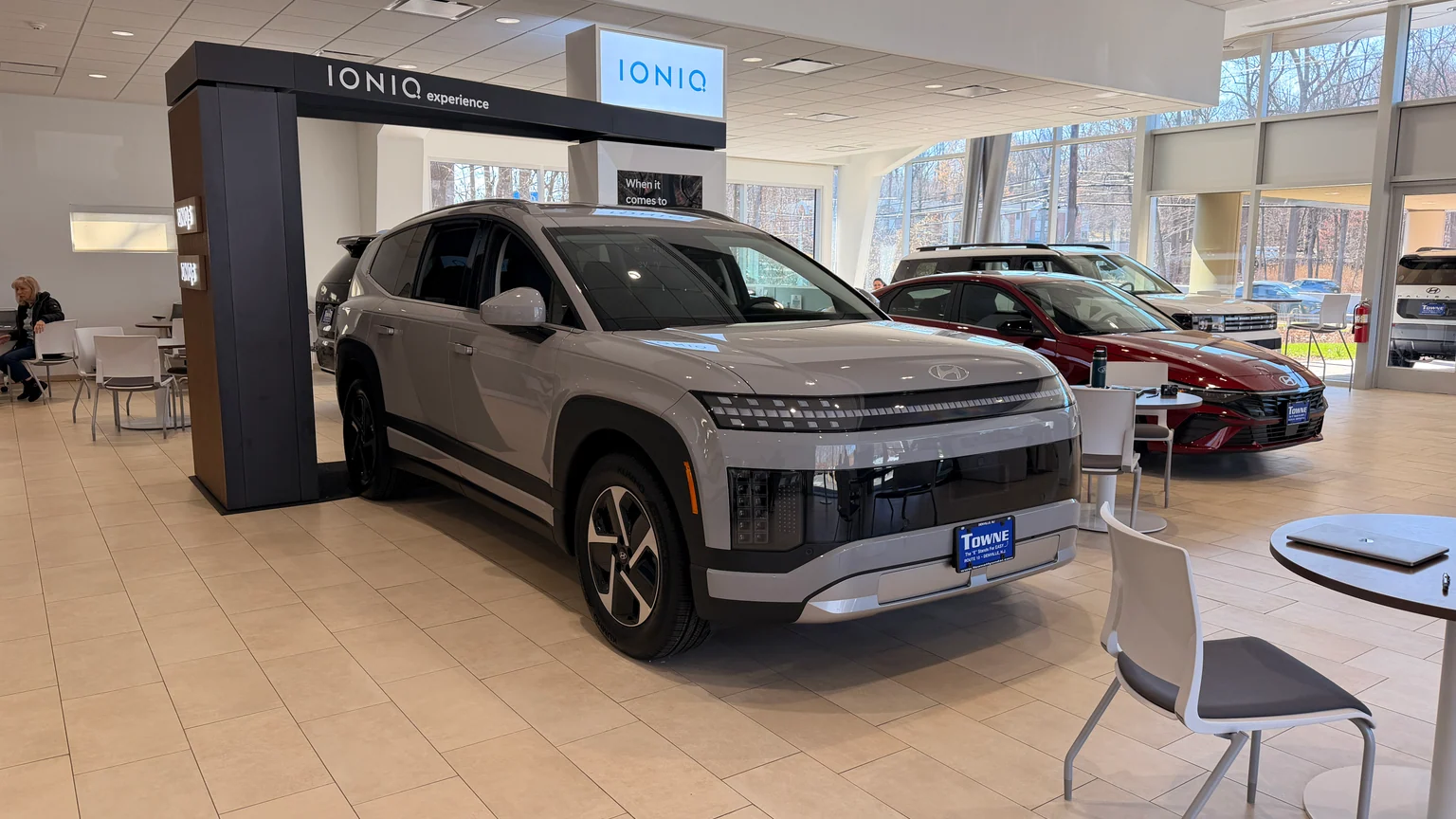
HYUNDAI IONIQ 9: NHTSA recall 26V588000 explained
This recall concerns rear power-seat operation and the seat system’s ability to detect a person during certain powered movements.

RecallWire Weekly Recall Report
A plain-language overview of newly listed safety recalls involving seat-belt anchorage, rearview-camera, display, and rear-suspension concerns.
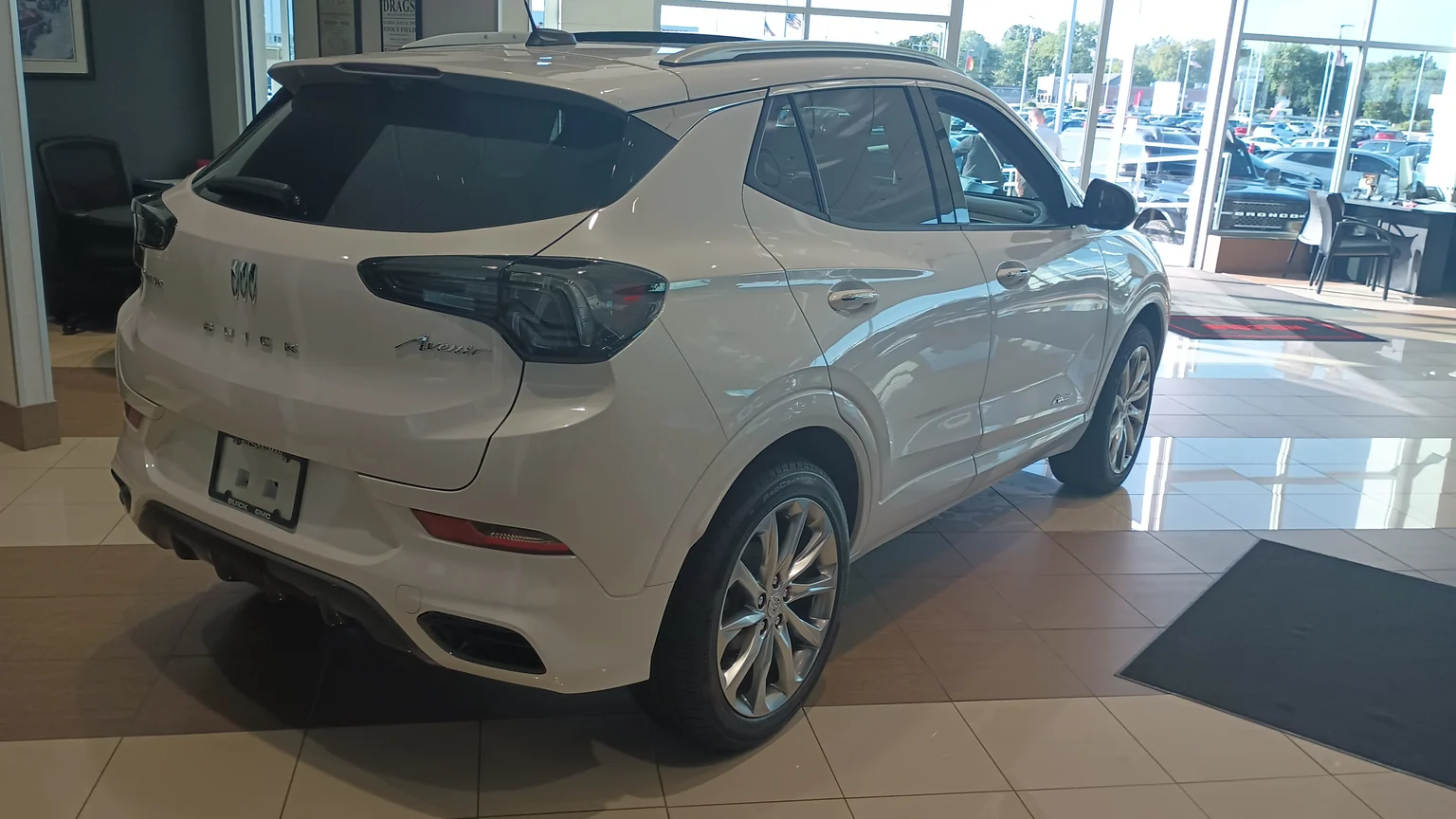
BUICK ENCORE GX: NHTSA recall 26V539000 explained
The official recall record describes a rearview camera display that may appear distorted or blank in certain Buick and Chevrolet vehicles.